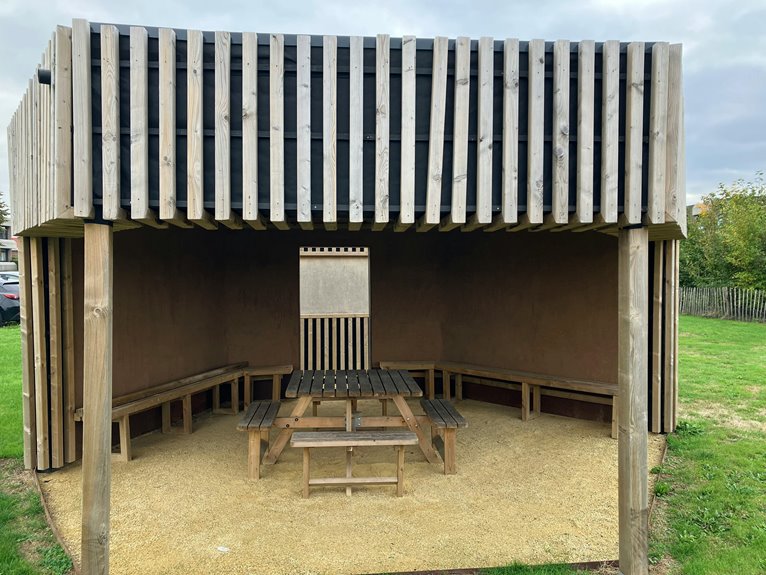
Pergolas have open lattice or adjustable louvered roofs that allow sunlight to pass through. Gazebos feature solid roofs that provide complete weather protection.
Pergolas typically have rectangular shapes and can be attached to a house or stand alone. Gazebos are usually octagonal in design and function as standalone structures.
Pergolas offer partial shade that adjusts based on roof position. Gazebos provide constant, full shade throughout the day. Gazebos protect against rain and snow more effectively than pergolas. Aluminum pergolas can withstand wind speeds exceeding 200 miles per hour.
Pergolas require less upfront investment and lower maintenance costs compared to wood gazebos. The choice between these structures depends on your local climate, available space, and how much maintenance work you can manage.
Roof Design: Open Lattice vs. Solid Enclosure
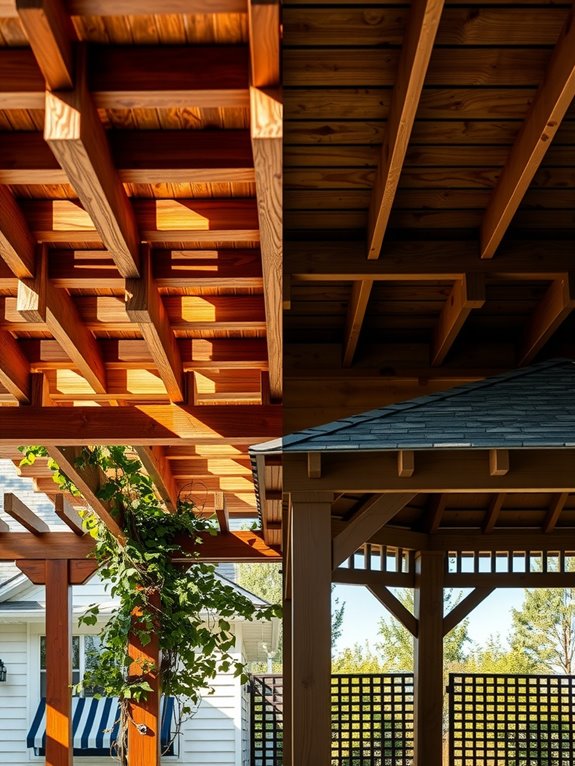
Pergolas and gazebos differ mainly in their roof design and weather protection capabilities. Pergolas have an open lattice or louvered roof. This design allows sunlight and airflow to pass through the structure. A louvered roof offers adjustable shade control. You can open or close the slats based on your weather preferences and shade needs.
Gazebos have a solid roof that provides complete weather protection. The solid canopy blocks rain and snow from reaching the space below. However, this solid design reduces airflow underneath the structure.
The choice between these two structures depends on your priorities. Select a pergola if you want flexibility in shade and ventilation. Select a gazebo if you need consistent protection from weather conditions.
How Much Sun and Shade Does Each Provide?
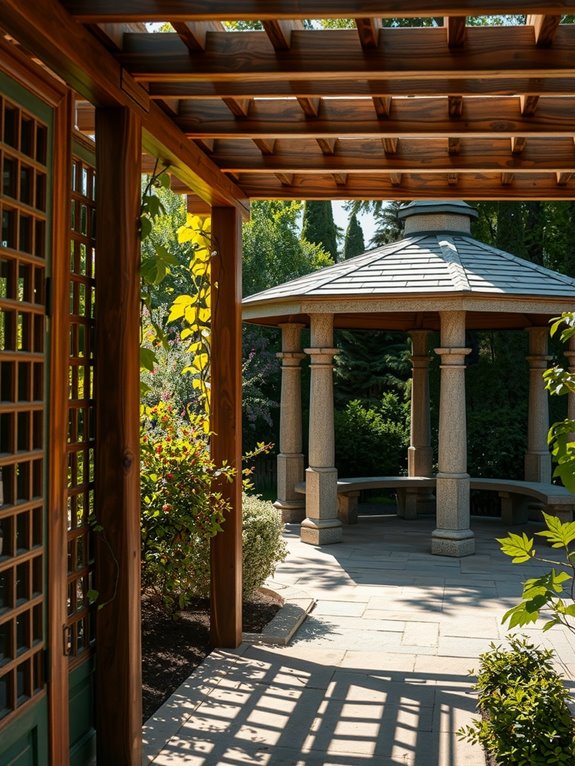
When you choose between a pergola and a gazebo, you decide how much direct sunlight reaches your outdoor space. A pergola has an open or semi-closed lattice design. This design allows some sunlight to pass through, creating partial shade. You can adjust the amount of shade by closing the louvers. Closed louvers can lower the temperature by about 20 degrees Fahrenheit compared to open configurations.
A gazebo has a solid roof that blocks sunlight completely. This provides permanent full shade. Unlike a pergola, a gazebo does not allow you to control your sun exposure through adjustable features.
Pergola’s Partial Shade Design
Pergola‘s Partial Shade Design
A pergola and a gazebo create different amounts of shade. A pergola’s lattice roof structure produces partial shade. Dappled sunlight filters through the open spaces in the lattice rather than creating complete darkness. The open roof design allows both sun and air to pass through while reducing direct sun exposure. Because pergolas have open sides, they do not fully enclose a space. This design preserves natural light and maintains outdoor air circulation.
Pergolas work well when you want sun filtration without total coverage. Modern pergolas with adjustable louvers offer increased shade control. Motorized louver systems allow you to open or close the slats to create different shade levels. Some louver systems seal completely. These sealed systems provide waterproof protection similar to gazebos. You can customize your pergola shade based on current weather conditions and your immediate needs.
Gazebo’s Complete Protection
A gazebo provides complete protection from the sun and weather. Unlike a pergola, which offers partial shade, a gazebo has a solid roof and enclosed or semi-enclosed sides. The solid roof blocks rain, snow, and harmful UV rays throughout the year. The enclosed sides work with the roof to create consistent shade coverage. Sun angle and time of day do not affect the shade level inside a gazebo.
A gazebo’s structural design delivers full coverage that cannot be adjusted. Louvered pergolas allow you to change the amount of shade by opening or closing the slats. A gazebo does not have this feature. You can use a gazebo during storms or intense heat without concern for weather exposure. The solid roof and side walls create a reliable outdoor room with dependable shelter whenever you need it.
Sunlight Exposure Comparison
Pergolas and gazebos provide different amounts of sunlight to outdoor spaces. Pergolas have an open lattice design that allows significant sunlight to enter. This design creates moving sun patterns throughout the day as the sun’s position changes.
Louvered pergolas offer adjustable shade options. You can open or close the louvers to control how much sunlight enters the space. When you close the louvers completely, the temperature underneath can drop by up to 20 degrees compared to when they are fully open.
Gazebos function differently because they have a solid roof. The solid roof blocks most direct sunlight and creates consistent shade underneath. This permanent structure provides reliable sun protection throughout the year.
Your choice between these structures depends on how much sunlight and shade you want in your outdoor area.
Weather Protection: Which Handles Rain, Snow, and Wind Better?
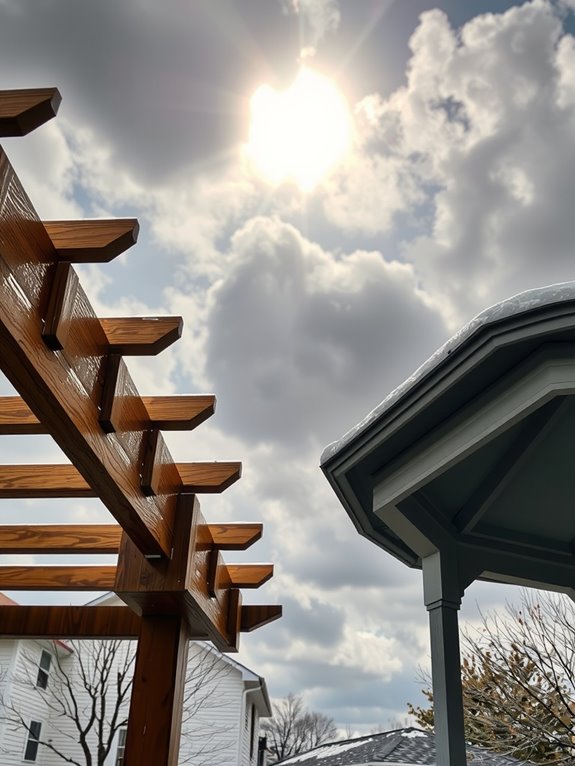
Weather Protection: Which Handles Rain, Snow, and Wind Better?
Gazebos and pergolas provide different levels of weather protection. Gazebos have solid roofs that block rain and snow completely. Traditional pergolas have open or slatted designs that allow rain to pass through. Louvered pergolas can close their slats to match gazebo-level coverage when needed.
Snow and wind resistance differ significantly between these structures. Aluminum louvered pergolas withstand extreme winds up to 200+ mph and support snow loads of 65 psf. Wood and vinyl gazebos manage rainfall effectively but have lower ratings for wind and snow loads. Traditional pergolas offer the least protection in severe weather conditions.
| Feature | Gazebo | Traditional Pergola | Louvered Pergola |
|---|---|---|---|
| Rain Protection | Complete | Partial | Complete (closed) |
| Snow Load | Moderate | Poor | Up to 65 psf |
| Wind Resistance | Moderate | Low | Up to 200+ mph |
| Material Options | Wood, vinyl | Wood, vinyl | Aluminum |
| Maintenance | Moderate | Low | Low |
Maintenance requirements vary by structure type. Louvered pergolas need less upkeep than wood or vinyl gazebos. Traditional pergolas demand the least maintenance because they lack moving parts or solid roof systems that require regular cleaning and repair.
Shape and Structural Form
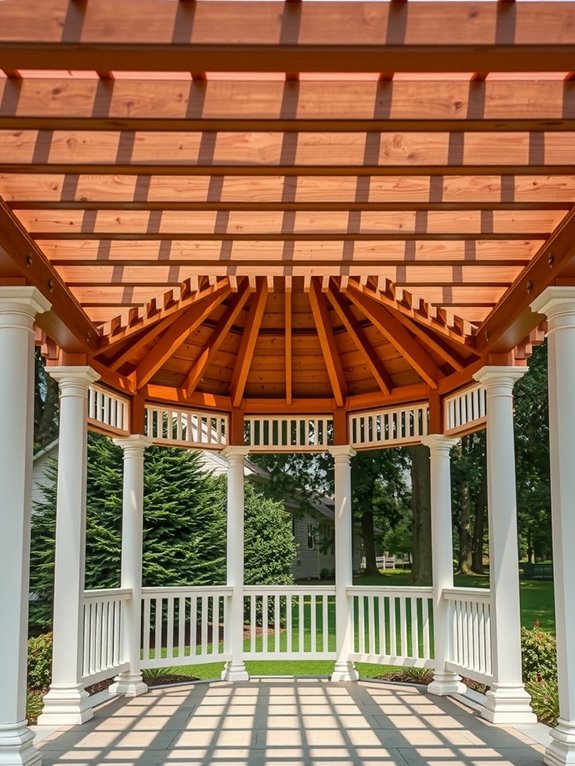
Shape and Structural Form
Pergolas and gazebos have different physical designs. These differences appear in their structure, form, and appearance.
Pergolas have rectangular or square shapes. They feature open-frame construction with lattice or louvers. This design allows partial shade to reach the ground below. Pergolas can attach to a house or stand alone in a yard.
Gazebos have polygonal shapes. Most gazebos are octagonal or hexagonal. They have solid roofs that provide complete weather protection. Gazebos require their own foundation and function as standalone structures.
The main structural difference between these two buildings involves their roofs. Pergolas use open slats or adjustable louvered systems that let light pass through. Gazebos use pitched or tiered solid roofs that block weather completely. The polygonal design of gazebos contrasts with the rectangular design of pergolas. This shapes how each structure functions and looks in an outdoor space.
Installation Complexity and Foundation Requirements
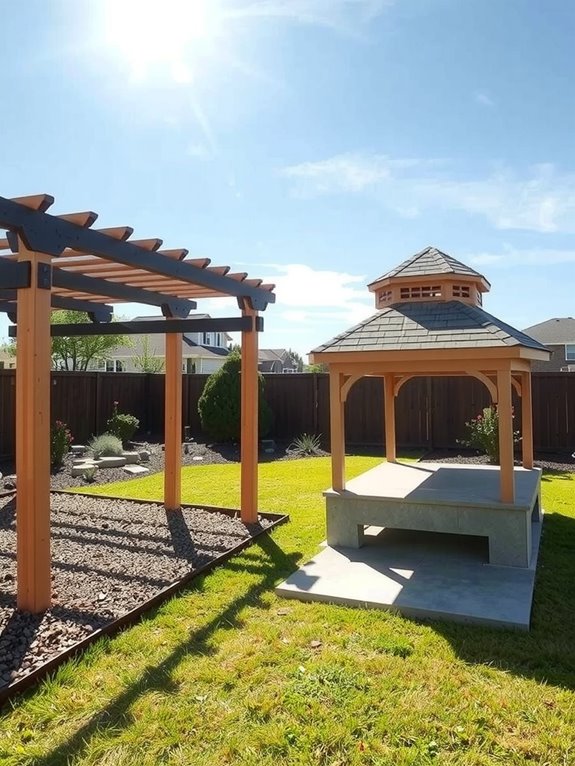
Pergolas and gazebos require different foundation approaches due to their structural designs. Gazebos are standalone structures that need dedicated foundations, typically concrete slabs or foundation pads. Posts anchor directly into these concrete bases for stability.
Pergolas offer more installation flexibility. You can install them as freestanding structures or attach them to your house. Freestanding pergolas need anchoring posts set in concrete footings or continuous foundations. Attached pergolas require less foundation work since they connect to your existing structure.
Both structure types require proper site preparation before installation. Many providers offer foundation services during installation. These services include concrete work and post anchoring. Plan for solid foundations like decks, patios, or concrete slabs. Solid foundations keep your structure stable and secure for many years.
Pergola vs. Gazebo Cost: Budget Breakdown
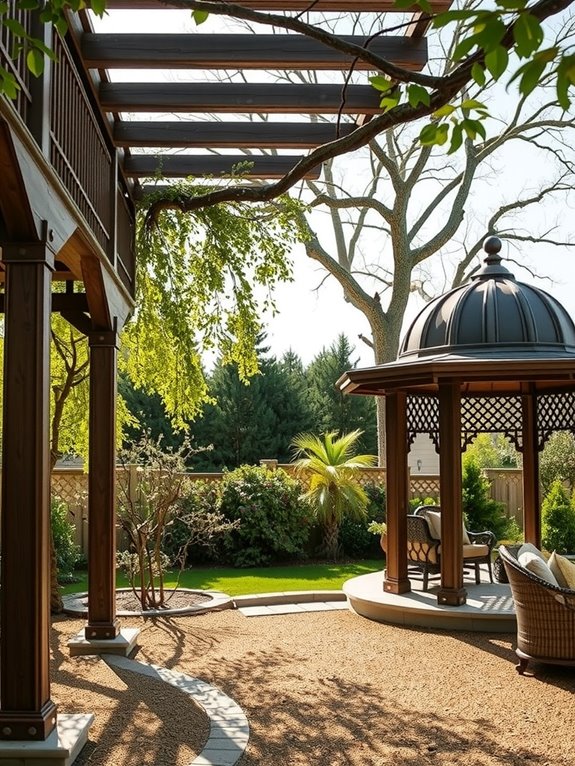
The cost of pergolas and gazebos varies based on three main factors: the materials used, the structure’s size, and what installation requires. Wood gazebos cost between $3,000 and $10,000. Premium aluminum louvered pergolas range from $5,000 to $20,000. Adding labor for foundation work and installation costs $1,500 to $4,000 for gazebos.
Material choice affects both initial and long-term costs. Wood requires less money upfront. However, wood needs staining or sealing every 2 to 3 years to maintain its condition. Aluminum costs more at the start. Its maintenance expenses stay lower over time.
Foundation work adds significant expense for both structures. Concrete footings and foundations increase your total cost considerably.
Long-term costs tell a different story than upfront prices. A high-end aluminum louvered pergola may cost the same as a mid-range wooden gazebo when you calculate durability and maintenance over many years. Budget planning should include both what you spend initially and what you will spend on maintenance in the future.
Maintenance and Upkeep Demands
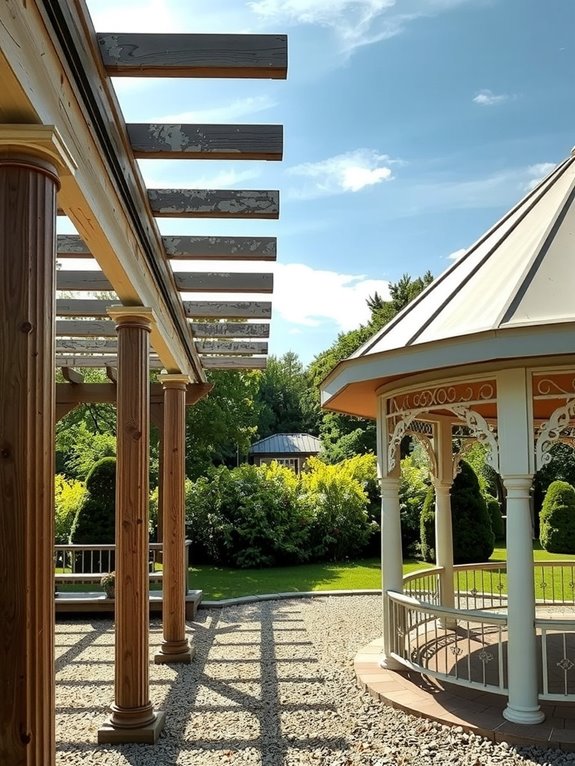
Pergolas need regular cleaning and wood sealing or staining every 2-3 years. Aluminum louvers require less maintenance because they resist corrosion. Gazebos need more frequent upkeep due to roof inspections and weather protection requirements, plus decoration maintenance throughout the year. Your material choice affects maintenance schedules and specific care needs. Wood, vinyl, fiberglass, aluminum, and composite each have different maintenance demands. Wood requires the most frequent treatment. Aluminum demands the least attention. Vinyl and composite materials fall between these two extremes. Fiberglass needs occasional cleaning and may require resealing depending on weather exposure. Understanding your material’s characteristics helps you plan maintenance tasks and budget time accordingly.
Pergola Cleaning and Care
Pergola maintenance depends heavily on your material choice. Aluminum pergolas require minimal upkeep. Wood versions need staining or sealing every 2–3 years.
Perform these regular tasks:
- Clean louvers and slats to remove debris and maintain shade effectiveness
- Inspect aluminum and vinyl surfaces for corrosion or damage
- Check foundation anchoring to ensure the structure remains secure and stable
Regular cleaning prevents buildup on surfaces, which helps your pergola function properly. Aluminum pergolas resist weathering longer than wood versions. This means aluminum requires less maintenance overall. Consistent upkeep extends your pergola’s lifespan and ensures reliable performance for years.
Gazebo Weather Protection Needs
Gazebos have solid roofs that block rain, snow, and intense sunlight. Pergolas, by contrast, have open or louvered designs that do not provide this protection.
Wood gazebo roofs require staining or sealing every 2–3 years to prevent moisture damage and decay. Aluminum and vinyl roofs need very little maintenance, which makes them better options for people with busy schedules.
A gazebo must sit on a solid, level concrete pad or proper footings. This foundation ensures the structure stays stable and weatherproofing works as intended.
You can add enclosure panels or apply extra weatherproofing treatments to improve wind resistance and weather protection. Inspect your gazebo regularly to spot problems early and keep it functioning properly throughout the year.
Material-Specific Maintenance Requirements
How much upkeep your pergola or gazebo needs depends primarily on what material it’s made from. Your choice of material directly impacts your long-term maintenance schedule and costs.
Wood requires staining or sealing every 2–3 years. This treatment prevents rot and weathering damage that compromises structural integrity. Without regular maintenance, wood structures deteriorate quickly when exposed to moisture and temperature changes.
Aluminum pergolas require minimal upkeep. They offer superior weather resistance and lasting performance without regular treatments. Aluminum does not rot or require staining.
Vinyl gazebos need less frequent maintenance than wood. Vinyl delivers reliable protection against moisture and deterioration while maintaining its appearance over time.
Beyond material selection, foundation integrity affects maintenance demands significantly. You must inspect concrete pads and footings periodically for settling or damage. These inspections prevent structural problems that can affect the entire structure.
Aluminum and vinyl structures deliver extended lifespans with reduced upkeep compared to wooden options. Wood structures demand consistent care throughout their lifespan. If you want minimal maintenance, aluminum and vinyl are better choices than wood.
Which Structure Fits Your Space and Intended Use?
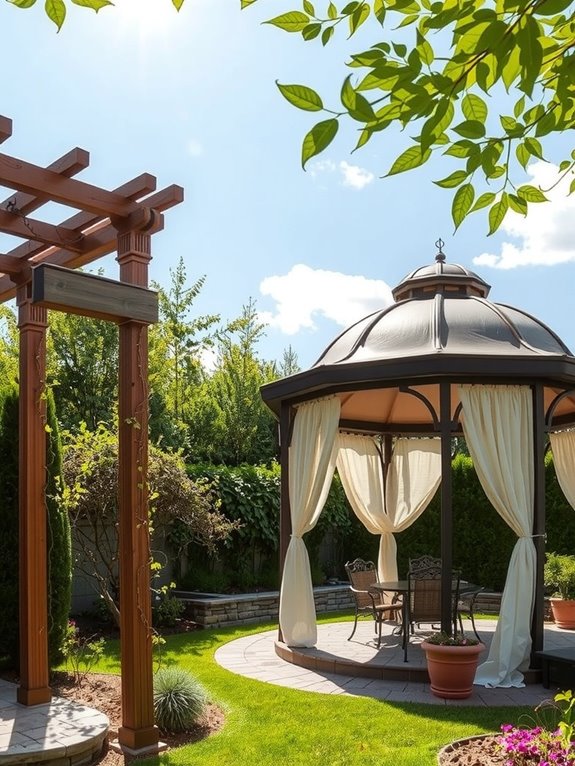
Choosing between a pergola and a gazebo depends on your available space and how you plan to use the structure. Pergolas work well for limited spaces because they attach to homes or stand alone without consuming much ground area. They blend into outdoor living spaces and offer adjustable shade through louvers or partial roofs.
Gazebos function better if you need weather protection and want a standalone structure as a focal point. They have solid roofs and raised floors that provide complete shelter from rain and sun. Consider your entertaining needs: pergolas fit standard dining tables for gatherings, while gazebos create enclosed retreats. Decide whether you prefer open sunlight or full shelter to select the structure that matches your outdoor living goals.
Customizing Shade and Sun After Installation
Customizing Shade and Sun After Installation
After you install an outdoor structure, pergolas and gazebos offer different ways to adjust shade and sunlight. Pergolas allow you to control shade levels. Gazebos provide fixed protection that does not change.
- Pergola louvers move manually or with motors to open and close. Open louvers let in sunlight. Closed louvers provide shade and weather protection. When fully closed, louvers can reduce temperatures by up to 20 degrees Fahrenheit.
- Shade additions for pergolas include polycarbonate panels and fabric canopies. These materials work with the open slatted design. You can add or remove coverage based on the season and your needs.
- Roof materials differ between structures. Aluminum louvers on pergolas offer durable protection year-round and allow adjustment. Gazebo roofs provide constant shade without the ability to modify coverage.
Pergolas adapt to changing weather and sun conditions. Gazebos maintain the same level of coverage at all times.
Which Adds More Home Value?
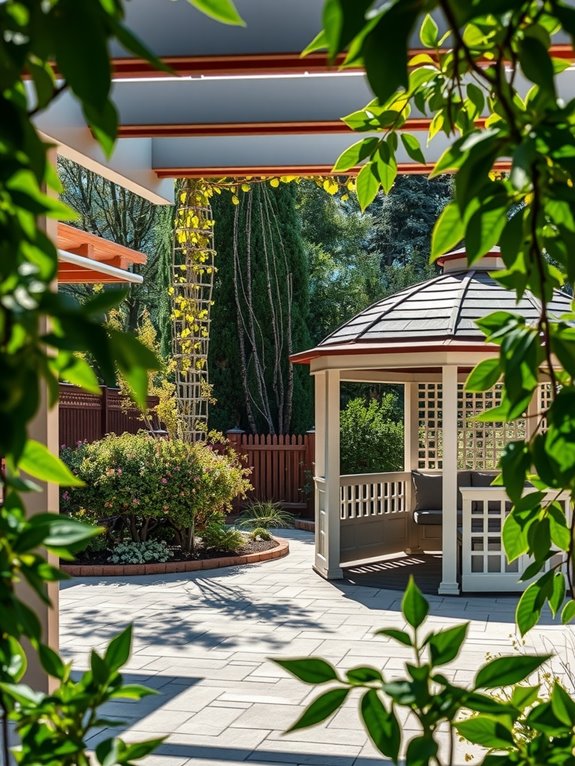
When you’re thinking about resale value, pergolas generally offer a better return on your investment than gazebos do. Real estate data shows pergolas deliver a 50–80% return on outdoor living upgrades. Gazebos appeal to fewer buyers and may not match modern home styles.
Premium aluminum louvered pergolas work well in all four seasons. These structures resist wind up to 200+ mph and support snow loads up to 65 psf. This durability makes them valuable year-round spaces for homeowners.
Pergolas offer more flexibility than gazebos. You can attach them directly to your home, choose open or closed roofs, and customize the design. These options photograph better for real estate listings. The visual appeal increases how buyers perceive the pergola’s value.
Low-maintenance aluminum louvered pergolas strengthen your resale return on investment significantly.