
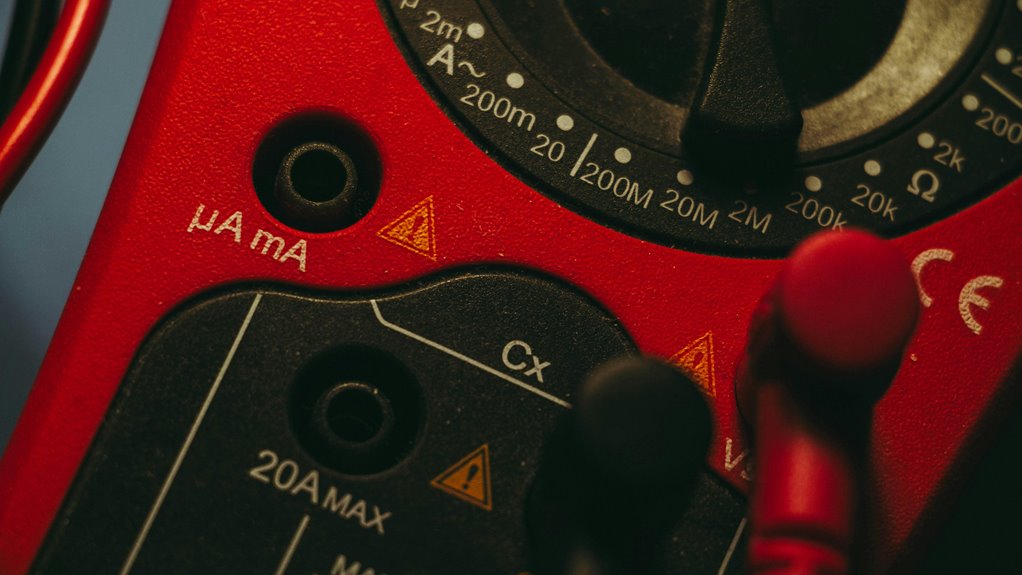
Most garden fountains operate on standard 110–120-volt AC power. You can plug these fountains into any outdoor outlet. Larger fountains require different electrical considerations. Setups located more than 50 feet from your power source need 220–240 volts instead. This higher voltage reduces energy loss when electricity travels long distances through wiring.
Several factors determine which voltage your fountain needs. The pump’s horsepower rating matters. Your desired water flow rate in gallons per hour also affects the choice. The installation location relative to your power source is equally important.
Safety requires a GFCI outlet for all fountain installations. GFCI outlets detect electrical faults and shut off power automatically. Identifying your specific fountain’s electrical requirements allows you to select the correct setup.
Do Garden Fountains Really Need 110V or 220V?
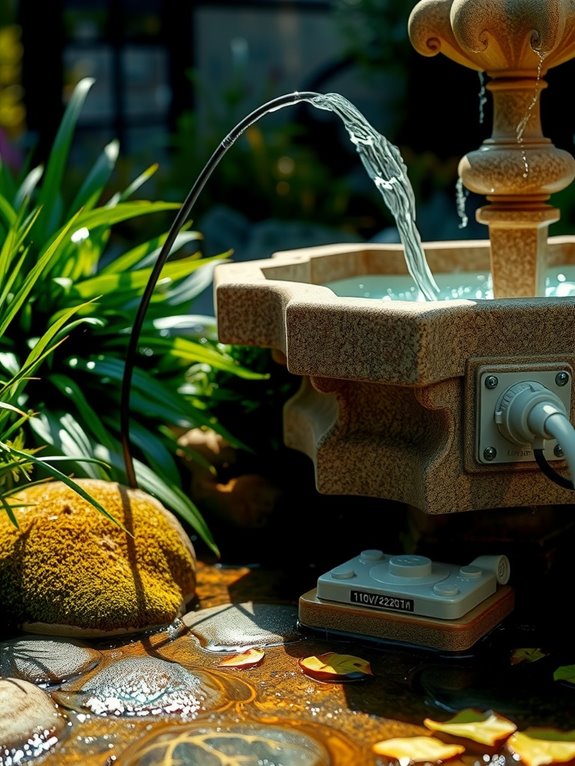
What Voltage Does Your Garden Fountain Need?
Most garden fountains operate on 110–120 volts AC. This voltage works well for smaller fountains that have 1/2 to 1 horsepower. Larger fountains or fountains placed far from your electrical panel need 220–240 volts instead.
Higher voltage has a specific advantage. It reduces amperage and lowers the wire gauge requirements during installation. This matters because longer distances from your power source can cause voltage drop. When voltage drops, your fountain pump works less efficiently.
Three factors determine which voltage you should use. First, consider your pump’s horsepower. Second, measure the distance from your power source to the fountain location. Third, decide how many gallons per hour of water flow you want.
A licensed electrician can evaluate your specific setup. They will recommend whether 110V or 230V is the better choice for your installation.
GPH Explained: What Flow Rate Means for Your Fountain
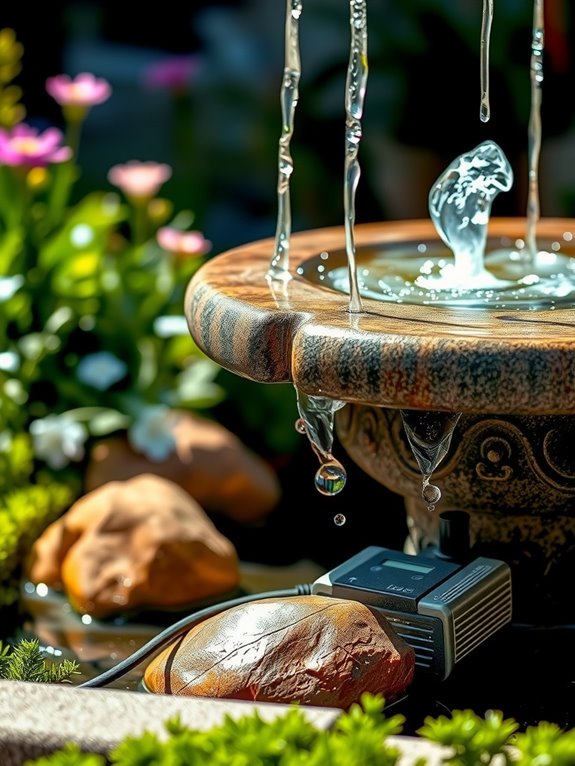
GPH stands for gallons per hour. This measurement tells you how much water your fountain moves in sixty minutes during normal operation. The size of your fountain and the height the water must travel determine which GPH rating you need. Taller fountains require pumps with higher GPH ratings because they must push water upward against gravity. You should match your pump’s GPH to your fountain’s voltage requirements. This ensures you get the correct water flow and electrical efficiency for your setup.
Understanding Gallons Per Hour
How does a fountain pump actually move water? A pump creates pressure that pushes water upward through your fountain system. GPH, or gallons per hour, measures how much water your pump moves in one hour under perfect conditions. Understanding pump flow helps you choose the right equipment for your fountain.
| Flow Type | GPH Rating | Best For |
|---|---|---|
| Gentle | 120 GPH | Small fountains |
| Moderate | 300 GPH | Medium fountains |
| Strong | 500 GPH | Large fountains |
| Variable | Adjustable | Custom designs |
As lift height increases, GPH decreases. Pumping water higher reduces the actual flow at the outlet. You must compare GPH ratings at your pump’s maximum lift height. This ensures the pump meets your fountain’s height and flow requirements. The comparison guarantees your fountain performs as intended.
Flow Rate And Fountain Size
The size of your fountain determines the GPH (gallons per hour) rating you need. You’ll select pump power based on your fountain’s dimensions and desired water movement.
Different fountain sizes require different flow rates:
- Small tabletop fountains need a 120 GPH pump. These fountains have minimal lift height requirements.
- Medium-sized fountains work well with a 300 GPH pump. They have moderate vertical rise.
- Large fountains need a 500 GPH pump. This creates dramatic water displays.
GPH decreases as lift height increases. A pump’s rated flow is its maximum output at ground level. When water must travel vertically through a nozzle, the actual flow rate drops. A 500 GPH pump delivers stronger water movement than a 120 GPH pump, but the water reaching your nozzle depends on the vertical distance it must travel. Higher GPH ratings produce more noticeable fountain effects, assuming the water reaches your desired height.
Matching GPH To Voltage Needs
Selecting the right voltage supply for your fountain pump directly affects its performance. Your pump’s GPH rating requires adequate electrical power to function properly. When voltage drops below the pump’s requirements, the flow rate decreases significantly.
Wire gauge plays an important role in voltage delivery. Undersized wires create electrical resistance that reduces the voltage reaching your pump. For example, a 12-volt pump paired with thin wire gauge will not deliver its full GPH potential. You will notice weaker water flow than the pump’s specifications promise.
Matching your voltage supply to both the pump’s rating and proper wire gauge ensures optimal performance. This combination guarantees that your fountain achieves the GPH output you selected. Check your pump’s voltage requirements and use appropriately sized wiring to maintain consistent, reliable water circulation.
GFCI Outlets: Non-Negotiable Fountain Safety
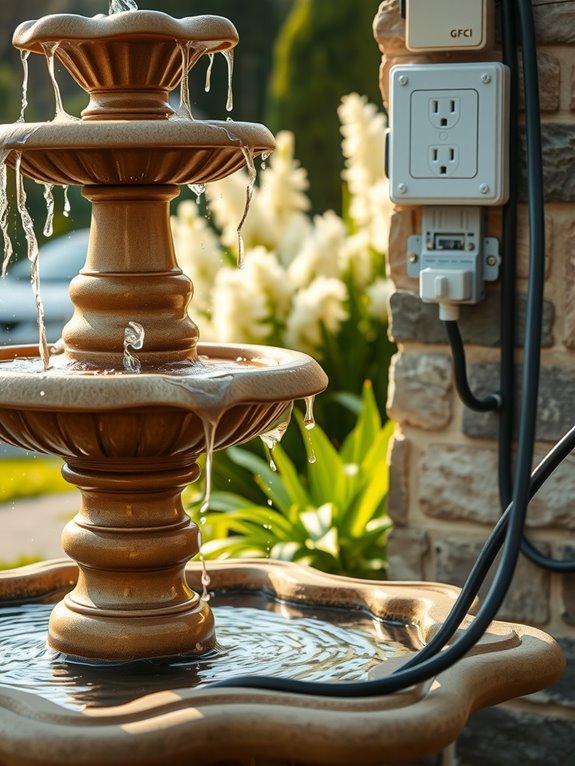
A GFCI (Ground Fault Circuit Interrupter) outlet is required to safely operate your fountain. This device instantly cuts power when water creates an electrical fault, protecting you from electric shock. You can install a GFCI outlet by using an existing outdoor outlet with a Test/Reset button or by hiring an electrician to add a new one to your yard.
Test your GFCI outlet once each month. If it trips frequently, this indicates wiring problems or equipment faults that need immediate attention. Investigate any repeated shutdowns to identify and fix the underlying issue.
What GFCI Protection Provides
GFCI outlets detect dangerous current leaks to ground and automatically shut off power within milliseconds. This electrical safety device stops electric shock before it happens.
GFCI protection works in three ways:
- Automatic shutdown – The outlet trips instantly when it detects ground leaks. Power to your fountain cuts off immediately.
- Regular testing capability – You can press the built-in test button on outdoor outlets to verify the GFCI protection works correctly.
- Code compliance – Electrical code requires GFCI protection for most outdoor receptacles near water features. This requirement keeps your installation legal and safe.
Installing dedicated GFCI-protected circuits ensures your fountain operates safely. Professional electricians can add these circuits if your current outdoor outlets lack this protection.
Installation and Accessibility
Proper outlet placement and installation are critical safety requirements for outdoor fountains. You need a GFCI outlet mounted in a weatherproof enclosure located near your fountain. Standard outdoor outlets supply either 110-120V or 230V power, depending on your fountain’s specifications.
| Component | Purpose | Location |
|---|---|---|
| GFCI outlet | Prevents electrical shock | Weatherproof enclosure |
| Outdoor-rated cord | Handles moisture exposure | Away from water spray |
| Grounding system | Completes safety circuit | Below ground level |
Position the power cord and all connections away from direct water spray. Water contact damages electrical components and increases shock risk. Secure cords along the ground or against surfaces to prevent tripping hazards. This also protects the cord from moisture damage.
A licensed electrician must handle any circuit installation or modification. This requirement applies especially when you need to convert between voltage levels or install a dedicated circuit for your fountain. Your local electrical codes govern these installations, and professional installation ensures your setup meets all safety standards.
Testing and Maintenance Requirements
A GFCI outlet detects ground faults and stops power instantly. This action prevents electrical shock hazards around water features. Regular testing and maintenance keep your outdoor fountain system running safely.
Essential Electrical Safety Testing Steps
Test your GFCI outlet monthly. Press the test button, and the reset button should pop out. This confirms the circuit trips properly.
Inspect outdoor-rated extension cords every three months. Look for damage, fraying, or wear that could reduce GFCI protection effectiveness.
Replace damaged cords right away. Make sure all connections stay dry and secure at all times.
Maintenance Routine
Check your fountain’s electrical components before each season of use. This practice ensures your GFCI protection works correctly and your fountain operates safely throughout the year.
How Much Will Your Fountain Cost to Run Monthly?
How Much Will Your Fountain Cost to Run Monthly?
You can determine your fountain’s monthly operating cost by checking its power consumption in kilowatt-hours (kWh). Your electric bill measures usage in kWh. Find your pump’s wattage in its specifications or manual.
Most residential fountains use power similar to a small household light bulb. This makes 24/7 operation cost-effective. To calculate the monthly electricity cost, use this method: multiply your pump’s wattage by 730 hours (the average number of hours in a month). Then divide that number by 1,000 to get kWh. Finally, multiply the kWh by your local electricity rate.
A 50-watt pump running continuously costs approximately $3-5 monthly. This amount depends on your voltage and regional rates. Higher voltage systems, such as 220–240 V options, reduce wiring losses. These systems can lower long-term electricity costs for larger setups.
Voltage for Your Fountain: Distance Matters Most
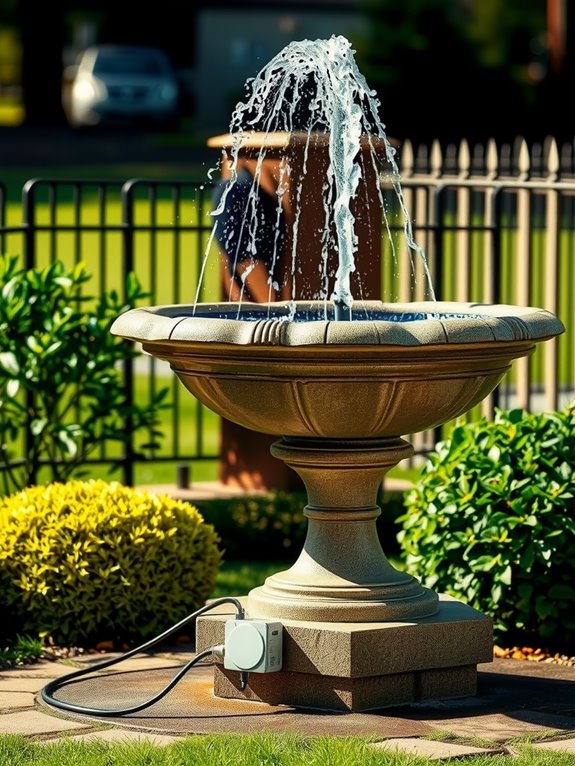
Where you place your fountain relative to your electrical outlet determines which voltage you should use. Distance significantly impacts your setup choices and performance outcomes.
Short Distances (Under 50 feet)
115V systems work fine for short distances. Most homes have standard 115V outlets, and no special installation is required.
Longer Distances (50+ feet)
230V becomes the better choice for distances over 50 feet. This higher voltage reduces voltage drop as electricity travels through the wires. You will also need thinner wire gauge, which saves money on materials.
How Voltage Drop Affects Performance
Extended cord lengths with 115V cause current to travel farther. This increases wire losses and can strain your home’s circuit. A 230V system delivers power more efficiently over greater distances. Your pump receives more consistent power with 230V, which improves motor longevity and reliability.
Installation Requirements for 230V
Converting to 230V requires a dedicated breaker and proper wiring. This investment in correct installation ensures your fountain operates safely and performs well over time.
Fountain Wiring: Gauge and Cord Length
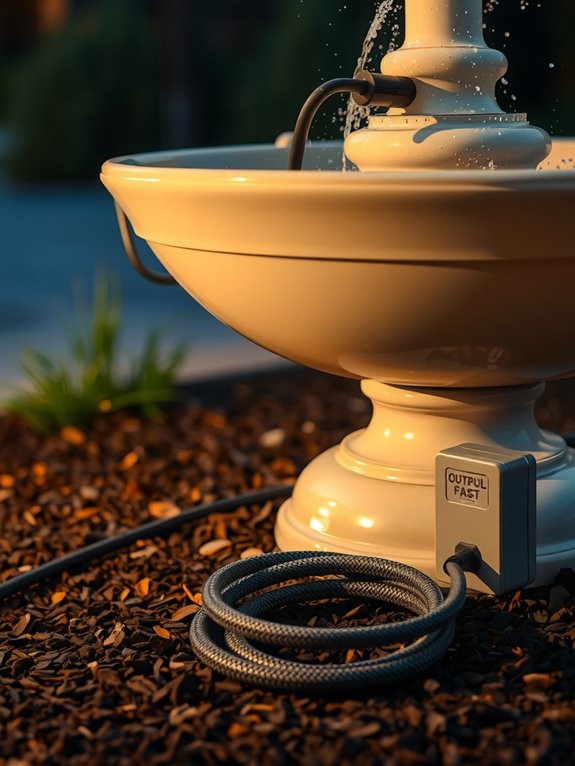
Wire gauge selection depends on two factors: your fountain’s motor size and the distance from your power source. Longer cord lengths cause voltage drop. This voltage drop can damage your motor.
A 1/2 HP fountain operating on 115V requires 12-gauge wire for cord runs up to 160 feet. The same 12-gauge wire on a 230V system can extend to approximately 650 feet. Higher voltage systems allow for longer distances because they experience less voltage loss over the same wire gauge.
Calculate the total distance from your main breaker to the motor before choosing your wire size. This measurement determines whether your fountain will operate safely and reliably.
Wire Gauge Selection Essentials
Wire thickness directly affects how much electrical power reaches your fountain pump. Thinner wires allow more electricity to escape as heat during travel through the wire, which reduces the power available to run your motor and creates a risk of overheating.
Matching gauge to voltage and distance
A 115V system with a 1/2 horsepower motor needs 12-gauge wire for cable runs up to 160 feet. A 230V system allows the same 12-gauge wire to extend approximately 650 feet. The increased voltage in 230V systems means less electrical loss over longer distances.
Calculating total distance
Measure the complete path from your main breaker to your pump location. Include all outlets and connections along the way. Many people measure only from the pond to the nearest outlet, which produces an incorrect distance and may result in an undersized wire.
Checking manufacturer requirements
Different motor sizes and voltages have specific maximum cord lengths listed in manufacturer documentation. These specifications ensure your pump operates safely and maintains consistent performance. Following these guidelines prevents both power loss and equipment damage from electrical stress.
Selecting the correct wire gauge protects your submersible pump’s function and extends its usable life.
Cord Length And Voltage
The distance your electrical cord travels from your home’s main breaker to your fountain pump determines whether your motor receives adequate power. Longer cords cause voltage drop, which reduces pump performance and shortens motor life.
For a 1 HP motor on 115V, keep your total cord length under 100 feet. The 230V system allows for longer runs because lower current requirements mean thinner wire can work effectively.
Wire gauge significantly affects how far you can run your cord. A 1/2 HP motor on 115V with 12-gauge wire reaches approximately 160 feet. The same motor and wire on 230V reaches about 650 feet. Heavier gauge wire reduces voltage drop and supports higher loads over extended distances.
Measure your cord length from your main breaker to the pump location. Do not measure only from your outdoor outlet to the fountain itself, as this measurement does not account for the full distance power travels through your system.
Powering Your Fountain: Patio vs. Lawn Setup
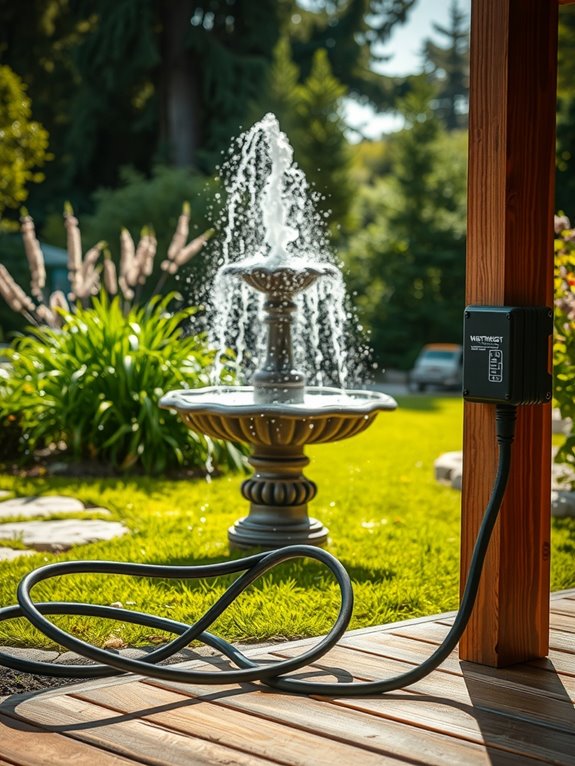
Where you place your fountain affects your electrical setup. Patio and lawn locations require different approaches to power and wiring.
Patio Fountains
Patio fountains sit close to your home’s outdoor power source. You can use standard 110-120 V outlets with outdoor-rated cords. Keep cords as short as possible to minimize voltage drop and maintain a smaller wire gauge. Run cords along edges or behind furniture to protect them from damage and foot traffic.
Lawn Fountains
Lawn fountains need more planning because of distance from your power source. Three main factors determine your setup:
- Longer distances require heavier wire gauge. Thicker wires prevent voltage loss when power travels to the pump.
- Buried wiring protects cables from damage and foot traffic in lawn areas.
- A 220-240 V circuit often works better for lawn fountains. Higher voltage reduces the current needed, which means you can use smaller wire sizes.
A licensed electrician can evaluate your specific location and determine the correct voltage and wire requirements for your fountain.
Why Submersible Pumps Are Your Best Bet
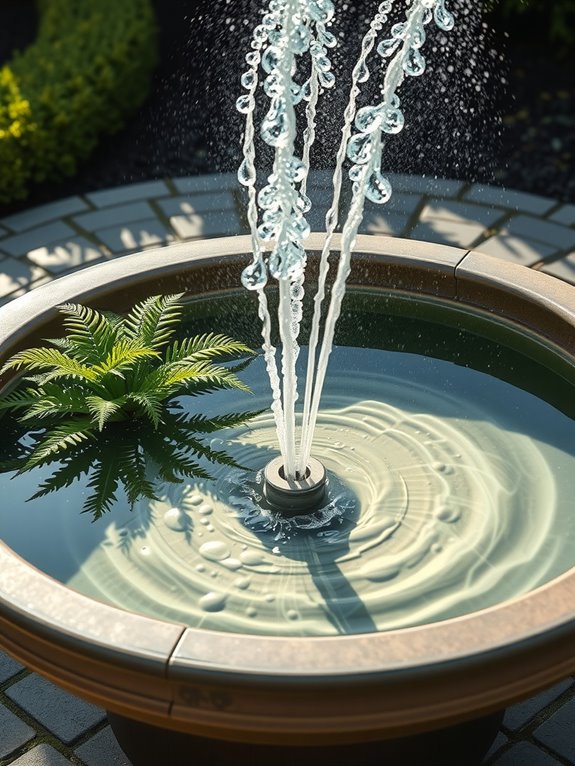
Submersible pumps sit underwater in your fountain basin. They operate quietly and reliably for most home setups. The motor and electrical parts stay submerged, which reduces weather damage and improves cooling performance. These pumps run on standard household voltage.
| Feature | Specification |
|---|---|
| Voltage Options | 115V or 230V |
| Horsepower Range | Up to 1 HP |
| Placement | Fully submerged |
When you choose a submersible pump, check three key specifications. First, note the GPH (gallons per hour) rating to match your fountain’s water flow needs. Second, measure the maximum lift height, which determines how high the pump can push water. Third, verify the outlet tubing size matches your fountain connections.
Maintenance requires basic steps. Unplug the pump before cleaning or inspecting it. Remove any debris from the intake opening to prevent clogs. Keep the pump fully submerged during operation, as running dry damages the motor. These pumps offer practical performance for residential fountain use without complicated installation or operation.
Fountain Wiring: DIY or Call an Electrician?
Fountain Wiring: DIY or Call an Electrician?
You need to decide which electrical work you can do yourself and when to hire a professional. Most basic fountain installation requires only simple tasks, but electrical work demands expertise for safety.
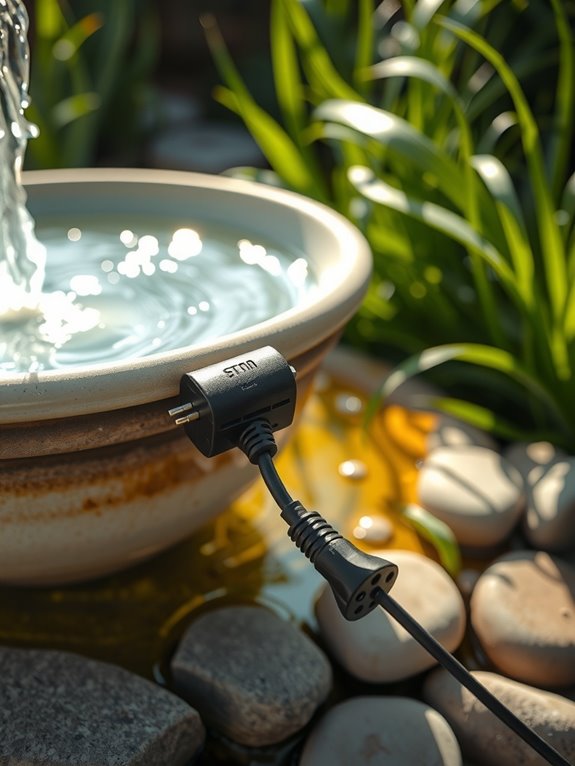
Simple setups allow you to plug a 110–120V fountain into a GFCI-protected outlet. This requires no special skills.
Complex installations need a qualified electrician. These include 220–240V units, longer distance runs requiring proper wire gauge, and dedicated circuits for lighting features. The circuit breaker must match your fountain’s amperage load. Longer distances from your main breaker may require thicker wire or higher voltage to minimize voltage drop.
Code compliance matters for safety. An electrician ensures your work follows NEC Article 680 safety standards. This prevents shock hazards and protects your family and property. When in doubt, hire a professional.
Keeping Your Pump Running: Basic Maintenance and Troubleshooting
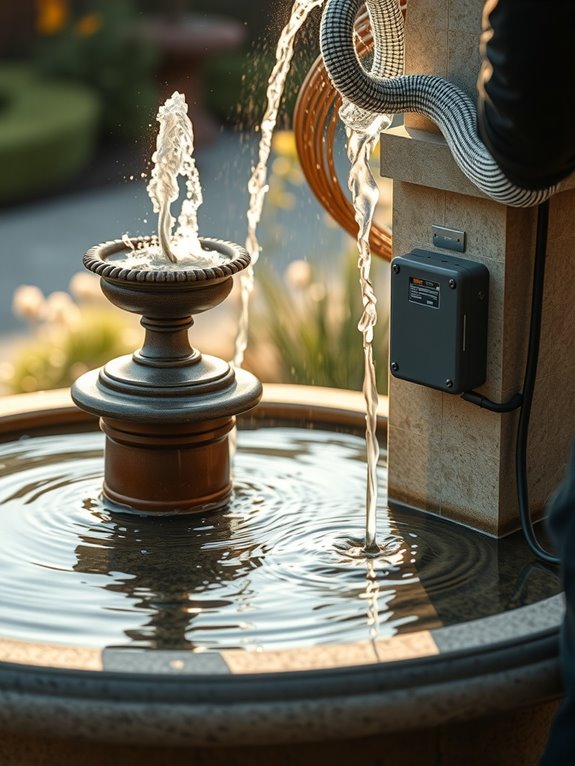
Your garden fountain’s pump is the heart of the system. Keeping it running smoothly requires regular attention and simple upkeep.
Unplug the pump before performing any maintenance work. Clean the intake regularly to remove debris that could damage the motor. Running the pump dry causes serious harm to internal components, so always keep the pump submerged in water.
Check your water level frequently and refill as needed to maintain proper submersion. Verify your GFCI outlet functions properly to protect against electrical hazards. Use outdoor-rated cords and keep all connections weatherproof and elevated off the ground to prevent water damage and shock risks.
Inspect tubing for cracks or leaks monthly. Small leaks can lead to water loss and reduced system performance over time.
Follow the manufacturer’s guidelines for your pump’s specific GPH (gallons per hour) rating and maximum lift height. These specifications determine how much water the pump can move and how high it can push water vertically. Exceeding these limits reduces pump efficiency and increases wear on internal parts.
These straightforward maintenance steps prevent costly repairs and extend your fountain’s lifespan significantly.