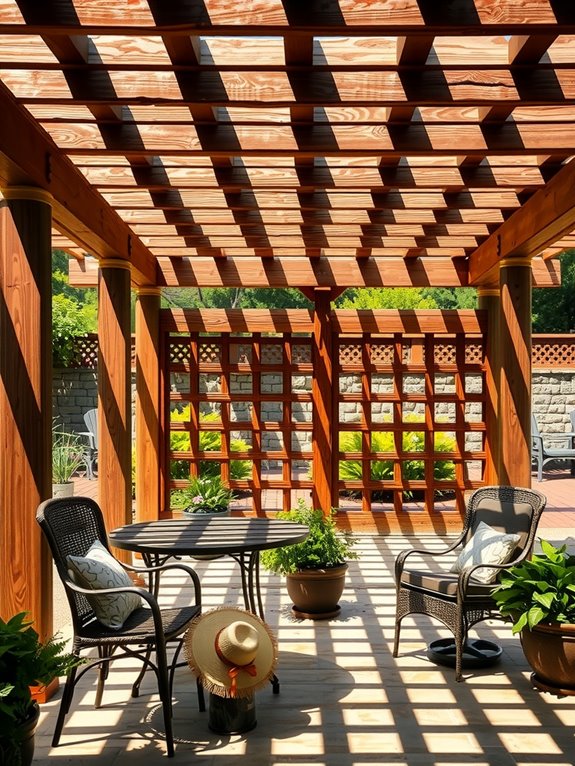
Traditional pergolas with open slats provide partial shade, not complete sun protection. The spaces between the slats allow sunlight to pass through. This creates a dappled light pattern underneath the structure. You will still experience some direct sunlight exposure while standing beneath it.
The spacing between slats directly affects how much sunlight gets blocked. Tighter slats block more sunlight than widely spaced ones. The roof orientation and slat angle also change the shade intensity.
If you need more coverage, you have several options. Climbing plants can grow across the pergola and add shade. Retractable canopies fold down when you need them. Fabric systems can block up to 93% of UV rays. Understanding your specific shade needs helps you select the right option for your space.
Do Traditional Pergolas Actually Provide Shade?
Do Traditional Pergolas Actually Provide Shade?
Traditional pergolas with open slats create partial shade rather than complete sun coverage. The spaces between slats allow sunlight to pass through, producing a dappled light pattern across the ground below. You remain exposed to some direct sunlight when standing under this structure.
Several design options increase shade effectiveness. A lattice weave pattern blocks more sunlight than standard parallel slats while still permitting light filtration. Climbing plants grown on the pergola structure develop into a living canopy over time. As vegetation expands, it gradually increases the shade level beneath the structure.
Retractable canopies offer adjustable shade control. You can modify the coverage based on weather conditions and your immediate needs. This feature allows flexible protection that you cannot achieve with fixed slat designs alone.
How Slat Design and Roof Orientation Control Light and Coverage?
Two main factors determine how much shade a pergola creates: slat arrangement and structural orientation. Tighter slats block more sunlight than widely spaced ones. Angled slats increase shade intensity compared to flat layouts. Roof orientation matters because the sun travels east to west throughout the day. A north-south positioned pergola creates different shade patterns than an east-west orientation.
| Feature | Shade Result |
|---|---|
| Tight slats | Maximum coverage |
| Wide spacing | Dappled light |
| Angled design | Increased blocking |
| Flat layout | Partial shade |
| Solid roof | Full protection |
Adjustable louvers allow you to tilt slats as the sun’s position changes during the day. This design gives you control over shade levels without permanent structural changes. Fabric canopies or solid roofs increase shade intensity significantly beyond traditional slatted designs. These additions provide fuller protection from direct sunlight than slats alone can offer.
Nine Shade Solutions That Transform Your Pergola
You can install motorized louvers on your pergola to adjust shade automatically. These louvers track the sun’s position throughout the day. This system gives you control over how much light and heat reach your space.
Climbing vines provide another shade option. Plants like clematis and ivy grow on your pergola structure. They create shade while adding visual interest. These plants also change appearance with the seasons.
Fabric canopies and retractable blinds offer flexible shade solutions. Motorized versions extend during peak sun hours. You can retract them when you want an open view or need access to the night sky. Outdoor blinds work similarly and provide adjustable coverage.
Motorized Louvers And Control
Motorized Louvers And Control
Motorized louvers let you adjust pergola shade using a button or voice command. These systems connect to smart-home technology and give you complete shade control from a remote device.
Key Features of Motorized Louvers:
- Aluminum louvers are durable and have a modern look
- Weather sensors automatically adjust the louvers based on sun intensity and rainfall
- Closed louvers provide rain protection and wind defense
- Remote controls allow you to change the shade from anywhere
- Automation systems manage climate control without requiring manual adjustments
When you close the louvers, your pergola becomes a sheltered outdoor space with full weather protection. The roof functions as a climate-control system that regulates sun exposure and protects against rain and wind.
Motorized louver systems cost more than traditional shading methods. However, the ability to control shade automatically and adjust it easily makes these systems worth the investment for homeowners who want a multipurpose outdoor solution.
Natural Plant-Based Canopies
A living canopy uses climbing plants like grapes and clematis vines attached to a pergola framework. These plants create increasing shade density as they mature. The shade strengthens each season as the vines develop more foliage.
The canopy provides seasonal shade that changes throughout the year. Summer months produce thicker foliage for maximum shade coverage. Winter allows light to penetrate through thinner growth. The interwoven vines also create privacy screening while maintaining an open-air feel.
Regular pruning and training maintain the canopy’s structure and coverage. You direct the vines along the pergola framework to maximize shade distribution across the space. Consistent care ensures even growth patterns. The climbing plants respond to proper maintenance with denser foliage and improved visual appeal over months and years.
Fabric And Retractable Options
Fabric and Retractable Shade Systems
Fabric and retractable shade systems provide flexible alternatives to permanent plant-based canopies. These solutions adapt to your changing needs throughout the day and across different seasons.
Key features of fabric and retractable options:
- Fabric shades use HDPE material and UV-resistant coatings that block up to 93% of UV A and B rays
- Retractable canopies extend during peak sun hours and retract to reveal the sky. Motorized versions offer remote control operation
- Outdoor curtains provide adjustable side shading for privacy and variable light control
- Motorized shading systems increase convenience through remote control, though they add cost and system complexity
- Most fabric and retractable systems install with lightweight components, making DIY installation straightforward
You control the amount of partial shade and direct sun exposure based on your needs. Fabric and retractable shade cloth solutions provide flexible sun control without permanent installation. They work well for patios and outdoor spaces where shading requirements change with the seasons.
Climbing Plants or Retractable Canopies?
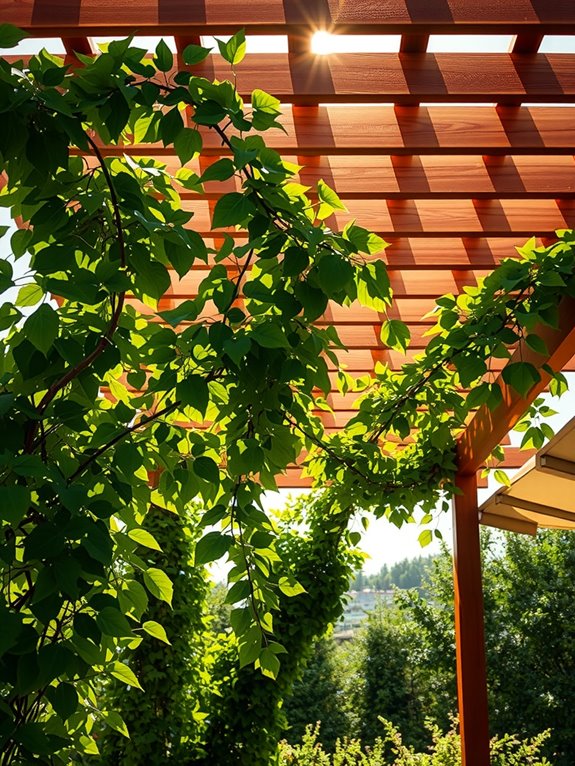
When choosing shade for your pergola, you have two main options: climbing plants or retractable canopies.
Climbing plants like grapevines and flowering vines create a living canopy that expands over time. You train the vines onto a trellis framework. These plants provide seasonal shade, increase privacy, and control natural light entry. However, climbing plants require regular maintenance. You must water them consistently and trim them seasonally to keep them healthy.
Retractable canopies provide immediate shade without ongoing plant care. You can adjust the amount of natural light by opening or closing the fabric covering. These systems offer quick shade solutions and do not require long-term maintenance.
The two options differ in their development timeline and flexibility. Climbing plants develop gradually and filter light through their leaves. Retractable canopies deliver instant coverage and allow you to control shade levels throughout the day.
Your choice depends on your priorities. Select climbing plants if you want to invest time in maintenance and prefer gradual shade development. Choose a retractable canopy if you want convenience, immediate coverage, and minimal upkeep.
Pergola Louvered Roofs vs. Permanent Panels
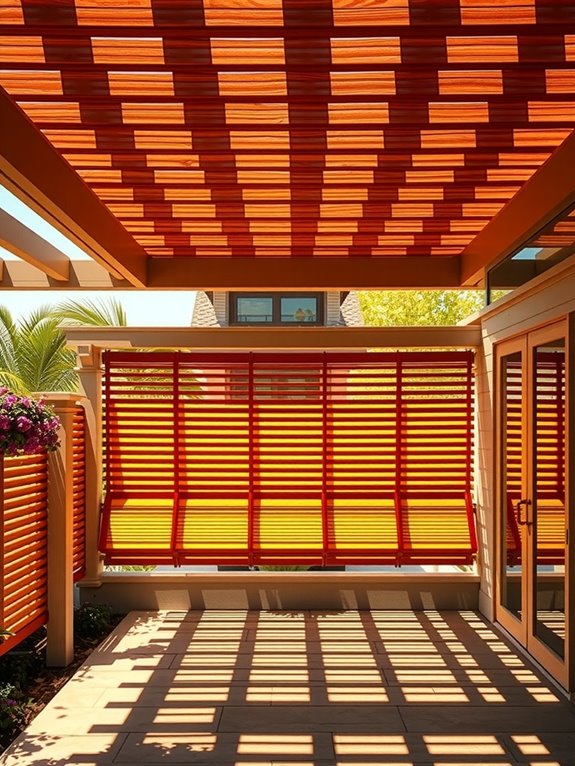
Louvered Roofs:
- Adjustable slats tilt to control light and ventilation
- Motorized options allow remote operation for sun control and rain protection
- Block 50–90% of sunlight depending on slat spacing and angle
- Enable you to customize exposure based on your daily needs
Permanent Panels:
- Fixed roof elements made from polycarbonate, metal, or insulated materials provide superior weather protection and year-round coverage
- Reduce natural light compared to louvered systems
- Require minimal maintenance once installed
Louvered roofs emphasize adjustability and airflow. Permanent panels prioritize weatherproofing and durability. Your choice depends on whether you want flexible light management or consistent weather protection for your outdoor space.
Matching Shade to Climate and Budget
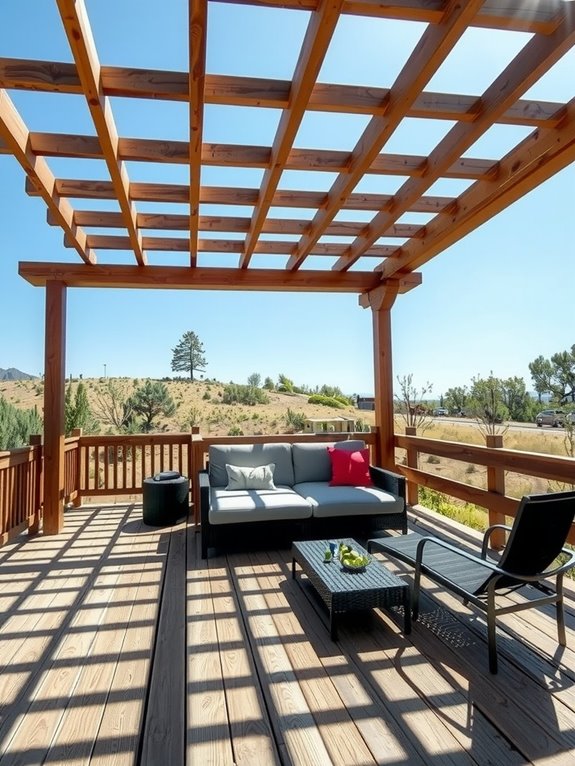
Your climate determines which pergola shade systems work best for your location. Hot, sunny regions require UV protection. Solid roofs and adjustable louvered systems provide this protection effectively. These weather-resistant materials handle intense sun exposure.
Moderate climates allow for more flexible options. Retractable canopies and shade sails offer both flexibility and affordability. Fabric canopies cost less than permanent structures but may need replacement within 5-10 years depending on material quality and sun exposure.
Climbing vines create gradual shade without upfront costs. Examples include clematis, ivy, and climbing roses. These plants require regular pruning and training to maintain desired coverage. Initial establishment typically takes 2-3 growing seasons.
Consider your area’s specific weather patterns when selecting materials. Rainfall and wind patterns affect durability and maintenance needs. Aluminum louvers and polycarbonate roofs resist weather damage longer than fabric options. Aluminum systems last 15-20 years. Polycarbonate typically lasts 10-15 years. Fabric canopies last 5-8 years.
Match your climate’s demands with your available budget. This approach ensures adequate shade and weather protection while controlling long-term costs. Factor in both initial purchase price and replacement frequency when comparing options.
Already Have a Pergola? Four Ways to Add Shade
If you already have a pergola in your yard, you can add shade without building a new structure. Several shade options work with your existing pergola and fit different budgets.
Consider these five additions:
- Retractable canopy: This system extends during peak sun hours and retracts when the sun sets. It provides flexible sun protection that you can adjust based on time of day.
- Climbing plants: Grapevines grow on your pergola structure and create seasonal shade. The plants also add visual interest to your yard.
- Shade cloth: Lightweight fabric panels attach to your pergola roof. These panels block ultraviolet (UV) rays and reduce heat underneath the structure.
- Outdoor curtains: Fabric panels hang from the pergola frame. You can draw them closed to block sunlight and create privacy in your outdoor space.
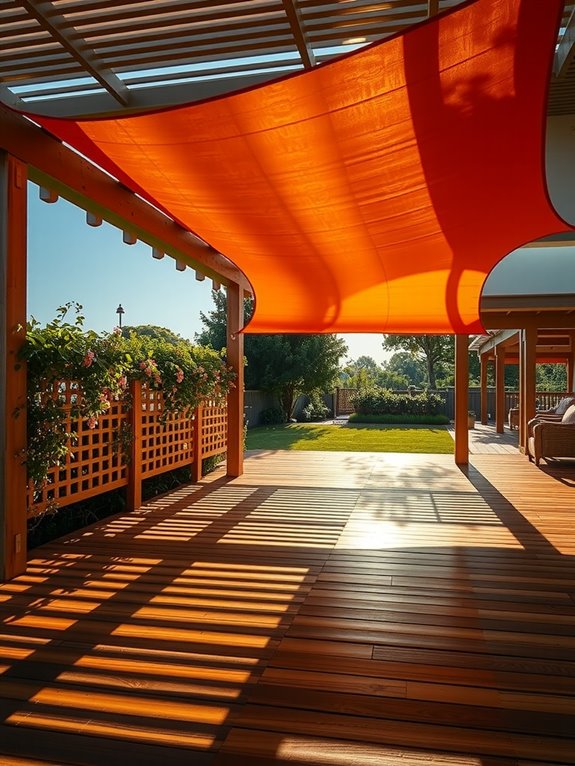
- Shade sails: Large triangular or rectangular panels attach to your pergola. They deliver substantial sun protection and serve as decorative elements.
You can use one shade option or combine multiple solutions. Mixing different shade methods allows you to create the exact coverage your space needs throughout different seasons.
Which Shade Materials Actually Hold Up Year-Round?
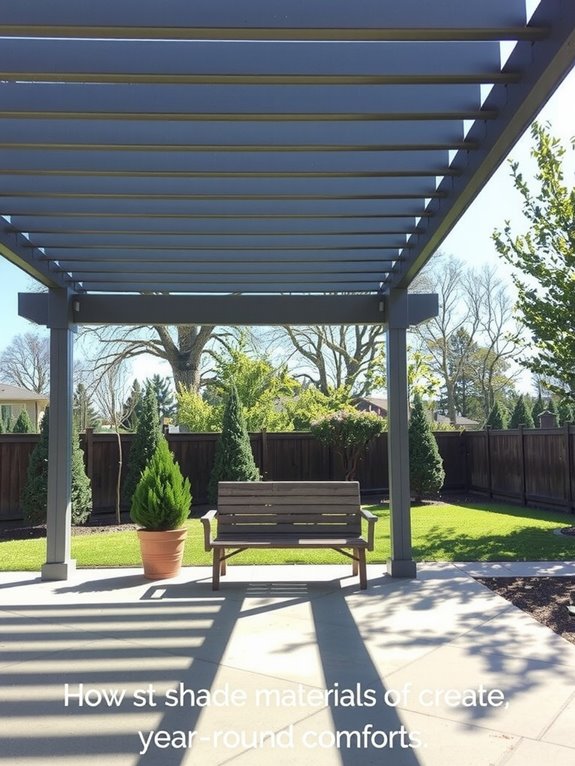
When selecting shade materials for your pergola, durability matters because weather exposure can damage or wear down solutions quickly. Aluminum louvers and motorized shading systems resist rain and sun damage year-round. Solid roof panels made from polycarbonate or metal provide maximum rain protection and insulation, though they reduce natural light. Weather-resistant fabrics used in motorized systems offer UV protection and consistent performance across seasons.
Shade cloth and tension fabrics filter UV rays effectively but require periodic replacement due to sun, wind, and rain wear. Lattice panels with climbing plants provide partial, seasonal shade with airflow. These panels demand more maintenance than solid options.
Your choice depends on balancing three factors: protection level, light needs, and replacement frequency. Consider your climate when selecting a shading option that will last year after year.