
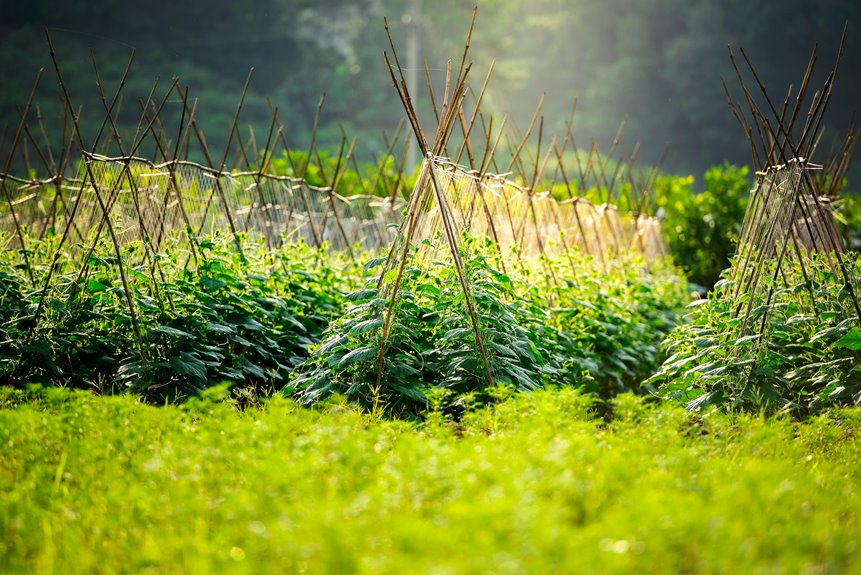
To trellis cucumbers in a raised bed, first select a location that receives 6–8 hours of direct sunlight daily. Fill the bed with well-draining soil mixed with compost to provide nutrients for plant growth.
Space cucumber plants 6–12 inches apart near the base of the trellis. Install a sturdy trellis on the north side of the bed before planting to avoid shading the plants. Drive the trellis posts 12 inches deep into the soil for stability.
As cucumber vines grow, gently guide their tendrils toward the trellis framework. Loosely secure the vines to the structure using twine, attaching it at leaf nodes to avoid damaging the stems.
Water the plants deeply twice each week to keep the soil consistently moist. Apply slow-release fertilizer at planting time to supply nutrients throughout the growing season.
Check the plants weekly for common pests such as cucumber beetles, which feed on leaves and fruit. Early detection and removal of pests prevent widespread damage to your vertical cucumber garden.
Choose a Sunny Spot and Enrich Your Raised Bed Soil
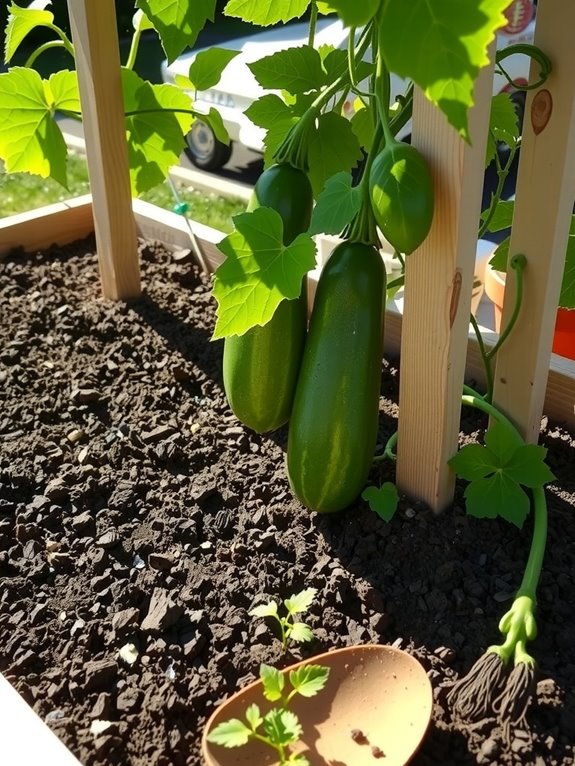
Cucumbers require direct sunlight for most of the day to produce healthy vines and fruit. Select a location in your raised bed that receives at least six to eight hours of direct sun daily.
Fill your raised bed with rich, well-draining soil mixed with compost or well-rotted manure. These organic materials add essential nutrients that cucumber transplants need to establish strong root systems. Well-draining soil prevents water from pooling around the roots, which can cause rot.
Soil temperature significantly affects cucumber growth. Maintain soil temperature at 60°F or above for steady development. Wait until outdoor temperatures remain consistently warm before transplanting seedlings outside. This timing allows your cucumbers to establish successfully and develop strong roots on their trellis support system.
Plan Your Spacing, Then Select a Trellis That Fits
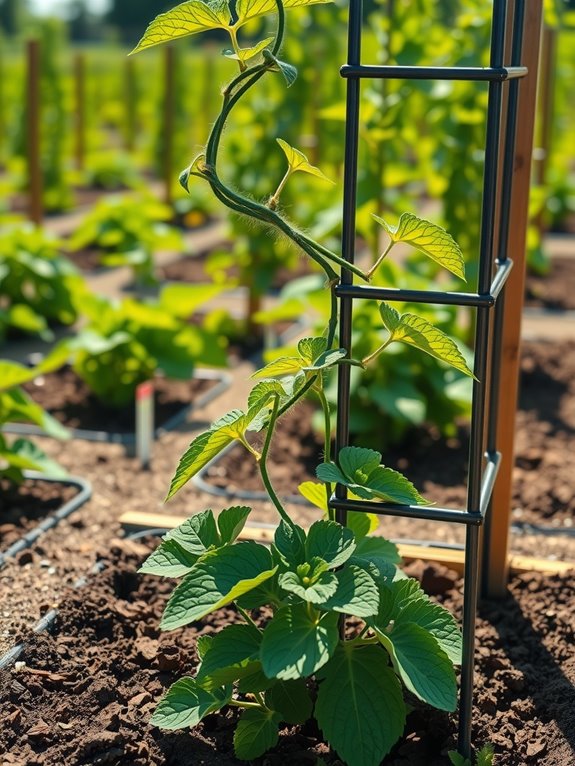
Space cucumber plants 12–18 inches apart in your raised bed. This spacing allows airflow between plants and gives you room to train the vines. If you plant directly at the trellis base, use 6–12 inch spacing instead.
Select a trellis type that matches your bed width. Arch, panel, A-frame, and string trellises each work for different space sizes. Position the trellis on the north side of your bed. This placement maximizes sun exposure for the vines and prevents shade on shorter plants below.
Your trellis must have two key features. It needs wind resistance to stay stable in outdoor conditions. It must also support the weight of mature cucumber plants with full foliage and fruit.
Begin training vines when they reach a few inches in length. Use soft ties or fabric strips to gently attach them to the trellis structure. Avoid tight bindings that can damage tender stems.
Install Your Trellis Securely Before Planting
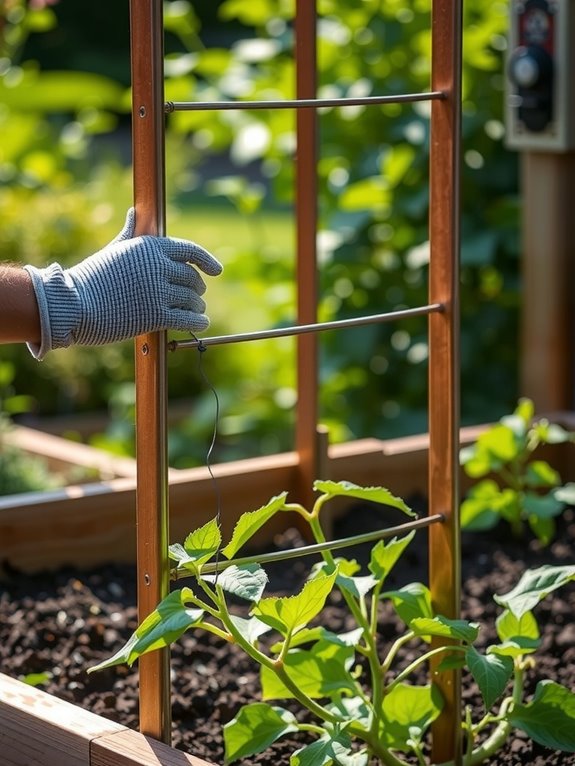
Install your trellis before planting cucumber seeds or seedlings. This timing prevents damage to developing vines and ensures proper anchoring.
Install your trellis before planting cucumber seeds or seedlings to prevent vine damage and ensure proper anchoring.
Follow these steps:
- Drive trellis posts 12 or more inches into the soil at the raised bed’s edges. Deep anchoring prevents shifting during the growing season.
- Choose a sturdy support structure. An arch trellis or A-frame trellis works well for most bed widths. The structure must support the weight of mature fruit and resist wind forces.
- Position your trellis on the north side of the raised bed. This placement prevents shade from falling on shorter plants that need full sun exposure.
- Test the entire structure for stability. Check that posts remain firm and the framework holds steady when you apply pressure.
Secure posts and a strong support structure create the foundation for cucumber vines to climb upward. Proper trellis installation also allows vines to receive consistent sun exposure throughout the growing season.
Plant Cucumbers at the Base and Guide Tendrils Upward
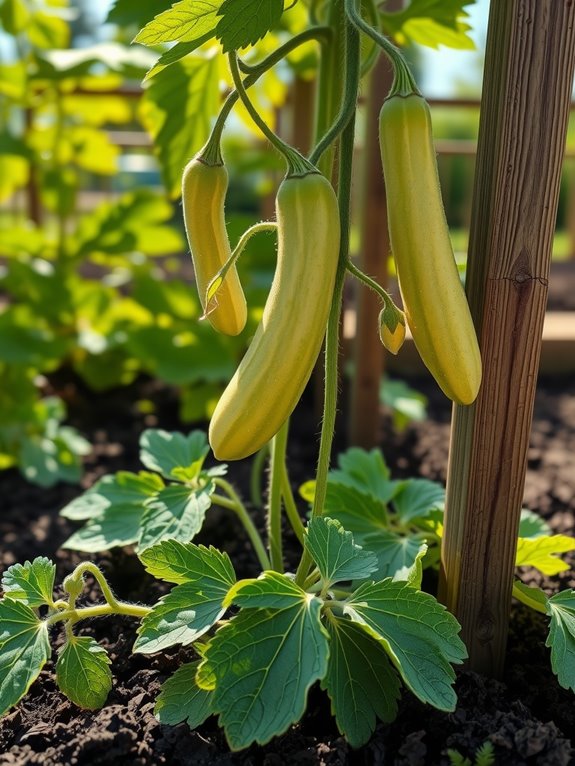
Plant cucumber seeds or transplants 6–12 inches apart at the trellis base. This spacing prevents overcrowding and allows vines access to light and air without competing with neighboring plants.
Guide tendrils toward the trellis framework as vines emerge. Loosely secure them with ties or twine at leaf nodes when vines reach a few inches long. Early training prevents tangled growth and makes redirection easier than managing established vines.
Monitor attachment points regularly as the cucumber plant grows. Adjust connections and maintain slack at each tie point to prevent constriction of new stems and leaves. Loose connections allow for continued expansion while supporting the plant’s upward growth along the trellis structure.
Water Deeply, Fertilize Monthly, and Scout Weekly for Pests
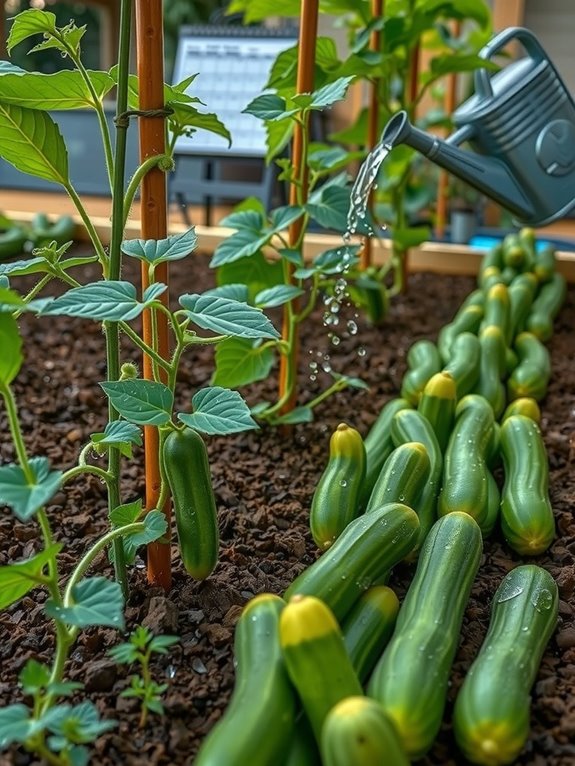
Consistent watering and proper nutrition keep your trellised cucumbers healthy and productive throughout the growing season. Follow these essential care steps to establish a strong foundation.
Water deeply at the base of each plant twice weekly. The soil should stay consistently moist, but avoid wetting the foliage. Wet leaves can promote disease development. Mulch around your raised garden bed to conserve soil moisture and reduce how often you need to irrigate.
Apply slow-release organic fertilizer when you plant the cucumber seeds or seedlings. At one month old, switch to liquid kelp and apply it again during the flowering and fruiting stages. This feeding schedule provides steady nutrition as the plant’s needs change.
Scout for pests and diseases every week. Look for cucumber beetles on both the tops and undersides of leaves. Check for powdery mildew, which appears as a white coating on plant surfaces. Catching problems early makes them easier to control. These weekly inspections minimize pest damage on your vertical vines and support steady growth throughout the season.