A standard 16-foot cattle panel works best for most garden trellises. When bent into a U-shape arch over a 4–5 foot path width, it creates a trellis that reaches 4–5 feet high. This height allows you to harvest beans, cucumbers, and squash without excessive stretching. The 50-inch panel width provides stability when paired with spaced posts.
Shorter versions ranging from 8–12 feet work well for vertical trellises if a full 16-foot panel does not fit your space. The path width directly affects the final arch height. Understanding this relationship helps you plan your trellis design accurately.
Start With the Standard 16-Foot Cattle Panel
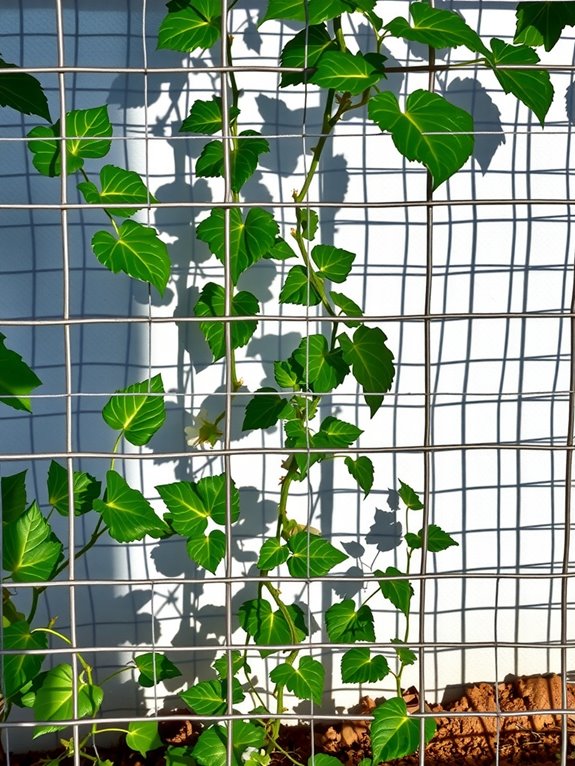
Start with the standard 16-foot cattle panel. This panel length provides enough material to form multiple arch styles without requiring frequent joins. The 50-inch width gives adequate space to construct a stable trellis arch when paired with properly spaced posts.
A single 16-foot panel minimizes extra fittings and simplifies attachment to T-posts or stakes. Most gardeners find this size practical for their first trellis arch project. The standard dimensions work well for typical garden layouts and plant support needs.
If your garden requires taller or longer spans, combine multiple panels strategically. Selecting shorter lengths creates more joints and requires additional fasteners. Longer panels reduce the number of connections needed in your structure.
How Does Cattle Panel Length Determine Your Arch Height?
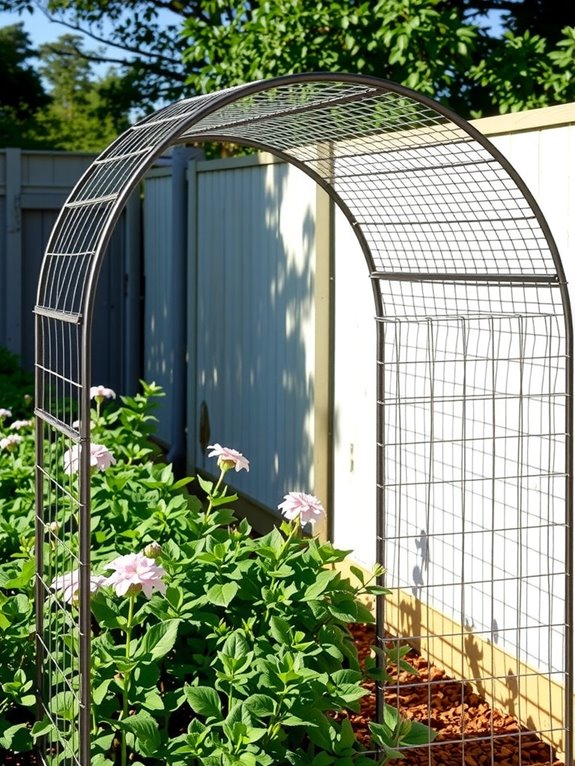
How Cattle Panel Length Determines Your Arch Height
A cattle panel’s length directly determines how tall your arch can become when bent into a U-shape. A standard 16-foot panel sets the maximum arch height you can achieve. Longer panels allow taller arches, while shorter panels limit your maximum height.
The path width between your arch legs affects the final arch height you can reach with any given panel length. Narrower spaces between legs produce taller arches. Wider spaces between legs produce shorter arches.
| Panel Length | Path Width | Resulting Arch Height |
|---|---|---|
| 16 feet | 3 feet | Taller |
| 16 feet | 5 feet | Moderate |
| 16 feet | 7 feet | Shorter |
If you need an arch taller than your 16-foot panel allows, you can cut or reconfigure the panel to achieve different dimensions.
Path Width and Arch Height: What to Measure
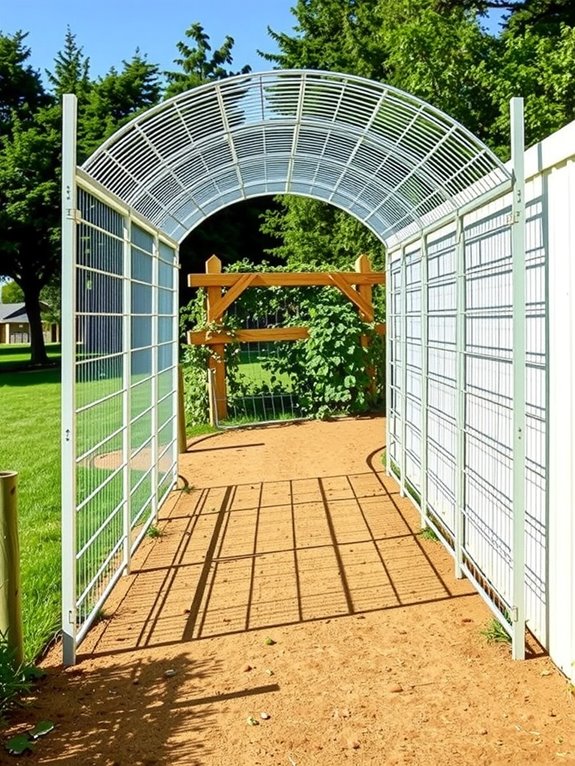
When you plan a cattle panel arch, measure your garden path width first. This measurement determines your arch height. Wider paths create shorter arches, while narrower paths produce taller arches from the same 16-foot panel.
For trellis dimensions, maintain a 4- to 5-foot width between posts. This span prevents base bowing and ensures stability. The distance also balances accessibility with structural support.
Once you choose your path width, you can calculate your expected arch height. Narrower paths allow the panel to curve higher, which gives you more vertical growing space. Measure your available garden space to determine which arch height works best for your needs.
Why 4–5 Feet Works Best for Most Gardens
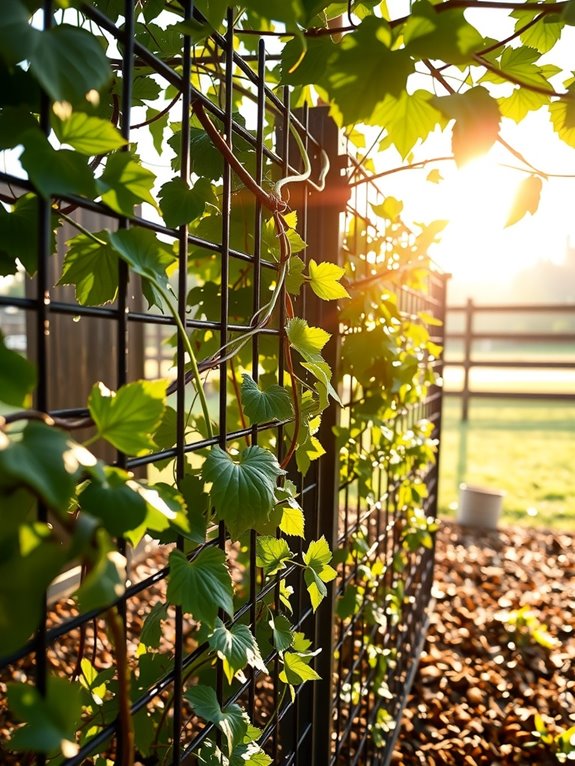
A 4–5 foot trellis height provides practical advantages for most gardeners. This measurement balances human ergonomics with plant support needs. You can reach vines without excessive stretching or bending during pruning and harvesting. Climbing plants experience less stem stress when supported at this moderate height.
A 4–5 foot cattle panel accommodates several common climbing vegetables. The structure prevents overcrowding and maintains proper vine spacing. Good spacing allows air to circulate around foliage, reducing disease risk.
| Feature | Benefit | Plant Type |
|---|---|---|
| Easy reach | Efficient maintenance | Beans |
| Vine spacing | Airflow circulation | Cucumbers |
| Stability | Structural support | Squash |
This height works well for versatile planting combinations. The framework supports beans, cucumbers, and squash effectively. Plants can grow productively throughout the season without excessive crowding or structural failure.
Measure Your Space for the Right Cattle Panel
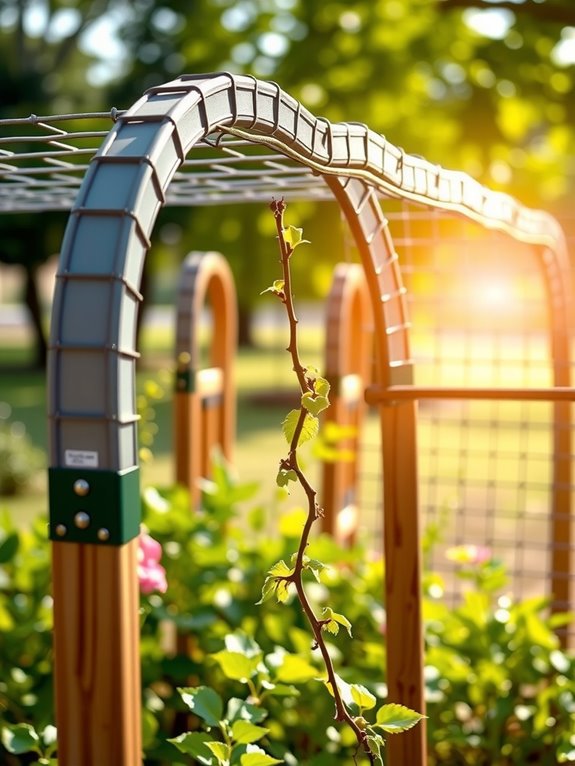
Measure your garden’s width and path size before selecting a cattle panel. The distance you want to span directly affects the arch height. Standard 16-foot panels work well for creating arches with a 5-foot base spacing between posts. This spacing provides the stability needed to prevent the legs from bowing outward. Your path width determines whether you get a short, wide arch or a tall, narrow one. Take accurate measurements of your available garden space to plan the correct panel bend.
Path Width Determines Height
The distance between the edges of your garden path directly determines your arch height when planning a trellis design. Wider paths produce shorter arches. Narrower paths create taller arches. This occurs because the cattle panel‘s arc compresses differently based on how far apart you space the legs.
A 4–5 foot path width works well for most gardens. This width allows you to access and maintain your plants easily. A standard 16-foot, 50-inch-wide cattle panel requires legs spaced about 4–5 feet apart to prevent base bowing.
Measure your available space before selecting your cattle panel length. Choose your post arrangement based on your desired arch height. This approach ensures your trellis design fits your garden layout.
Standard Panel Length Guidelines
Once you measure your garden space, a standard 16-foot cattle panel serves as your starting point for building an arch structure. You can use the entire panel length to create one tall arch. Alternatively, you can divide it into smaller sections to make multiple arches along a garden trellis.
A standard cattle panel measures 50 inches wide. This width affects your arch height and overall shape. Position supports approximately 4 to 5 feet apart along the base. This spacing prevents the base from bowing and keeps the arch structurally sound.
Understanding these standard panel dimensions helps you plan your structure. It also ensures proper support throughout your garden design.
Spacing Requirements For Stability
The spacing between support posts determines whether your cattle panel arch maintains its shape or gradually bows outward under weight. Posts positioned 4–5 feet apart distribute the load of climbing crops evenly across the cattle panel and prevent base bowing.
Your 16-foot panel length sets the maximum span available. Narrower spacing between posts creates taller arches. Wider spacing produces shorter arches. Before installing your trellis, measure your site width and evaluate ground conditions. These factors help you select appropriate post spacing that fits your garden layout and supports your intended climbing crops.
Other Panel Sizes: When and How to Use Them
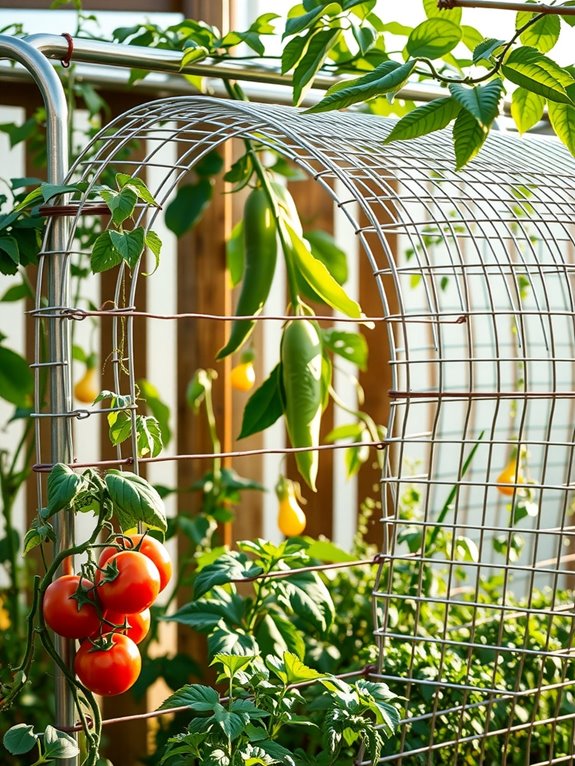
What if your garden space doesn’t accommodate a full 16-foot cattle panel? You can cut or notch panels to create shorter versions that fit your needs. Cut cattle panel sizes typically range from 8 feet to 12 feet long, depending on your configuration.
Shorter panels work well for vertical trellises along a single bed or between raised beds. Notching panels creates even narrower options for tighter spaces. When you use shorter panels, plan your arch height and base width carefully. You must ensure the remaining panel sections align with T-posts for stable anchoring.
Full-length panels excel for arched trellises and tunnel-style rows. Cut panels suit individual bed setups. This flexibility allows you to customize your garden’s trellis design to match your specific layout and plant support needs.