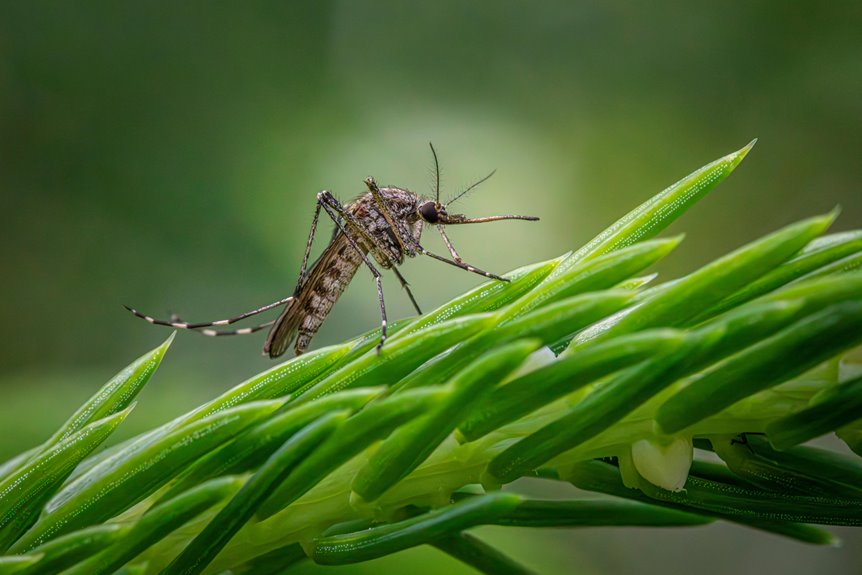
Yes, garden fountains can attract mosquitoes. Female mosquitoes lay eggs in still water collected in fountain basins. When water remains stagnant, larvae develop in safe conditions. Debris and algae accumulation in the basin creates an ideal environment for mosquito development.
You can prevent mosquito breeding by keeping your pump running continuously. Moving water disrupts the calm conditions that mosquitoes require for egg-laying and larval development. Weekly cleaning removes organic material such as leaves, dead insects, and algae that support larvae growth. These practices eliminate the still water and food sources mosquitoes need to reproduce.
Do Garden Fountains Attract Mosquitoes?
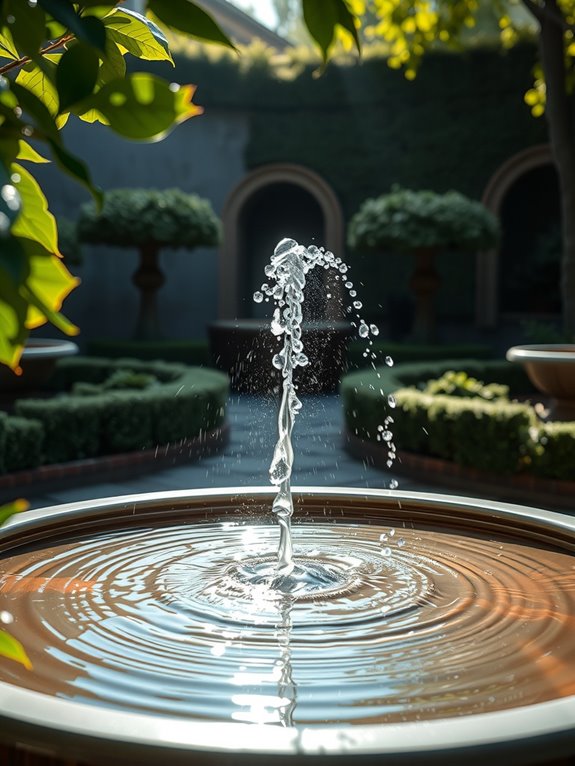
Yes, garden fountains can attract mosquitoes. Female mosquitoes lay eggs in standing water, and fountain basins provide ideal locations for egg-laying. Water that remains still creates conditions where mosquito larvae develop. Debris such as leaves and algae accumulates in stagnant water, providing food and shelter for larvae.
Moving water prevents mosquito breeding. When fountain water circulates continuously, the surface disruption stops larvae from developing. Regular maintenance reduces mosquito populations in your fountain. Clean debris from the basin regularly and keep the water in constant motion. Monitor the water for any signs of mosquito larvae, which appear as small dark specks or wriggling shapes just below the surface. Consistent fountain operation and upkeep provide the most effective defense against mosquitoes using your fountain as a breeding ground.
Keep Your Fountain Flowing: Prevention Basics

Keep your fountain pump running consistently. Mosquitoes avoid laying eggs in moving water. Weak water flow or clogged intakes create stagnant pockets where mosquitoes breed successfully.
Check your fountain weekly for algae, debris, and larvae. These regular inspections prevent mosquitoes from establishing colonies in the water. Fountains with moving jets, sprays, or bubblers stop breeding more effectively than fountains with little or no circulation. The stronger the water movement, the less likely mosquitoes will use your fountain as a breeding site.
Continuous Water Movement Matters
Mosquitoes require calm water surfaces to lay their eggs. Keeping your fountain’s water in constant motion prevents mosquito breeding. Continuous water movement disrupts the still conditions that mosquitoes need.
Running your fountain daily stops stagnant water from forming in the basin. Strong water circulation makes it difficult for mosquito larvae to develop. Weak pump flow or turned-off pumps create pockets where stagnant water collects. These pockets turn your fountain into a breeding ground for mosquitoes.
Even short daily operating periods maintain proper water circulation. This consistent operation keeps your fountain functioning as a water feature instead of a mosquito habitat.
Regular Maintenance Prevents Breeding
Clean your fountain weekly to prevent mosquitoes from breeding in it. Remove algae, leaves, and organic debris from the basin and pump. These materials attract mosquito larvae and create ideal breeding conditions.
Trim vegetation around your fountain. This reduces the amount of debris that falls into the water. Mosquitoes need standing water to reproduce, so keep your pump running continuously to maintain water movement.
Check your fountain’s surface regularly for larvae. Mosquito larvae display visible breathing and wriggling movements near the water surface. Remove larvae as soon as you notice them, especially when they are small.
Use BTI larvicides such as Mosquito Dunks for targeted larval control if needed. These products work in standing water and pose minimal risk to other organisms. BTI is a bacteria that kills mosquito larvae without harming beneficial insects or plants nearby.
Why Fountain Circulation Breaks the Mosquito Breeding Cycle
Moving water prevents mosquitoes from laying eggs on the fountain’s surface. The calm, still water that mosquitoes require for reproduction disappears when the pump circulates continuously. Mosquito larvae cannot develop properly in water that moves constantly. They need undisturbed conditions to complete their life cycle, which includes the egg, larva, pupa, and adult stages. A strong and consistent water circulation eliminates these still conditions. Stagnant water or weak water flow allows mosquitoes to finish their development cycle successfully. By maintaining continuous fountain operation, you remove the breeding environment that mosquitoes depend on.
Still Water Attracts Eggs
Female mosquitoes seek calm water to lay eggs. Garden fountains with stopped or weakened water circulation create ideal breeding conditions. Mosquito larvae require undisturbed environments to develop through their growth stages.
Moving water prevents egg-laying and larval development. Active fountain pumps maintain constant circulation that keeps water unstable. Larvae cannot survive the continuous movement needed for their progression through instars, or developmental stages.
Debris accumulation worsens stagnation problems. Leaves, algae, and organic matter gather in still basins, providing shelter and nutrients for egg-laying females. Mosquito populations increase significantly when water movement decreases, particularly during warm months when breeding rates accelerate. Temperature ranges between 80-90 degrees Fahrenheit maximize reproductive activity.
Movement Disrupts Larval Development
Moving water prevents mosquito larvae from developing into adults. Mosquito eggs require still water to hatch and grow. Water circulation disrupts the stable conditions that larvae need to survive.
The table below shows how different circulation levels affect larval survival rates:
| Circulation Level | Larval Survival | Stagnant Zones | Development Risk |
|---|---|---|---|
| Strong flow | Low | None | Minimal |
| Moderate flow | Reduced | Few | Decreased |
| Weak flow | Moderate | Multiple | Increased |
| Off pump | High | Extensive | Severe |
| Blocked flow | Very high | Throughout | Critical |
Water movement destabilizes the larval environment. Larvae cannot establish themselves in areas with consistent water flow. A continuously operating fountain with a functional pump provides effective mosquito prevention. Weak circulation or blocked water features still allow mosquito-friendly microhabitats to form. Features with active movement, such as jets and waterfalls, offer better protection than stationary water designs.
Continuous Circulation Prevents Breeding
Fountain circulation breaks the mosquito breeding cycle by keeping water in constant motion. Moving water disrupts the conditions that mosquitoes need to lay eggs and develop larvae successfully.
How water movement prevents breeding:
Fountain jets and waterfalls create constant water movement that eliminates still pockets where mosquitoes deposit eggs. Daily operation, even for short periods, maintains water movement and prevents larvae from settling in one location. Strong water circulation keeps larvae in turbulent conditions rather than calm, undisturbed spots, which hinders their development.
Maintenance requirements:
Running your fountain regularly ensures breeding prevention through consistent water movement. Clogged intakes or blockages weaken circulation and allow still pockets to form, which attract mosquitoes. Movement-focused features provide better larvae disruption than static basins alone.
Add Fish, Dunks, and Oils to Problem Fountain Water
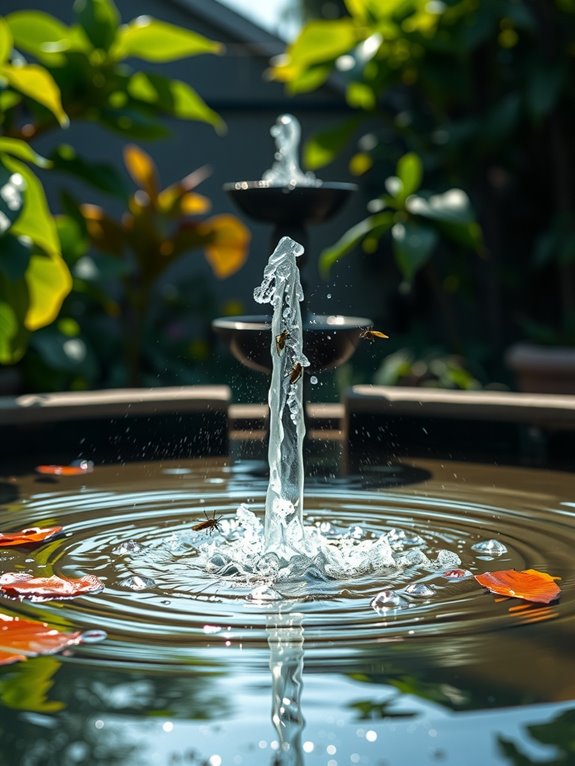
If your fountain’s water attracts mosquitoes, several treatment methods can stop larvae from developing. Fish like Gambusia, koi, or minnows eat mosquito eggs and larvae. Adding these fish directly to your fountain water provides natural control without chemicals.
Mosquito Dunks contain BTI, a bacteria that targets only mosquito larvae. You can place these dunks in problem fountains to kill larvae while keeping fish, birds, and other wildlife safe. This method works alongside fish populations in the same fountain.
Oils and cinnamon-based treatments harm some aquatic life. You should avoid using these products if your fountain contains fish or frogs. Water circulation combined with these methods creates an effective system for protecting your fountain from mosquitoes.
Design Depth and Circulation Into New Features
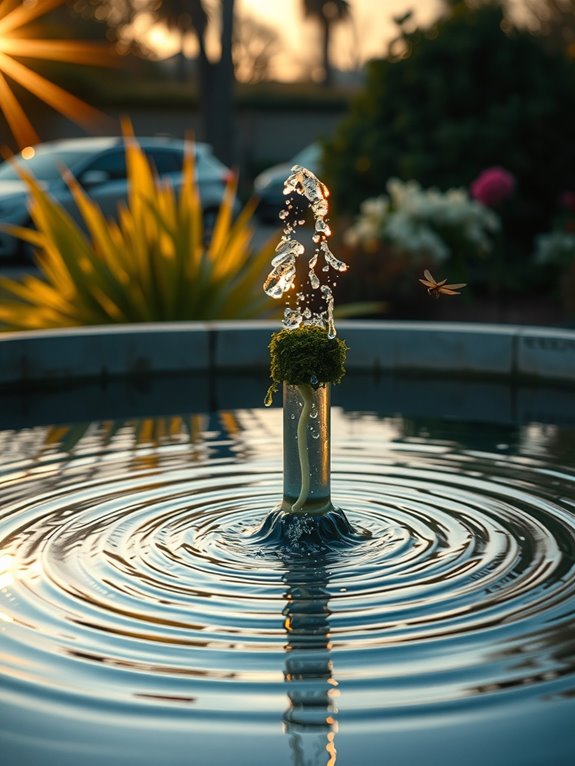
Design Depth and Circulation Into New Features
How can you stop mosquitoes from breeding in your fountain before installation? You need to design your water feature with mosquito prevention in mind from the start.
Smart design choices include:
- Installing water deeper than 2 feet, which prevents the shallow-water larval habitat where mosquitoes breed
- Creating steep walls and vertical drops that reduce calm surface areas where eggs settle
- Adding continuous water circulation through fountains, jets, or waterfalls that disrupt egg-laying zones
Moving water is your strongest defense against mosquito breeding. Ensure your pump runs continuously and check it regularly for clogs or weak flow. Stagnant water creates the calm conditions mosquitoes need to lay eggs. Active water circulation eliminates these conditions. By building depth and strong circulation into your fountain design from the beginning, you will create an environment where mosquitoes cannot breed.
Common Fountain Mistakes That Invite Mosquitoes
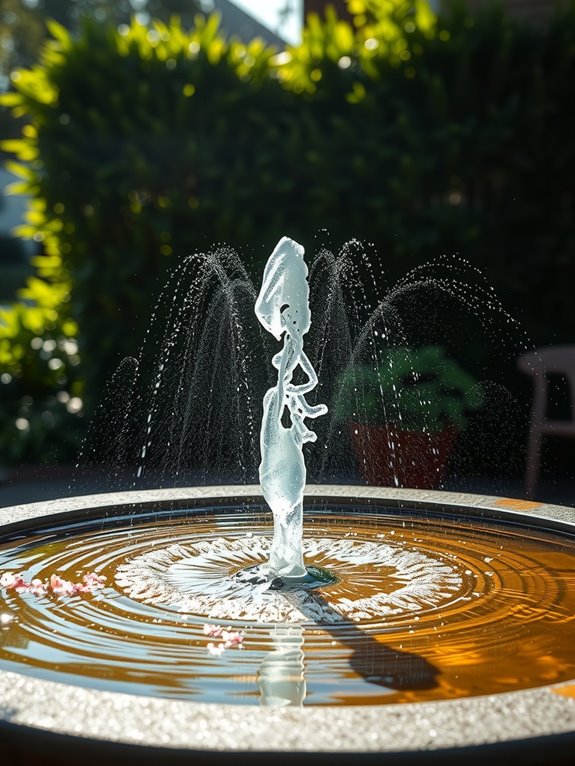
Stagnant water creates ideal conditions for mosquito breeding. When pumps remain off or water stops moving, mosquitoes can lay eggs safely in still conditions. Continuous water circulation prevents this problem.
Neglecting weekly maintenance increases mosquito populations. Skimming debris and cleaning basins removes organic material and algae that mosquitoes need to reproduce. Without regular cleaning, these substances accumulate and support larval development.
Fountain design affects mosquito breeding rates. Shallow basins without circulation features like jets or bubblers allow water to pool motionlessly. Dead zones where water does not move remain undetected but provide perfect breeding spots. These stagnant pockets should be eliminated through proper design.
Preventing mosquito breeding requires two main actions. First, maintain constant water movement through pumps and circulation features. Second, clean fountains weekly to remove organic debris and algae. Together, these practices eliminate the still water conditions that mosquitoes need to reproduce successfully.