You will need an 18-foot cattle panel, two 6-foot T-posts, and zip ties. The total cost is approximately $30–$35. Select a location that receives 6–8 hours of direct sunlight daily.
Drive each T-post into the ground to a depth of two feet. Ensure both posts are level with each other. Bend the cattle panel into an arch shape and position it across the top of both posts.
Secure the panel to each post using 5–6 zip ties. Use double-loop anchoring on each zip tie for added stability. As climbing vines grow, guide them through the openings in the panel.
During fall, check all zip tie connections and tighten them if needed. Remove any dead plant growth from the structure. This trellis will support climbing plants for multiple years with proper maintenance.
Gather Materials for Your Cattle Panel Trellis
Before you build your cattle panel trellis, gather specific materials. An 18-foot cattle panel forms the main structure. You will need two 6-foot T-posts to anchor the panel into the ground. About 10 zip ties hold the structure together, with 5–6 zip ties per post for maximum stability.
The total cost is approximately $30–$35. A cattle panel costs around $30, and each T-post costs $5–$6. Collect all materials in one location before assembly begins. This prevents interruptions during construction.
Two people work together most efficiently for this project. Coordinate with a partner beforehand. Check that your T-posts have notches on them. These notches face inward during installation to support the arched cattle panel properly.
Scout and Prepare Your Garden Spot
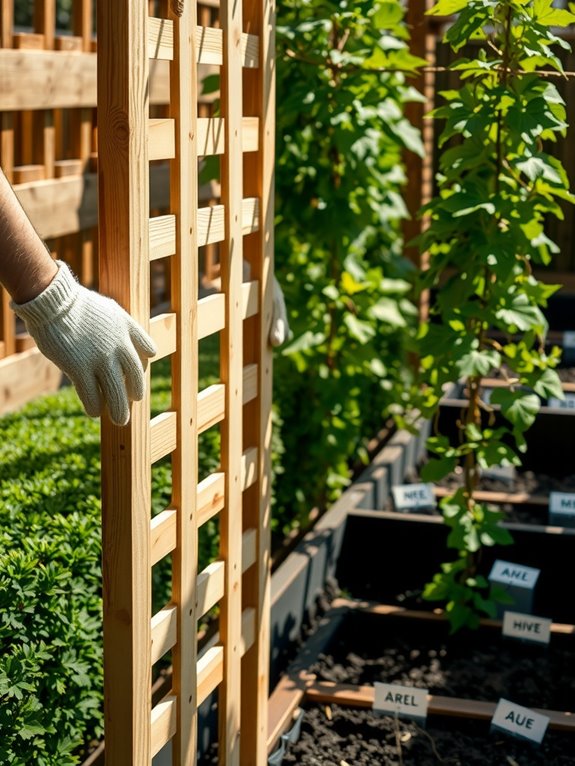
Find a location that receives at least six to eight hours of direct sunlight each day. The area must have enough space to accommodate two 6-foot T-posts and an 18-foot cattle panel without obstruction.
Remove all weeds, debris, and rocks from the designated area. Level the ground where you will install your trellis to ensure it sits stable and even. Use stakes or string to mark out your footprint and visualize the exact dimensions before you begin installation.
Assess Your Space Needs
Where will your trellis fit best in your garden? You need to evaluate your available space carefully. Measure your ground area and note the height clearance you have. Check how many hours of direct sunlight reach different spots in your garden. This information helps you choose the right trellis orientation for your climbing plants.
| Space Factor | What to Measure |
|---|---|
| Ground Area | Length and width in feet |
| Height | Distance from soil to obstacles |
| Sunlight | Hours of direct sun daily |
| Bed Type | Raised or in-ground garden |
| Boundaries | Distance from nearby plants |
Consider your garden bed type and mark clear boundaries. Cattle panels work well for different configurations. You should leave enough room around your trellis for maintenance access and harvesting. Plan for future relocation needs by avoiding permanent installation in high-traffic areas.
Check Sunlight Exposure
Check Sunlight Exposure
Most trellised crops like beans and cucumbers require 6–8 hours of direct sunlight daily for strong growth. You need to observe your garden throughout the day to identify shading from trees, fences, or buildings that might block afternoon light.
Track the sun’s path across your space over an entire week to confirm your spot receives consistent light. This observation helps you understand whether your location provides adequate daylight for your crops.
Note the prevailing wind direction near your location as well. Strong gusts can damage vines or topple lightweight structures.
Check your soil’s drainage and levelness. Standing water creates problems for vine growth. Slightly elevated areas work best for trellis placement. These observations help you choose the ideal spot for your trellis garden.
Clear Ground and Level
Before installing your trellis, prepare the garden spot carefully. Scout the area and remove weeds, rocks, and debris. This creates a flat, workable surface for your trellis. Use a carpenter’s level or straight edge to check that the ground is even. An upright trellis stands better and distributes weight evenly across the soil.
| Task | Purpose |
|---|---|
| Remove weeds and rocks | Creates flat surface |
| Clear radius around base | Prevents tripping hazards |
| Level ground | Ensures upright trellis |
| Mark location with stakes | Guides assembly |
Clear a small radius around the base of at least 2 feet. This prevents tripping hazards and allows room for anchoring stakes or posts. Mark the exact location and height with stakes or chalk lines to guide your assembly work.
Check the drainage in your chosen spot. Water should not pool near the trellis base. Address any slopes by leveling the soil, or add mulch around the area to improve water movement away from the trellis structure.
Drive Posts Securely Into the Ground
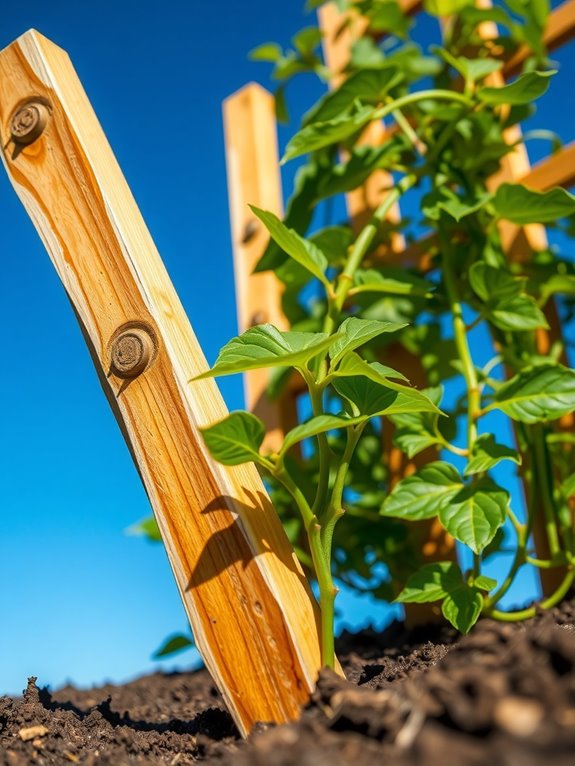
Drive T-posts deep into the ground until they reach stable soil and cannot move. This prevents shifting caused by wind or rain. The posts must be anchored firmly enough to support cattle panels or trellis netting without any lateral movement.
Position the notches on both posts to face inward. This orientation allows the notches to grip and hold your panels or netting securely in place. Assign a second person to hold the posts vertical while you drive them with a hammer or post driver. This ensures the posts remain perpendicular to the ground during installation.
After driving both posts, compact the soil around each one. Push down the soil with your foot or a tamping tool to eliminate air gaps. Removing these gaps increases soil contact and provides maximum stability for the posts throughout the growing season.
Post Depth And Stability
The foundation of your trellis depends on driving two 6-foot metal T-posts firmly into the ground at each end of where your arch will sit. Push each post at least 2 feet deep into the soil. This depth anchors your structure against wind and the weight of climbing plants.
The posts must stand perpendicular to the ground, not leaning. Use a level to check alignment as you drive each post. Proper alignment prevents shifting during construction and bending of your cattle panel.
Once both posts are secure and level, you’re ready to attach and shape your panel into an arch.
Notch Alignment For Assembly
Once your posts are driven into the ground, align each notch to face inward toward the center of where your arch will form. Inward-facing notches keep your posts plumb and vertical.
Position the short sides of your cattle panel against each T-post before you bend the panel. The notches guide the panel into the correct position and prevent it from shifting sideways during installation. Use 5–6 zip ties per post to lock the arch shape firmly in place.
This alignment method creates a stable base for your cattle panel to rest against securely. Proper notch alignment guarantees that your trellis will be sturdy, wind-resistant, and functional for growing climbing plants.
Two-Person Installation Best Practices
How to Keep T-Posts Vertical During Installation
You need a partner to help drive T-posts into the ground correctly. One person holds the post steady while the other person drives it with a sledgehammer. The person holding the post applies balanced outward pressure. This pressure prevents the post from bending or leaning during installation.
Work together to keep the post perpendicular to the soil surface. Once your first T-post is stable and vertical, install the second post. Maintain equal spacing between the two posts. These two posts serve as anchors for your cattle panel trellis.
Proper post installation prevents structural problems later. When you attach and bend the cattle panel, weak or tilted posts will fail. Correct installation during this two-person phase creates a sturdy foundation for your entire trellis structure.
Arch Your Panel and Position It
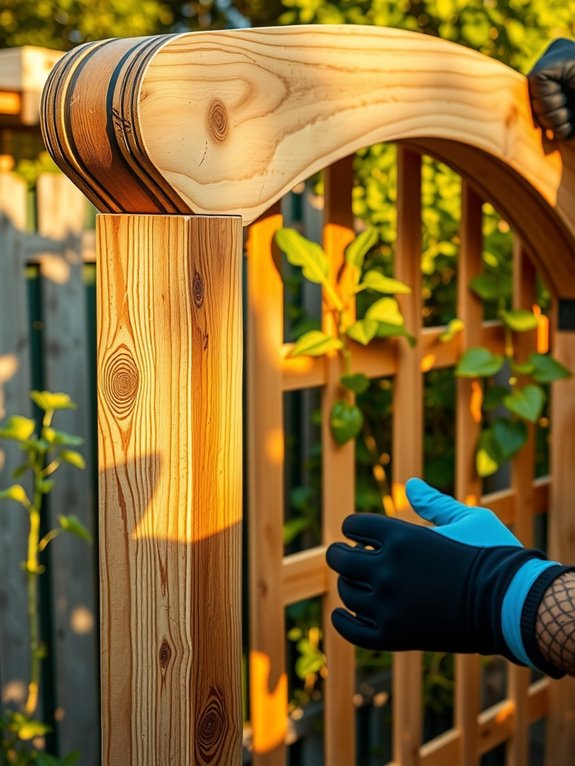
Your arch framework begins with a 6-foot T-post driven firmly into the ground. The T-post’s notches should face inward to anchor the trellis panels.
Position two cattle panels so their short sides rest against each T-post. Bend the cattle panel across to connect to the opposite side, creating an arched shape.
Adjust the height and width as you work to achieve your desired arch dimensions. Bend the panel gradually to avoid kinks or damage. Check alignment from multiple angles before securing. Test the arch’s stability by applying gentle pressure.
Once you are satisfied with the positioning, secure each panel to the T-posts using 5–6 zip ties per post. Panels must be firmly fastened before you plant climbing crops like beans and cucumbers, which require reliable support for their vines.
Lock Down All Joints With Multiple Ties
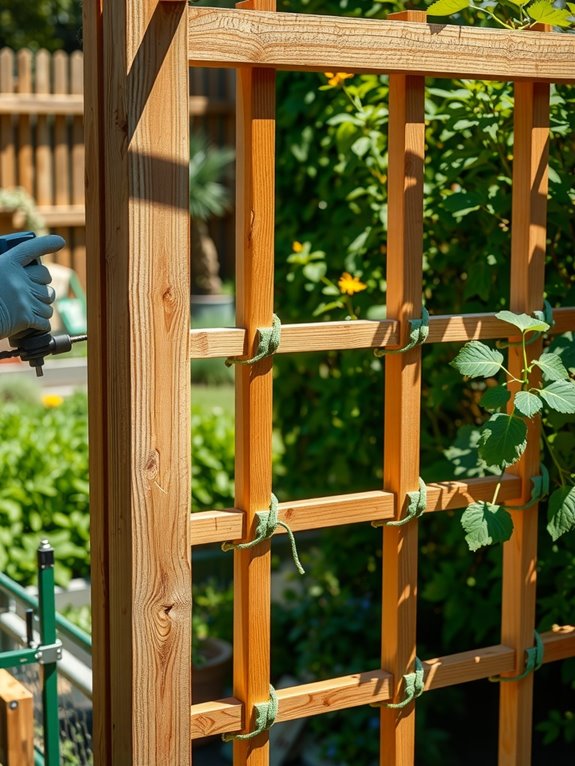
Zip ties are the primary fastening method for keeping your trellis structure stable and secure. Use 5–6 zip ties at each joint where the cattle panel connects to the T-posts.
Loop each tie around both the panel edge and the post. This double-anchored connection resists slippage over time better than single wraps. Space the ties evenly along all connection points to distribute stress properly and maintain the arch’s shape.
| Tie Placement | Number Required | Purpose |
|---|---|---|
| Per post | 5–6 | Firm fastening |
| Loop style | Double-anchored | Reduce slippage |
| Spacing | Even distribution | Maintain shape |
The ties prevent movement caused by wind or the weight of growing plants. Check your zip ties each season and replace any that show cracks, discoloration, or brittleness. Damaged ties compromise joint integrity and reduce the structure’s ability to support the trellis safely throughout the growing year.
Guide Climbing Plants Up as Growth Starts
Once your trellis structure is secure, begin training climbing plants onto it as growth starts. Gently guide the emerging vines onto the trellis framework as they break through the soil. Early training prevents tangled growth and encourages upward development.
Several methods work well for attaching vines to a trellis:
- Soft twine or netting can loosely tie young stems. This allows space for the plants to expand as they grow larger.
- Weave vine tendrils directly through cattle panel openings for natural support without added materials.
- Apply gentle pressure to redirect shoots that grow away from the trellis structure.
Scarlet Runner Beans, Lima Beans, and Pole Beans respond well to this training approach. Check plants every few days and adjust ties as needed to accommodate growth. This guidance establishes strong vertical growth patterns throughout the growing season.
Fall Cleanup and Winterization for Year-Round Strength
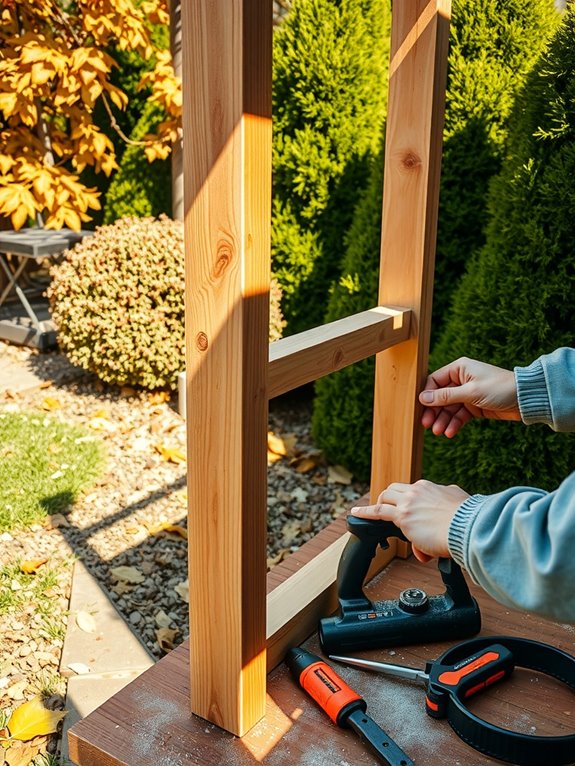
Protecting your trellis through winter requires specific maintenance tasks. Fall cleanup strengthens the structure and prepares it for spring use. You should tighten all connections, replace worn zip ties, and remove lightweight components like removable panels before winter arrives. Snow weight and wind damage can compromise an unprepared trellis.
Clear dead plant material from the base of the trellis. This step eliminates pests and disease spores that survive winter in plant debris. Apply heavy mulch around the base in late fall. The mulch layer insulates soil, reduces weed seeds that germinate in spring, and protects the trellis foundation.
| Task | Timing | Benefit |
|---|---|---|
| Tighten connections and replace zip ties | Early fall | Prevents structural failure under snow load |
| Remove dead plants | Mid-fall | Stops pest and disease overwintering |
| Apply mulch | Late fall | Insulates soil and reduces spring weeds |
These winterization steps prepare your trellis to support climbing plants when the growing season begins. A well-maintained trellis provides reliable structure for years of use.