
Most freestanding pergolas anchored to the ground need a building permit. Check if your pergola exceeds 120 square feet in size. Pergolas taller than 8 to 10 feet also require permits. Location matters too. If your pergola sits near property lines, you will need approval.
Adding features triggers different rules. Electrical wiring, plumbing, or a solid roof almost always requires a permit. These additions change how building codes apply to your structure.
Permit requirements differ by location. Cities and municipalities have their own building codes and zoning laws. You must check your local regulations before starting construction.
Multiple approvals may be necessary. Your homeowners association (HOA) may require approval. Your city may also require a separate permit. Both could apply depending on where you live.
Getting the right permits prevents problems. Working without permits can result in fines and stop-work orders. Understanding your local requirements ahead of time protects you during construction.
Quick Answer: Most Pergolas Require a Permit
Do you need a permit for your pergola? Most likely, yes. A building permit is typically required for freestanding structures that you anchor permanently to the ground.
Building permits are typically required for freestanding pergolas that are permanently anchored to the ground.
Your local jurisdiction uses permit thresholds to determine requirements. These thresholds focus on three main factors: size (often around 120 square feet), height (8–10 feet or more), and location near property lines or easements.
If you live in an HOA community, you will need both HOA approval and a building permit. These are separate requirements and are not interchangeable.
The permit process becomes mandatory when you add certain features to your pergola. Electrical work, plumbing, or a solid roof all require permits. Understanding these requirements before construction begins protects you from fines, stop-work orders, and removal demands later.
Pergola Permit Triggers: Size, Height, Location, and Features
Most pergolas require permits. The specific trigger depends on four main factors: size, height, location, and features.
Size matters considerably. Pergolas exceeding 120 square feet typically need a permit. This measurement includes the total footprint of the structure.
Height also determines permit requirements. Structures taller than 8 to 10 feet usually require permitting. Your local building department sets the exact threshold.
Location factors significantly impact permit necessity. Your pergola’s proximity to property lines and easements determines whether approval is needed. Most jurisdictions enforce these distance requirements.
Features can change permitting requirements. A solid roof reclassifies your pergola as a more substantial structure requiring approval. Electrical wiring or plumbing almost always demands a permit.
Permit thresholds vary by municipality. You must confirm specific requirements with your local building department before construction begins. Each jurisdiction sets different standards for pergola construction.
Check Your Local Building Codes and Zoning Laws
Permit requirements vary significantly between cities. You must check your local building department’s rules before starting construction. Local building codes and zoning laws determine whether you need permits and what thresholds apply in your area.
Contact your local building department to find out:
- Size limits for freestanding structures without permits
- Height restrictions that trigger permit requirements
- HOA approval requirements in addition to city permits
- Specific building codes affecting pergola construction
Many municipalities exempt pergolas under 120 square feet from permit requirements. Other cities require permits for all structures. Height thresholds typically range from 8 to 10 feet. Your location determines these specific rules. Verification with your building department ensures you follow proper procedures before construction begins.
HOA Approval vs. City Permits: What’s Required?
HOA Approval vs. City Permits: What’s Required?
Many homeowners assume that getting approval from their homeowners association (HOA) is enough to build a pergola. In reality, you need both HOA approval and city permits if your local building department requires them. These two approval processes serve different purposes.
| Approval Type | Purpose |
|---|---|
| HOA Approval | Ensures aesthetic compatibility with neighborhood standards |
| City Permits | Verifies compliance with building codes and safety regulations |
HOA approval addresses setbacks, design, and material requirements specific to your community. The local building department confirms structural safety and code adherence through its own independent review. Your HOA approval shows you meet community standards, but it does not replace code compliance requirements.
Plan for both approval timelines in your project schedule. HOA review and municipal permitting processes differ in length and requirements. Start by checking your HOA guidelines and obtaining required HOA approval first. This step prevents delays in the municipal permitting phase that follows.
How to Apply for a Pergola Permit
Getting a pergola permit requires organization and attention to detail. You will work with your building department to complete paperwork and inspections.
Step 1: Prepare Documentation****
Create a site plan that shows where your pergola will be located on your property. Submit construction drawings that include detailed measurements and a list of materials you plan to use. The building department will review these documents.
Step 2: Complete the Application****
Fill out the permit application form provided by your building department. Pay the associated fees, which typically range from $50 to $200. The cost depends on your location and the pergola’s size.
Step 3: Request Additional Reviews****
Your building department may ask for engineered calculations if your pergola is a larger structure. Check whether your homeowners association requires approval before construction begins. Some communities have specific requirements for outdoor structures.
Step 4: Schedule and Pass Inspections
Schedule inspections at three key stages: the foundation stage, the framing stage, and the final stage. The building department will examine your work at each inspection point. Your pergola receives final approval after all inspections pass.
Following these steps prevents delays and ensures your pergola meets local building codes and regulations.
Risks of Building Without a Required Permit
If you build a pergola without a required permit, your city or county will issue financial penalties and fines. The amount depends on how serious the violation is.
Construction may stop immediately. Authorities can issue a stop-work order that halts all building activity. They may also require you to remove part or all of the structure if it fails to meet local building codes.
Skipping the permit creates problems later. Insurance companies may deny claims on unpermitted structures. When you sell your home, buyers and their lenders will ask for proof that all structures follow local building codes. Without this documentation, the sale becomes difficult or impossible.
Financial Penalties And Fines
Building a pergola without the required permit creates serious financial consequences. Skipping the permitting process exposes you to significant costs beyond the structure itself.
You may face several types of financial penalties:
- Initial fines from your local building department for unpermitted work
- Stop-work orders that halt construction and require costly corrections
- Retroactive fees that can double or triple the original permit cost
- Additional penalties if you fail to bring the structure into compliance
Fines accumulate quickly. You might owe thousands of dollars in penalties alone. Your unpermitted pergola can trigger inspector visits and mandatory inspections. Some jurisdictions impose daily fines until violations are resolved. The total financial burden of avoiding permits often exceeds the cost of proper permitting upfront.
Forced Removal And Stop-Work
Building departments have the authority to physically stop your pergola project and require its removal. When you build without a required permit, inspectors can issue a stop-work order. This order halts all construction immediately and prevents you from continuing work until you obtain proper permitting or dismantle the structure.
The removal process requires you to pay contractors to take down the completed structure. This results in wasted time and money on work that must be undone. Building departments enforce these regulations to protect community safety and maintain property standards.
Obtaining the required permits before starting construction prevents stop-work orders and removal costs. Complying with permitting requirements keeps your project moving forward without interruption or financial loss.
Insurance Claims And Property Sales
How an Unpermitted Pergola Affects Your Home’s Insurance and Sale
Unpermitted construction creates serious legal and financial problems. Building a pergola without required permits puts your property at risk in multiple ways.
Insurance Coverage Issues
Insurance companies deny or limit claims when unpermitted structures are involved. If your pergola sustains damage from wind, snow, or fire, your claim may be rejected. The insurance company may refuse to pay for repairs or related damages to your home. Some policies exclude coverage for unpermitted additions entirely.
Disclosure Requirements During Sale
You must tell potential buyers about the unpermitted pergola. This disclosure requirement applies to all property sales. Buyers and their lenders will discover the unpermitted work during the inspection and appraisal process. The discovery often delays closing or makes buyers hesitant to proceed.
Permitting and Cost Consequences
Retroactive permits cost significantly more than permits obtained before construction begins. Permit fees vary by location but typically increase 50 to 200 percent when applied after the fact. Local building codes classify permanent structures like pergolas as requiring permits. HOA approval does not satisfy city or county permit requirements. Your property lacks legal protection without proper municipal permits.
Resolution at Sale Time
Closing may require you to obtain permits immediately. You may need to pay for inspections and modifications to meet current code standards. Lenders often refuse to finance properties with unpermitted structures until permits are obtained or structures are removed.
DIY vs. Professional Installation: How Permits Differ
Whether you build a pergola yourself or hire a contractor, your local building department requires permits. The permit requirements are the same for both DIY and professional projects. You must submit site plans, construction drawings, and sometimes engineering calculations. Both approaches require plan reviews and inspections before and during construction.
Professional contractors have one advantage. They handle permit applications and technical paperwork, which can speed up the approval process. DIY pergola kits may reduce some design work if they include pre-engineered plans. However, you still need plan approval and must schedule inspections regardless of which approach you choose.
Both DIY and professional installations involve permit fees. You may also need to make revisions during the review process before final approval.
What Classifies as a Freestanding Pergola
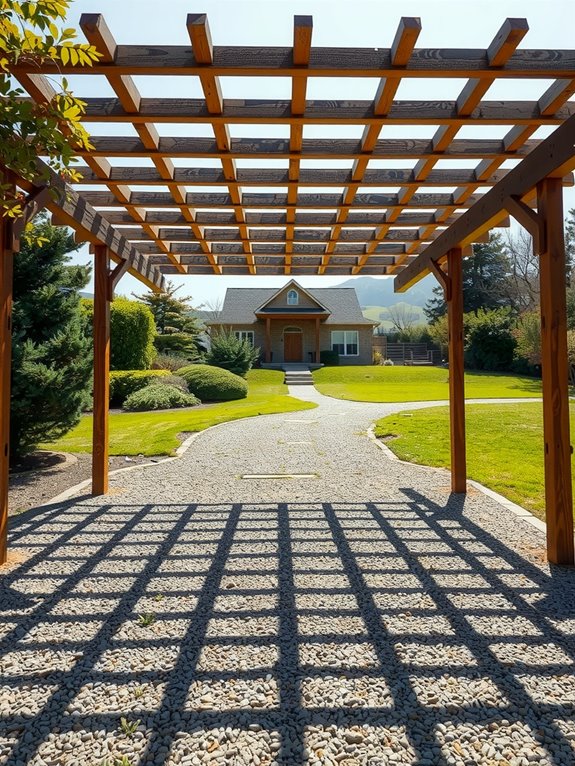
When you plan a pergola project, knowing whether it is freestanding or attached matters for permit requirements. Your building department classifies structures based on specific characteristics.
A freestanding pergola has four key features:
- Independent from your house – It does not connect to your home’s structure.
- Ground anchoring system – It has its own footing and foundation separate from your house.
- Permanent installation – It is built to stay in place year-round.
- Open design – It features vertical posts with lattice roofing and no walls or solid covering.
Attached pergolas trigger stricter code requirements because they connect to your main structure. The pergola’s independence from the house determines permit needs. Local building departments examine two things: whether your footing and anchoring are independent, and whether your design qualifies as a permanent structure. This distinction directly affects your permitting process and inspections.