

You can build a DIY garden fountain by following five essential steps.
First, select a level location near a power source where you can see the fountain easily.
Second, gather these materials: a waterproof basin, a submersible pump, flexible tubing, and decorative rocks.
Third, clear the area and create a level base using pavers or flat stones.
Fourth, place the pump in the basin and connect the tubing to your top vessel. Fill the basin with water and test the flow rates to ensure the pump operates correctly.
Fifth, adjust water levels as needed and inspect all connections for leaks. Remove debris from the basin regularly and refill the water as it evaporates.
Each step prepares you for the next one.
The result is a functioning water feature that circulates water continuously.
Step 1: Plan Your Garden Fountain Location and Footprint
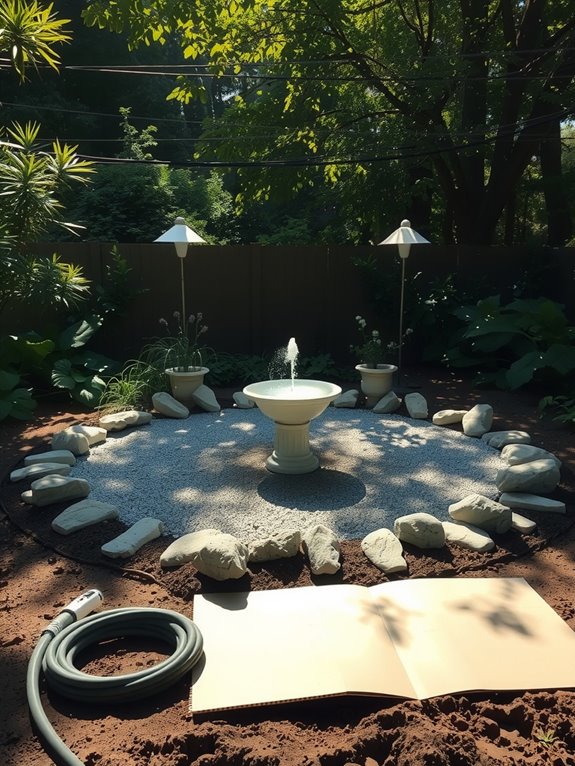
Choose a fountain location with good visibility from seating areas. The spot should have reliable access to power or sun exposure if you plan to use a solar pump. Map out the fountain’s footprint by visualizing its final size and confirming you have a level base for installation.
Choose a fountain location with good visibility and reliable power or sun access for optimal pump performance and enjoyment.
Identify where your basin, top vessel, and supporting structure will be positioned. Consider safety and maintenance access by evaluating debris accumulation patterns, drainage flow, and the proximity of nearby plants or walkways. These factors affect how often you’ll need to clean the fountain and whether water runoff will damage surrounding areas.
Decide on your top vessel height and hidden reservoir position. These measurements determine your desired spill line and water circulation throughout the fountain system. Proper planning during this stage prevents problems with water drainage, structural stability, and access to maintenance components later.
Step 2: Gather Your Garden Fountain Materials and Tools
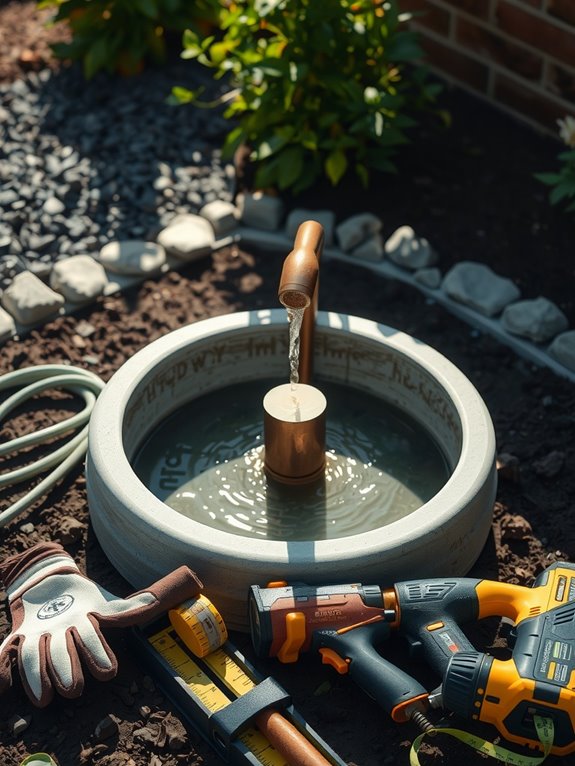
Materials and Tools for Your Garden Fountain
Your fountain requires a waterproof basin to hold water. A submersible pump rated for your desired gallons per hour output will circulate the water. Flexible tubing connects the pump to other components in your system.
Drainage gravel stabilizes your fountain structure. Power your pump using a GFCI-protected outlet, or select a solar-powered pump as an alternative. Silicone adhesive seals connections and prevents leaks from developing.
Decorative rocks or pebbles serve two purposes. They hide the pump from view and add visual appeal to your fountain. Optional additions include a nozzle or spout to direct water flow in specific patterns.
Gather these tools before you begin: a utility knife, drill, level, and measuring tape. Safety gear includes gloves to protect your hands during assembly. Keep a bucket of water nearby to test your pump’s performance before final installation.
Step 3: Prepare Your Site and Build a Level Base
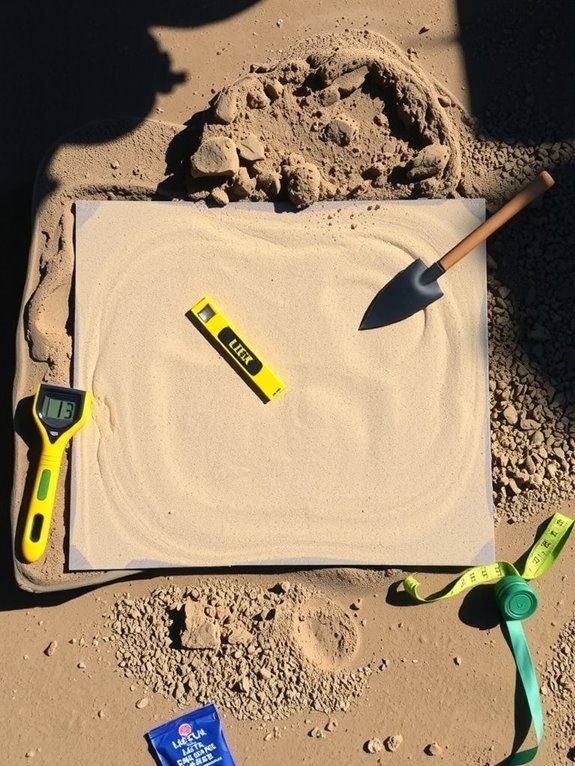
Clear the installation area completely. Mark the footprint to show the final size of your fountain. This creates safe access to the power outlet and allows space for maintenance work.
Mark your fountain’s footprint clearly to ensure safe power outlet access and adequate maintenance space around the installation area.
Build a stable, level base using pavers or flat stone. A level base prevents the fountain from wobbling during use. Dig a shallow pump hole that is 2 inches deeper than the basin. This depth keeps the pump submerged while preventing electrical cords from being exposed.
Set up a drainage gravel bed in the pit before you place the basin. Gravel improves water drainage and reduces the settling of the fountain over time. Plan the pump cord path before installation begins.
After the waterproofing silicone dries, seal any holes around the cord entry point. Leave extra slack in the cord so you can access the pump for maintenance and connect the power safely.
Step 4: Install the Pump and Connect Your Tubing
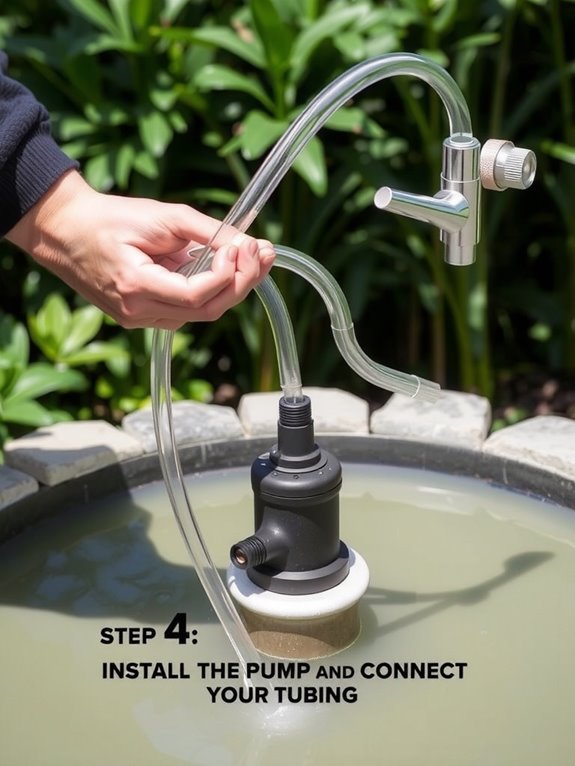
Step 4: Install the Pump and Connect Your Tubing****
Position the pump upright in the water-filled basin and secure it so it will not shift during operation. The pump’s placement directly affects how water flows through your fountain system.
Route the tubing from the pump outlet to your top vessel. The tubing must be long enough to reach your nozzle or spill point without bending or kinking, which restricts water flow. Cap any unused holes in the top vessel to direct water through your intended path only.
Before adding decorative elements such as drain gravel or stone, perform a dry fit of all components. This step allows you to center your vessels properly and ensure the weight distributes evenly across the basin.
Fill the basin with water and turn on the pump. Adjust the pump’s flow control to achieve your desired spill height and water pattern. The control mechanism typically ranges from low to high settings, measured in gallons per hour (GPH). Common pump outputs range from 300 GPH to 3000 GPH, depending on your fountain’s size and design. Test the system and make adjustments until the water movement matches your specifications.
Step 5: Test, Adjust, and Maintain Your Fountain
Step 5: Test, Adjust, and Maintain Your Fountain
Fill the basin with water and turn on the pump. Water will circulate up to the top vessel and spill back down into the basin. Use your pump control or valves to test different water flow levels. Adjust the nozzle or flow rate to control the spill height and reduce splashing until you find your preferred setting.
Inspect all joints, seals, and cord passages for leaks. Apply sealant to any areas where moisture escapes. Re-tighten any loose fittings you find. Check your tubing for kinks that restrict water return to the reservoir, as these blockages prevent proper circulation.
Add filler rock around the basin and top vessel to stabilize the structure and guide water distribution. Maintain your fountain regularly by keeping cords above ground level, cleaning debris from screens, and topping up water to replace water lost to evaporation. These steps will keep your fountain functioning properly over time.