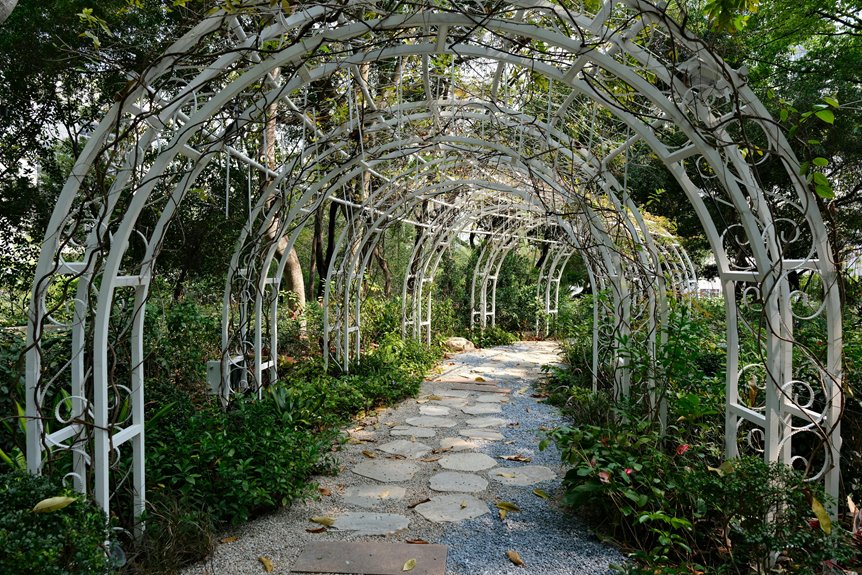
An A-frame garden trellis provides support for climbing plants while occupying minimal ground space. These freestanding structures can withstand wind and heavy rainfall when constructed correctly.
Three main material options exist for building an A-frame trellis. Bamboo frames cost under $50 and work well for gardeners with limited budgets. Wooden designs offer a classic appearance and moderate durability. Metal structures provide the greatest longevity and perform best in humid climates where wood deteriorates quickly.
Pole beans, cucumbers, and peas grow successfully on A-frame trellises. Orient the broad sides of your frame in an east-west direction. This positioning allows plants to receive balanced sunlight throughout the day.
Proper installation ensures structural stability. Set posts firmly into the ground to prevent tilting or collapse. Apply weather-resistant finishes to wooden components to prevent rot and decay. Inspect all joints quarterly to identify loose bolts, cracked wood, or rust spots that could compromise the structure.
The most suitable design depends on three factors: your local climate conditions, the amount of space available in your garden, and the specific crops you plan to grow. Select materials and dimensions based on these requirements rather than aesthetic preferences alone.
Why A-Frames Work: Benefits Over Traditional Trellises
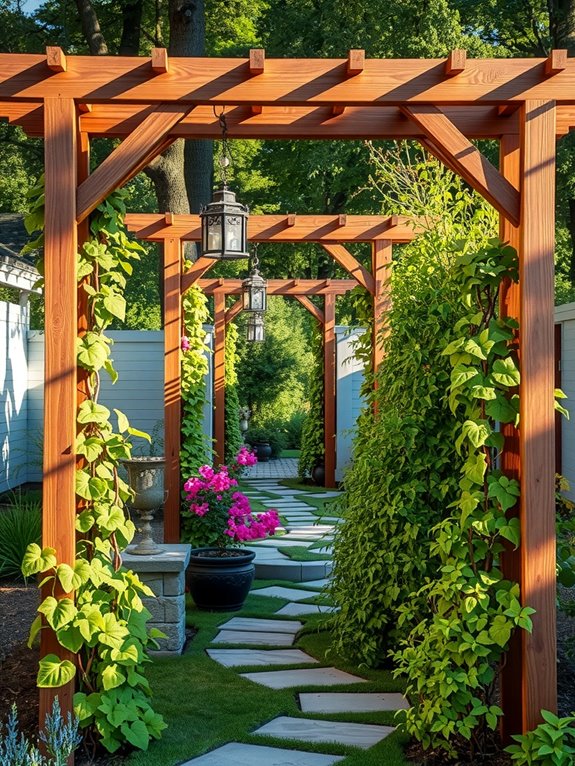
Gardeners often replace bamboo tepees with A-frame trellises for practical reasons. A-frame trellises are freestanding structures that resist summer storms better than traditional designs. They withstand heavy winds and rain without tipping or collapsing.
These frames effectively support pole beans and peas. The harvest height is accessible for both children and adults, reducing the need for ladders or step stools. Gardeners string bale twine across the A-frame to guide vines along the framework.
A-frame trellises offer mobility and flexibility. You can move them between garden sections to enable crop rotation. The broad sides face east and west, which maximizes sunlight exposure on both sides of the plants throughout the day.
The construction requires secure bracing at the base. Once properly installed, these frames last for many seasons without needing replacement. The durability of A-frame trellises makes them a long-term investment for vegetable gardeners.
What to Plant: Choosing Crops for Your A-Frame
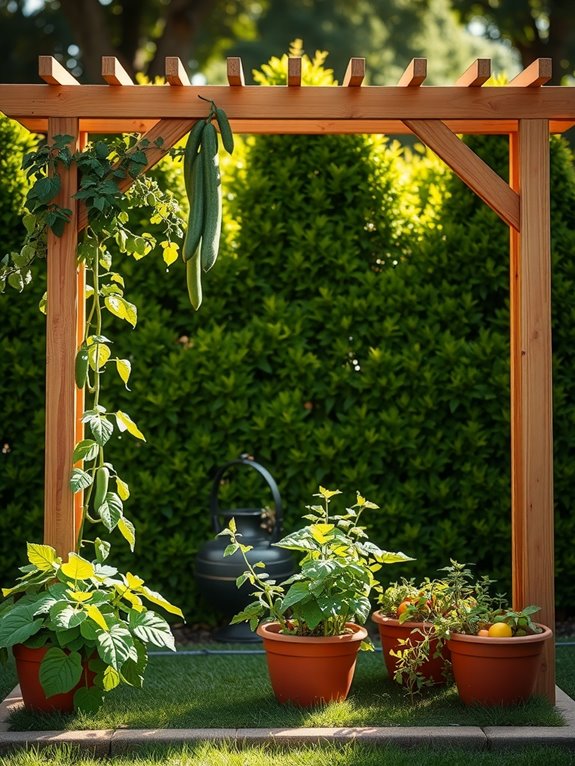
Which Plants Work Best on Your A-Frame Trellis
Peas grow well during early spring on lower A-frames. As the vines grow, you train them onto twine for support. Pole beans and climbing bean varieties use the full height of the structure effectively.
Cucumbers spread across the angled panels. This placement maximizes your planting area and keeps fruit away from the ground. Tomatoes benefit from the shade created underneath the frame during hot summer months.
Squash and melons need sturdy frames. These plants are heavy and require structures that can withstand their weight and summer storms.
Select your crops based on your local growing season. Early-season vegetables work well in the lower section when you first set up your A-frame. Heat-loving plants appreciate the shade the frame provides during peak summer temperatures.
Position your A-frame with the broad sides facing east and west. This orientation ensures both sides of the frame receive adequate sunlight throughout the day. Even sunlight distribution promotes balanced growth across all your selected crops.
Budget-Friendly Bamboo: Build Under $50
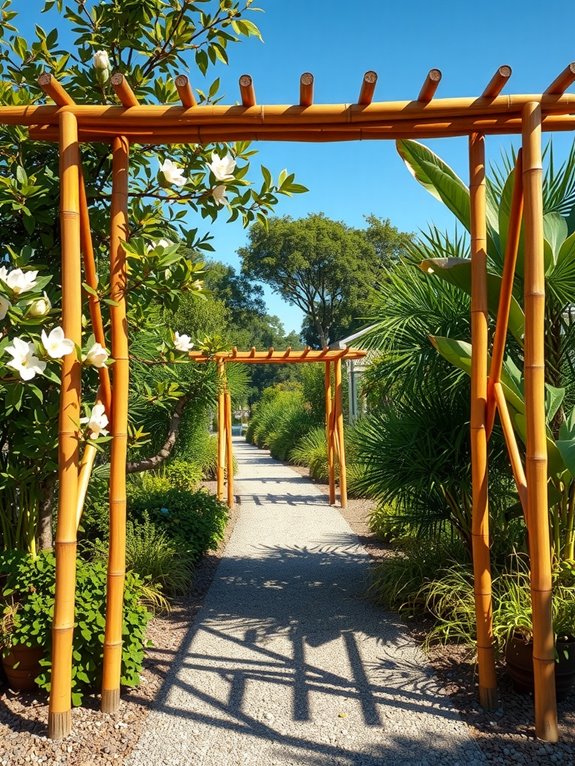
You can construct a sturdy A-frame trellis for under $50. Gather bamboo poles and wooden posts to form the frame’s foundation. Secure the posts firmly into the ground to withstand wind pressure and the weight of climbing plants.
Use affordable string or twine to create horizontal supports. These supports serve as climbing surfaces for pole beans and peas. The A-frame design distributes weight evenly across both sides, creating a stable structure.
Two people should work together to lift and install the structure safely. Straightforward construction plans allow you to complete the project in one weekend. This approach costs significantly less than purchasing a pre-made trellis while providing adequate support for your climbing crops.
Classic Wooden A-Frame: Durable and Timeless
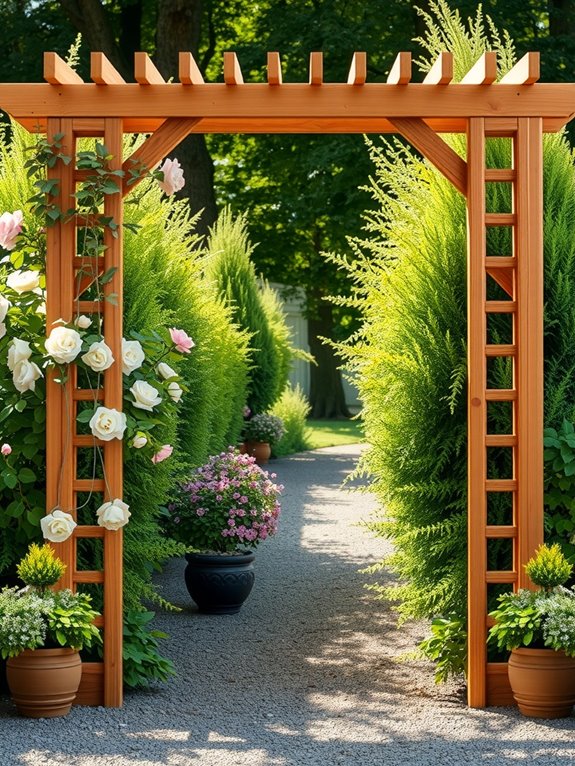
Wooden A-frame trellises offer greater durability than bamboo options. This structure consists of two angled panels that meet at a peak, forming a freestanding frame. The design provides two growing surfaces and creates shade beneath the structure.
The A-frame supports heavy vines when properly braced and anchored. Suitable crops include cucumbers, beans, and squash in larger garden spaces. The structure resists wind damage due to its stable, wide base.
Construction Requirements
Building a wooden A-frame requires intermediate skills. You must measure and cut lumber to size, assemble joints with screws for strength, and position the frame with assistance. The frame typically costs between $35 and $60 to construct.
Key Characteristics
Wooden A-frames provide wind-resistant construction and support heavy-bearing crops. The structure creates distinct microclimates within your garden. Wood construction extends the lifespan of the trellis compared to alternative materials.
Metal and Wire Construction: Modern and Lightweight
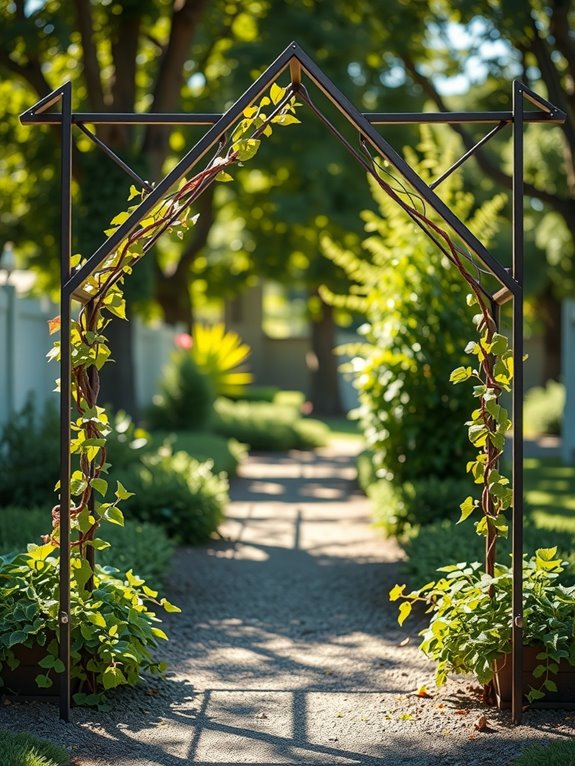
Metal and wire A-frames resist rust and weather damage better than wood structures. This advantage matters most in humid or coastal environments where moisture causes wood to deteriorate.
Installing metal frames requires less physical effort than wooden structures. The materials weigh considerably less, and assembly uses bolts and clips instead of nails or screws. This combination reduces both labor time and installation difficulty.
Metal and wire designs offer flexibility in spacing and configuration. You can adjust the wire grid pattern to match the support needs of different climbing plants. Clematis (Clematis species) requires moderate support with spacing around 6-8 inches between wires. Cucumbers (Cucumis sativus) need slightly tighter spacing of 4-6 inches to hold their weight. Small melon varieties like Cantaloupe (Cucumis melo) require sturdy support with spacing of 3-4 inches between horizontal wires. This adjustability means one frame type can accommodate multiple plant species across different growing seasons.
Durability And Weather Resistance
Durability And Weather Resistance
Metal A-frame trellises outlast traditional wood and bamboo structures because metal resists corrosion and weather damage. Powder-coated finishes protect against rust year-round. Slim black metal grids support climbing plants like clematis while remaining visually subtle in garden spaces.
Metal construction offers specific advantages for trellis durability:
- Powder-coated surfaces prevent rust and weather damage throughout all seasons
- Multi-wrap fastenings maintain rigid panel connections under the weight of climbing vines
- Metal frames sag less than all-wood designs
- Sturdy joinery withstands wind and storms
- Metal requires minimal maintenance over decades
Metal A-frames distribute ground bracing and windload stress effectively. These structures last for many years while supporting climbing beans, clematis, and other flowering vines reliably. Metal frames reduce sagging compared to wood alternatives and maintain structural integrity through seasonal weather changes.
Lightweight Installation Benefits
Modern metal and wire A-frame trellises set up quickly. These structures weigh less than traditional wooden frames because they use lightweight materials. You will not need heavy equipment or multiple people to install them in your garden.
Metal frames maintain structural strength while weighing significantly less than wood alternatives. The reduced weight makes assembly accessible for most gardeners and reduces physical strain during installation. Wire components let you adjust training strings as your climbing plants grow. You need only minimal tools and basic effort to reposition these trellises seasonally.
A-frame trellises support pole beans, peas, and other climbing crops effectively. The straightforward assembly process takes about one hour from start to finish. This quick setup means you spend less time preparing and more time planting your crops and companion plants.
Design Versatility Options
Metal and wire A-frame trellises offer flexibility that wooden designs do not provide. Modern materials adapt to specific growing needs and space constraints.
Metal and wire structures have several advantages:
- Lightweight frames that you can reposition without help or equipment
- Rust-resistant options that last through multiple growing seasons
- Customizable wire spacing to fit different vine types
- Greater durability than wood in wet climates
- Clean appearance that matches contemporary garden styles
You can adjust wire spacing for pole beans, peas, or climbing vegetables. Metal construction resists sagging as vines grow heavier. These designs support wind-resistant principles similar to wooden frames. Metal trellises also install more easily than wooden alternatives.
Orient for Sun: East-West Placement Strategies
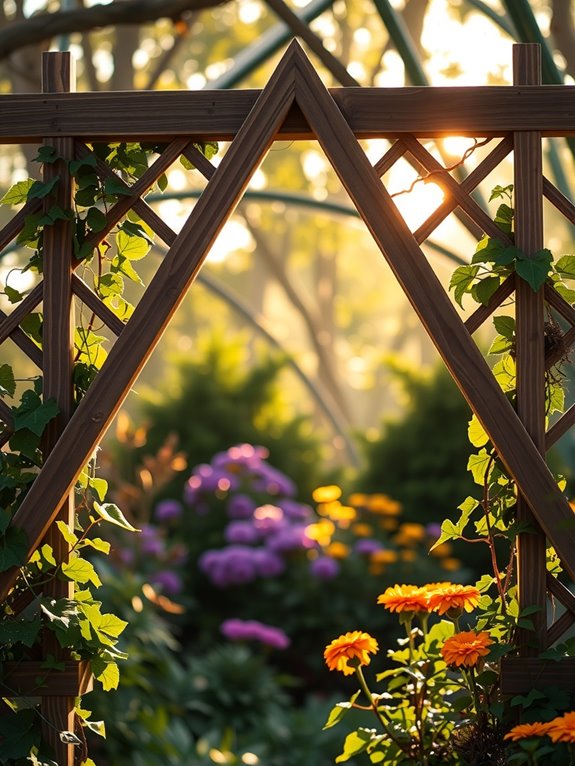
Orient your A-frame trellis with its broad sides facing east and west. This placement allows plants to receive balanced sunlight on both sides throughout the day. Morning light comes from the east side, and afternoon light comes from the west side. This arrangement reduces heat stress and prevents overexposure during hot summers.
Regional climate affects how sunlight reaches your plants. Arkansas summers differ from Dallas conditions in sun intensity and duration. Observe where sun concentrates in your specific backyard before deciding your final placement. Note the shadows cast by nearby structures, trees, and fences at different times of day. Document the sunlight patterns during early morning, midday, and late afternoon hours. This information will help you position your trellis for optimal plant performance.
Sun Exposure Optimization
An east-west orientation for your A-frame trellis maximizes sunlight on both sides of the structure. Morning sun reaches the eastern side when the day begins. Afternoon light reaches the western side as the day progresses. This arrangement distributes heat exposure evenly across both surfaces.
Climbing crops like peas and beans receive adequate light on both sides. Adjacent plants access sufficient illumination and cast fewer shadows on neighboring areas. Even sun distribution reduces heat stress during peak summer months when temperatures peak in the afternoon.
The balanced light conditions support healthy plant growth. You can grow multiple plant varieties simultaneously. Sensitive plants receive protection from excessive midday heat while still obtaining necessary light for photosynthesis.
Regional Climate Considerations
Different regions receive varying amounts of sun intensity and experience different temperature patterns throughout the day. Your A-frame trellis orientation should match your local climate conditions.
In Arkansas and Dallas areas, intense midday sun creates heat stress on plants. Position your garden trellis with broad sides facing east and west. This placement allows morning sun to strike one side while afternoon sun hits the opposite side. The result is balanced light exposure across both surfaces.
East-west positioning distributes sunlight naturally throughout the day. This arrangement reduces excessive heat concentration while maintaining adequate illumination for climbing crops such as pole beans and peas. The staggered sun pattern prevents plant stress from concentrated afternoon heat.
Your specific region’s temperature peaks and seasonal variations determine the optimal timing for planting and maintenance. East-west orientation works well in most climates because it supports healthy vertical growth without forcing plants to endure prolonged periods of intense direct heat.
Space-Saving Designs: Corner Trellises and Planters
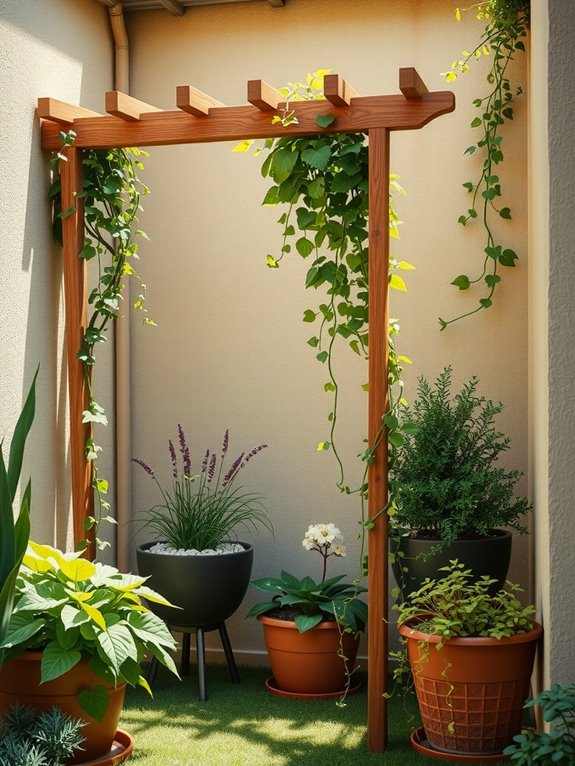
Small patios and confined garden beds require vertical growing solutions. Combining A-frame trellises with integrated planters creates an efficient, freestanding structure that maximizes limited space.
Key Advantages
A trellis-planter combination doubles your growing area without increasing your footprint. Vining crops positioned at eye level become easier to harvest. The structure improves air circulation around plants and reduces fungal diseases. Unused corners convert into productive growing zones.
Setup and Placement
Position your combined unit in a corner that receives morning or afternoon light. The planter base secures the trellis structure and prevents wind damage. This arrangement allows you to grow more vegetables and flowers in the same square footage.
Build for Wind and Weather: Stability Techniques
When you’ve invested time and resources into an A-frame trellis, you need it to withstand summer storms and strong winds. Garden trellis stability depends on solid construction methods.
Assemble posts and bracing on the ground first. Then lift the frame together as a team to ensure proper positioning. Use durable joining techniques or multi-wrap fastening systems to increase rigidity and longevity. Lightweight construction will sag under vine weight and should be avoided.
Orient your trellis with broad sides facing east and west. This balances sun exposure while reducing wind impact. Ground-level posts must anchor firmly into soil to prevent shifting during storms. These stability techniques create a reliable structure that supports growing vines throughout the season.
Paint, Personalize, and Store: Finishing and Maintenance
Painting and protective coatings extend the lifespan of your A-frame trellis. Exterior wood stain or weather-resistant paint protects lumber from rot and UV damage. These coatings also allow you to select colors that coordinate with your landscape design.
Store your trellis indoors during winter months. A shed or garage provides a dry location that prevents moisture damage and wood warping. Disassemble the structure before storage if space is limited.
Regular maintenance keeps your trellis functional. Inspect all joints and screws every few months to check for looseness. Look for signs of decay, insect damage, or wood discoloration. Reapply protective coatings every two to three years to maintain the wood’s resistance to weather and pests.
Paint And Color Selection
Selecting paint and color for your A-frame garden trellis serves practical and visual purposes. The right colors protect wood from weather while establishing your garden’s appearance.
Color choices affect how the trellis functions and looks:
- High-contrast hues make vines easier to see and help them grip the structure
- Soft pastels create a Painted Cottage Garden style
- Clean, modern tones suit contemporary landscapes
- Weatherproof outdoor paint extends the trellis’s lifespan in areas with storms and strong winds
- Strategic colors connect your garden’s overall design
Apply weatherproof sealant and outdoor paint to shield wood from wind and moisture. Match your trellis colors to existing garden elements or your space’s color palette. This approach ensures your A-frame trellis works effectively while reinforcing your garden’s distinctive style.
Seasonal Storage Solutions
A-frame trellises require proper storage to maintain their condition over multiple years. After the growing season ends, disassemble your trellis carefully and prepare it for storage. Remove all remaining vines and debris from the structure first.
Wooden pieces should be stored horizontally on a flat surface. Keep them away from moisture and direct sunlight, as both cause warping and deterioration of the wood.
| Storage Location | Temperature | Humidity | Protection | Duration |
|---|---|---|---|---|
| Garage | 50-70°F | Low | Covered with tarp | 6 months |
| Shed | 45-65°F | Moderate | Wooden pallets | 6 months |
| Basement | 55-65°F | Low-moderate | Shelving unit | 8 months |
| Attic | Variable | Low | Plastic covering | 5 months |
| Outdoor cover | 40-75°F | Moderate-high | Heavy-duty tarp | 6 months |
Different storage locations offer varying temperature and humidity conditions. Basements provide the longest storage duration at eight months due to stable temperatures between 55-65°F and low-to-moderate humidity levels. Attics should be limited to five months because temperatures fluctuate more than other indoor spaces.
Place hardware pieces in labeled containers to prevent loss and confusion during reassembly. Before the next growing season, inspect all wooden and metal pieces for damage, rust, or deterioration. Replace any compromised components before reinstalling your trellis.
Maintenance And Longevity Tips
Protective coatings extend the lifespan of your A-frame trellis well beyond a single growing season. Apply exterior-grade sealant to all lumber surfaces annually before winter storage to protect against weather damage and wood deterioration.
Sand rough spots on the wood to prevent splinters and decay. Use fine-grit sandpaper to smooth any raised areas before applying sealant. Paint the structure with non-toxic finishes that match your garden’s appearance.
Inspect the trellis quarterly for loose fasteners. Tighten all screws and bolts to maintain structural stability. Check for warping or bent components before each growing season, as wood naturally settles and shifts over time.
Replace any damaged lumber immediately. Cracked, rotted, or severely warped boards cannot support crop weight safely and increase collapse risk. Store your trellis indoors during severe winter weather when temperatures drop below freezing or heavy snow loads occur.
These maintenance steps keep your trellis structurally sound and functional for multiple growing seasons. Regular inspection and prompt repairs prevent small problems from becoming major structural failures.
Seasonal Repairs and Winter Prep: Keep It Standing
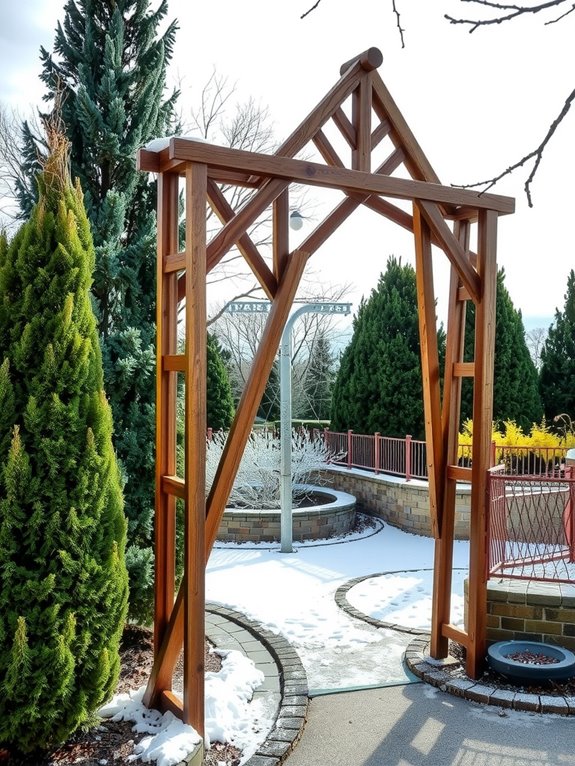
Why does your A-frame trellis need attention before winter arrives? Winter weather can damage wooden structures. Regular maintenance prevents storm damage and extends the lifespan of your trellis.
Winter weather threatens wooden trellis structures. Regular maintenance prevents storm damage and extends your trellis lifespan significantly.
Before cold months begin, inspect your structure carefully. Look for loose screws and damaged lumber. Tighten all fasteners. Replace any cracked or rotting wood sections immediately.
Remove dead plant material and debris from the frame. Moisture trapped in vegetation causes wood decay. Check that your trellis runs with broad sides facing east and west. This orientation ensures proper weight distribution during winter winds.
Apply a weatherproof sealant to all exposed wood. This protects the structure against freezing and thawing cycles. Clear the ground around your A-frame to improve drainage. Good drainage prevents ice accumulation around the base.
These repairs keep your trellis standing strong through winter. Your structure will be ready for next season’s crops, including pole beans and peas.