
Building a backyard gazebo requires seven distinct steps. First, plan your design by sketching measurements and reviewing local building codes for your area. Second, prepare the site by marking the location and digging four holes approximately two feet deep for the corner posts. Third, set the posts vertically level and fill the holes with concrete to anchor them securely.
Fourth, construct the floor frame using 2×4 joists and cedar boards cut to your specified dimensions. Fifth, build the roof structure using 4×12 rafters and raise them into position. Sixth, weatherproof the roof by installing sheathing and applying protective coatings to resist moisture and UV damage. Seventh, add built-in benches and a pedestal table, then sand all wood surfaces and apply polyurethane finish.
Each step involves specific measurements and construction techniques. The concrete depth around posts typically matches the hole depth of two feet. Cedar boards resist rot better than softwoods and require less maintenance over time. Polyurethane creates a protective layer that extends the lifespan of wood surfaces exposed to outdoor conditions. Following each step carefully ensures structural stability and durability of your finished gazebo.
Plan Your Gazebo Design and Check Building Codes
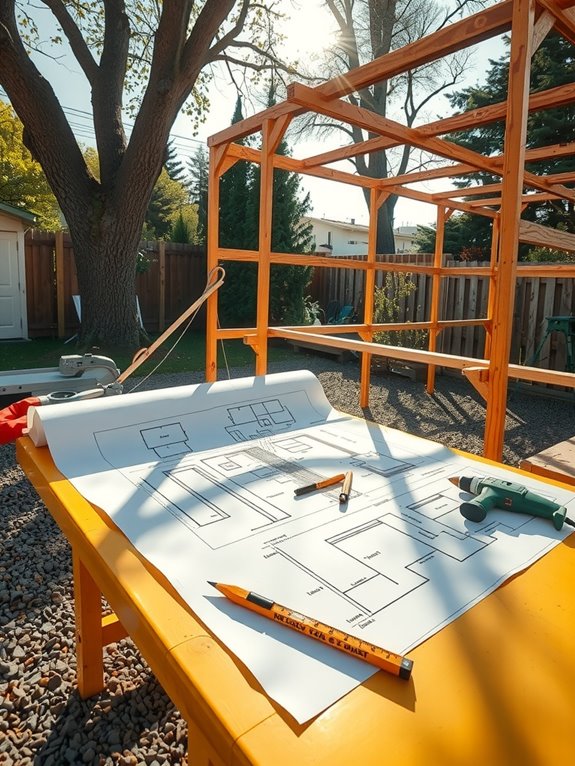
Select a level area in your yard where you want to place your gazebo. The location should provide good shade and allow viewing of your plants and vegetables. Most gazebos measure 8 to 12 feet in diameter. You can choose from square, hexagonal, or octagonal shapes.
Most gazebos measure 8 to 12 feet in diameter and come in square, hexagonal, or octagonal shapes for any yard.
Sketch your measurements on paper before you begin building. This planning step helps you visualize the structure and its placement in your space.
Check your local building codes and permits next. Regulations vary by state, and no nationwide standard exists. Contact your local building department to learn what you need for your gazebo project. Verify that your four corner posts form right angles. Maintaining precise geometry ensures the frame stands properly and meets all code requirements.
Prepare Your Gazebo Site and Dig Foundation Holes
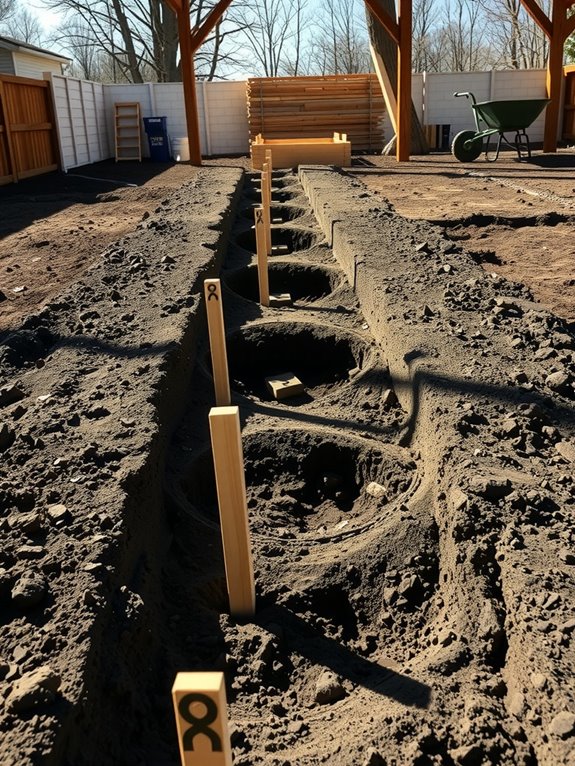
Before building, you need to prepare the ground and create a solid foundation for your posts. Mark your gazebo location with stakes and string. Check that the area is level and suitable for your garden space.
Use a posthole digger or auger to dig four holes that are 2 feet deep. Arrange these holes in a square or your chosen shape. Lay gravel in each hole. The gravel provides proper drainage and stability for the posts.
Place your posts into the holes. Add another layer of gravel on top of each post. Ensure each post stands vertical and aligns properly with the others by checking the level and plumb of all posts after positioning them.
This preparation creates the sturdy base your gazebo frame requires for safe, long-lasting construction.
Set Posts and Pour the Foundation
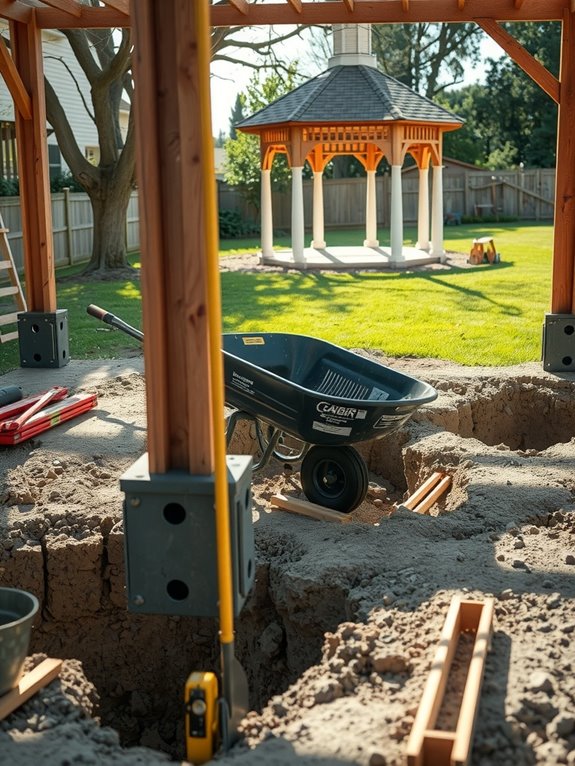
Once your posts are positioned vertically in the prepared holes with gravel beneath them, you’re ready to secure them permanently. Check each post with a spirit level to confirm it’s plumb and true before pouring concrete.
- Pour concrete into the holes around each post to lock them firmly in place
- Use a spirit level continuously while concrete sets to maintain vertical alignment
- Allow concrete to cure fully before proceeding to floor framework installation
The gravel layer aids drainage and prevents moisture from wicking up into your post holes. Concrete creates a durable base that keeps your gazebo structure stable and self-contained for years to come.
Build Your Gazebo Floor Frame
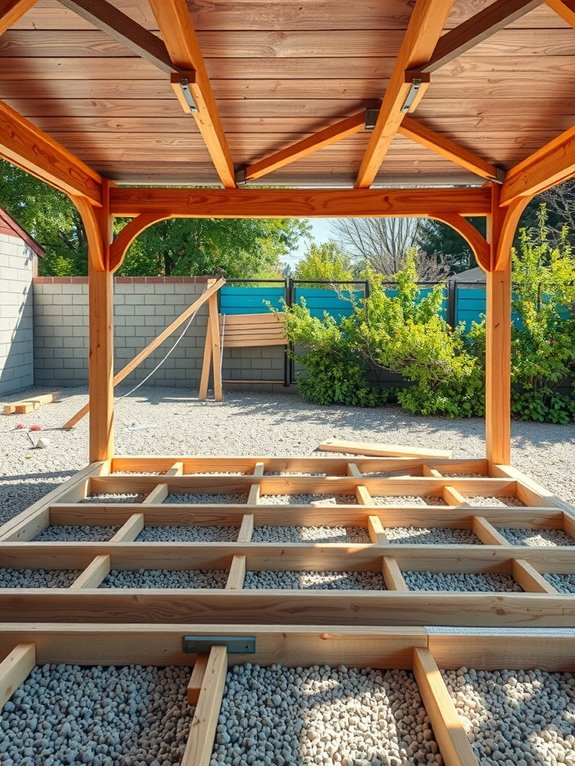
Your concrete has cured. Now you are ready to construct the floor frame that will support your entire gazebo structure. You will use 2×4 floor joists as your base. Lay them level and square across your posts.
Use 2×4 floor joists as your base, laying them level and square across your posts for a solid foundation.
Attach the floor frame securely to the posts you set in gravel-filled holes. Next, lay cedar boards across the joists to create your finished surface. Cedar resists rot naturally because of its chemical composition, which makes it suitable for outdoor use.
Before installing boards, apply ground protection to any wood that contacts soil directly. This reduces moisture exposure and extends your structure’s lifespan. Check that your floor frame remains level throughout installation. Make adjustments as needed during this process.
A properly constructed floor frame creates a stable, durable platform for your complete gazebo.
Build and Raise the Gazebo Roof
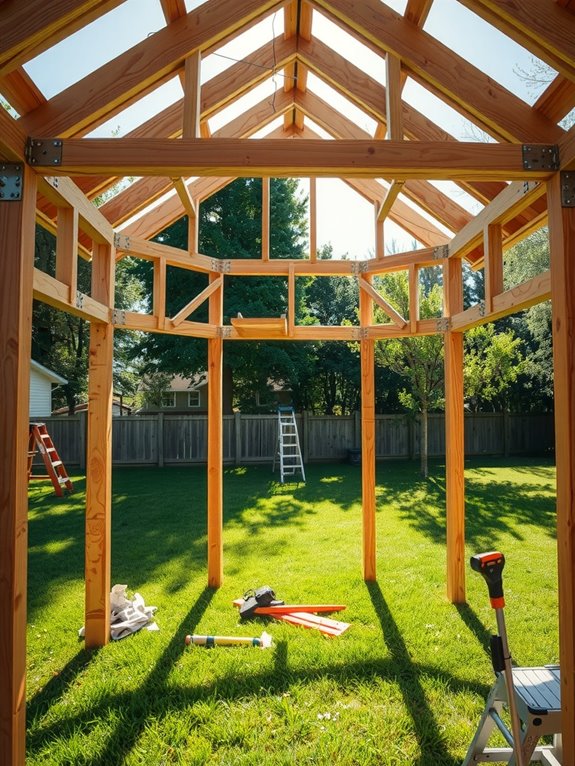
With your floor frame complete and level, you’re ready to construct the roof. Building the roof involves several key steps that you’ll complete before lifting it into place.
Steps for roof construction:
- Cut 4×12 roof rafters and mark birdsmouths. These cuts create the angled roof structure.
- Cover the frame with OSB sheathing. Then add interior cedar boards for finishing.
- Install underlayment with roofing nails. Attach drip edge to direct water away from the structure.
Next, assemble the complete roof structure on the ground. Once finished, you and your helpers lift it into position on the posts. Secure the roof with screws and nails. Add metal straps and angled nails to increase wind resistance. Your roof is now ready to protect the gazebo.
Install the Roof and Weatherproof Your Gazebo
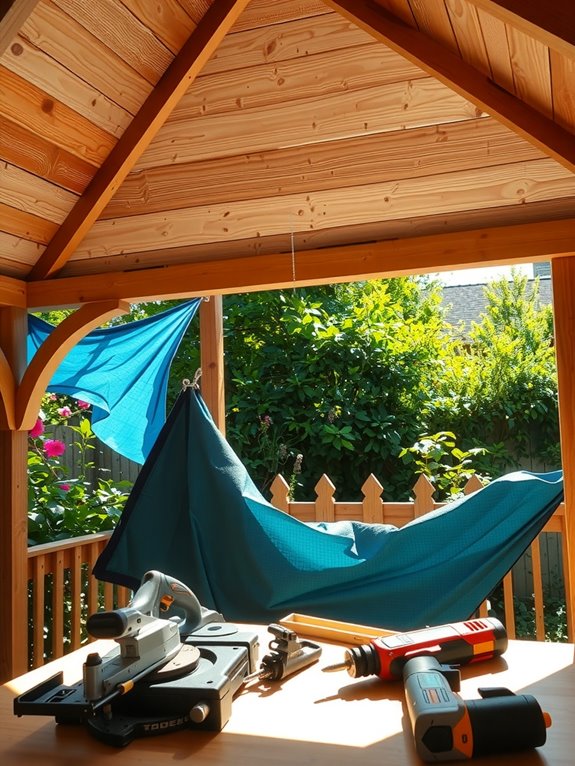
Start by assembling the roof frame using OSB sheathing and cedar board interior finishing. Lift the completed roof into position on the posts. Install underlayment with roofing nails to create a moisture barrier. Attach a drip edge along the roof perimeter to direct water away from the structure’s walls and foundation.
Add metal straps with angled nails to increase wind resistance. Screw cedar boards onto the roof surface for the exterior finish. Apply polyurethane coating to protect the wood from moisture and UV damage. Spread gravel around the gazebo base to improve drainage and reduce water pooling near the foundation.
Roof Frame Assembly Process
Cut 4×12 rafters and mark the birdsmouths on each one. Birdsmouths are notched cuts that rest on your posts and center beam. These cuts ensure your rafters sit flush and secure against your support structure.
Attach the rafters to the top of your center beam and post tops. This connection forms the core of your gazebo roof framework and provides the structural support for all other components.
Follow these assembly steps:
- Measure and mark birdsmouths accurately on each rafter before installation
- Secure rafters with bolts and metal connectors for maximum stability
- Verify that all angles match your gazebo’s frame dimensions
Proper rafter placement prevents shifting and ensures your roof system functions correctly over time.
Weatherproofing Material Installation
Installing proper roofing and weatherproofing materials protects your gazebo from rain, snow, and wind damage. Lay OSB sheathing across your roof frame. Cover the sheathing with your chosen roofing materials and attach an underlayment using roofing nails. Seal all edges with a drip edge to direct water away from the structure.
Secure the roof to your posts using angled nails. Add metal straps across the joints to increase wind resistance and prevent separation during strong gusts. These straps should be fastened at multiple points along the posts and roof connection.
Apply weatherproof finish to all exposed cedar surfaces and ground-contact areas. Paint base posts with exterior paint and apply polyurethane to other surfaces for added durability and protection against moisture.
Ensure proper drainage by expanding gravel around the foundation and creating a slight slope that angles away from the structure. This slope prevents water from pooling near the base and reduces the risk of foundation damage.
Securing Roof Against Elements
Securing Roof Against Elements
With weatherproofing materials in place, you are ready to build and install the roof structure. Construct the roof on the ground first. Then lift it into position and secure it to the posts. This method reduces handling risk and ensures proper alignment.
Key installation steps:
Attach underlayment with roofing nails. Install a drip edge to direct water away from the gazebo structure. Add metal roof straps that connect from posts to the roof. These straps increase wind resistance. Use angled nails in strategic locations for additional stability against wind forces.
After securing the framework, add OSB roof sheathing for protection. The sheathing boards typically measure 4 feet by 8 feet and are 7/16 inches thick. Install interior cedar board finishes to complete the weatherproof layer. Cedar boards measure 3/4 inch thick and 5 1/2 inches wide. These boards provide both protection and visual appeal.
Your gazebo now has a durable roof. It protects against rain, wind, and weather damage. The layered system of underlayment, sheathing, and finish boards creates a moisture barrier that prevents water penetration into the structure.
Add Seating, Tables, and Decorative Finishes
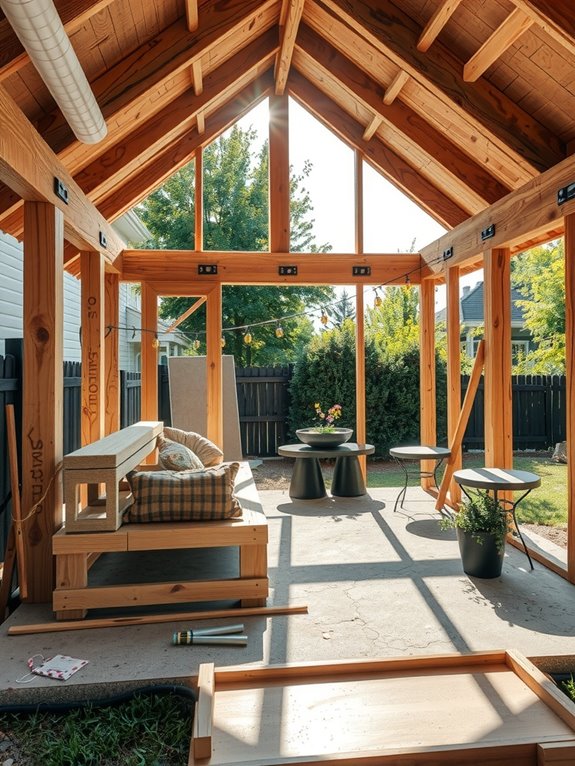
You’ll build sturdy benches around the gazebo’s interior using 2×4 lumber. These benches will be set at a 19-inch height and secured with brackets. Sand the benches before installation, then fasten them to the floor joists using long screws for stability.
Install a pedestal table by attaching cedar boards to the table surface. Anchor both the table and benches directly to the floor joists to prevent shifting or movement.
Apply polyurethane as a protective finish to all wooden surfaces. This coating protects the wood from moisture and wear. Add decorative flower baskets around the gazebo’s structure for visual interest. Spread gravel around the base of the gazebo to improve drainage and create a finished appearance.
Built-In Bench Seating
Built-In Bench Seating
Built-in bench seating adds both comfort and function to a gazebo. This seating creates a space where people can gather and sit together.
Gazebo seating construction:
Frame benches using 2×4 lumber and secure them with screws. Set the bench height at 19 inches for comfortable seating. Attach the benches to floor joists using brackets and long screws. This method creates stable, drop-in designs that stay in place.
Add a third bench by notching the supports around the table area. This approach maximizes seating without making the space feel crowded.
Finishing the benches:
Remove the benches before sanding them. This step allows you to sand all surfaces evenly for a smooth finish without splinters. Once sanding is complete, reinstall the benches in their original positions. Apply polyurethane to the wood surfaces. This protective coating prevents moisture damage and extends the life of the wood.
Proper construction and finishing techniques maintain the gazebo’s structural stability and visual appearance while providing durable seating for years of use.
Pedestal Table Installation
With bench seating in place, you can now add a pedestal table to create the main functional area of your gazebo. The table consists of a minimalist base that connects directly to the floor joists. This design provides maximum stability while keeping the space uncluttered.
Installation Process
| Installation Step | Key Action |
|---|---|
| Base Connection | Attach pedestal to floor joists |
| Cedar Application | Screw boards to table surface |
| Surface Preparation | Sand until smooth |
| Securing Method | Use long screws through joists |
Start by attaching the pedestal base to the floor joists using long screws. This connection prevents shifting and movement. Next, screw cedar boards across the top surface of the table. Cedar resists weather damage and decay. Sand all surfaces smooth to create a finished appearance and eliminate splinters.
Apply a polyurethane coating to the entire table and benches for weather protection. This coating extends the lifespan of the wood and reduces maintenance needs. The long screws that secure the table also hold the benches in place.
After table installation, spread gravel around the gazebo post area. Gravel improves drainage and prevents water from pooling near the structure. It also creates a neat, defined border around your gazebo.
Paint and Protective Finishes
Protective finishes shield gazebo wood from weather damage and extend the structure’s lifespan. These coatings work together to prevent moisture penetration, UV degradation, and rot.
Apply polyurethane coating after sanding all wood surfaces to create durable protection against moisture and ultraviolet damage. This finish creates a hard, water-resistant layer on exposed wood.
Use protective finishes specifically on ground-contact areas where wood meets soil. These areas face the highest risk of rot and decay. Consider using non-pressure-treated lumber in contact areas and protecting it with appropriate coatings instead.
Stain or paint cedar boards and lattice brackets to seal wood against weather exposure. Cedar contains natural oils that offer some protection, but applied finishes extend durability significantly.
Add cedar caps along the front edge of the gazebo. These caps serve both aesthetic and protective functions by directing water away from underlying wood.
Expand the gravel layer around the gazebo’s base to improve drainage. Gravel prevents soil moisture from contacting the wood structure and undermining protective finishes. A 3- to 4-inch gravel bed surrounding the base provides adequate drainage protection.