

You’ll start by checking property lines and local building codes with your county clerk. Next, pick your fence style and materials like cedar or preassembled panels. Measure your entire fence line and mark gate locations with spray paint.
Dig post holes about 2 feet deep. Add gravel to the bottom for drainage. Set posts in concrete to secure them firmly in the ground.
Install three evenly-spaced horizontal rails between the posts. These rails provide stability for the fence structure. Attach pickets or panels using 2-inch screws or nails. Space them consistently along each rail section.
Build your gate frame using exterior 2×4 lumber. Add diagonal bracing to reinforce the gate frame and prevent sagging. Each step builds on the previous one to create a sturdy, finished fence.
Check Your Property Lines and Local Building Codes
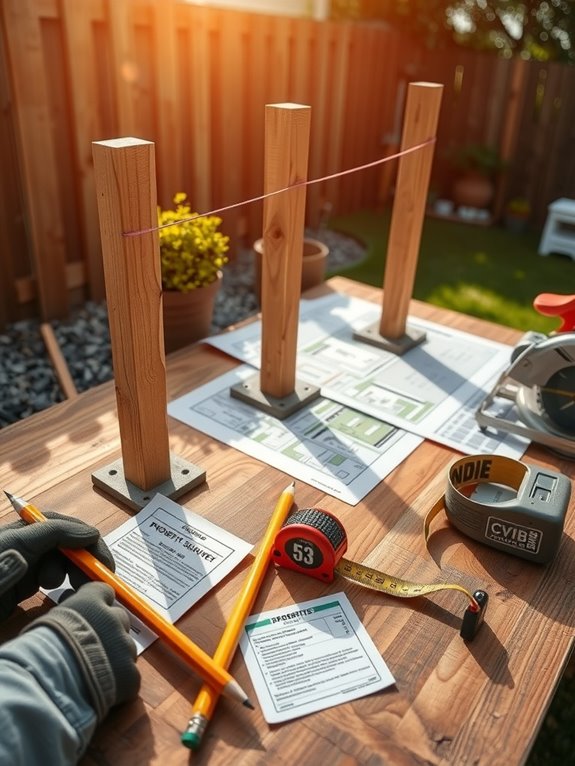
Before you dig the first post hole, you need to check your property lines and understand local building codes. Contact your county clerk or hire a licensed surveyor to get boundary information from your home plat.
Before digging post holes, verify property lines and local building codes by contacting your county clerk or hiring a licensed surveyor.
Research your city’s regulations and any HOA rules that apply to your fence. These rules cover fence style, height, and placement. Many areas require permits before you start construction, so verify this with your local authority.
Review setback requirements. These requirements specify how far your fence must sit from the property line. Discuss your plans with neighbors to ensure you follow any shared-use agreements.
Call your utility authority to have utilities marked before you dig. This step prevents damage to buried lines and keeps your project safe. Following these steps protects your investment and keeps your project legal.
Pick Your Fence Style and Materials
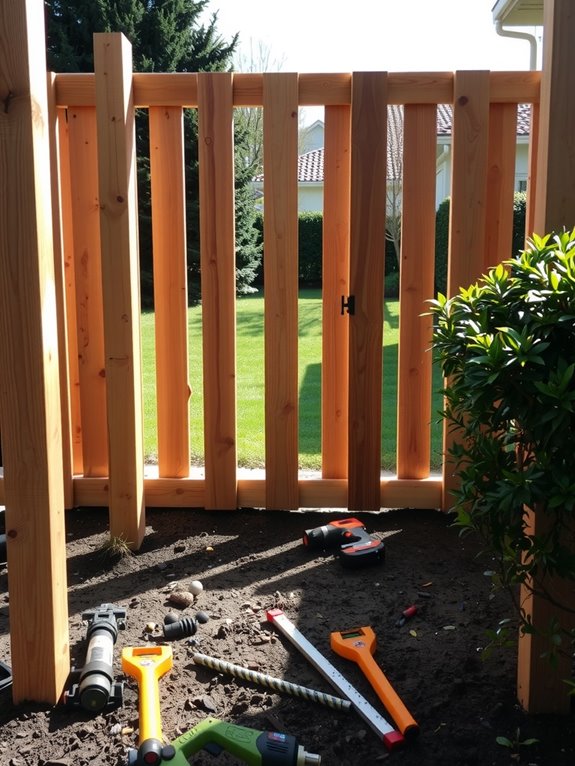
What style will work best for your yard and budget? You need to balance how the fence looks with how well it functions when choosing materials and design.
Popular fence options include:
Cedar fences. Natural wood resists moisture and insects because of its natural oils. Cedar weathers to a gray color over time. You can apply semi-transparent stains to customize the appearance.
Preassembled panels. These panels come ready to install. They require less work than building fences from individual pickets. Installation takes less time and involves fewer steps.
Post spacing and layout. Space posts 6 to 8 feet apart. Align posts with panel widths to ensure stable support.
Access and gates. Design your fence with removable panels or access points. These allow room for large deliveries and yard maintenance. Gate placement must follow local regulations and property line rules.
Check local building codes before you choose your final fence style. City or HOA requirements may affect your design decisions.
Measure and Mark Your Fence Line
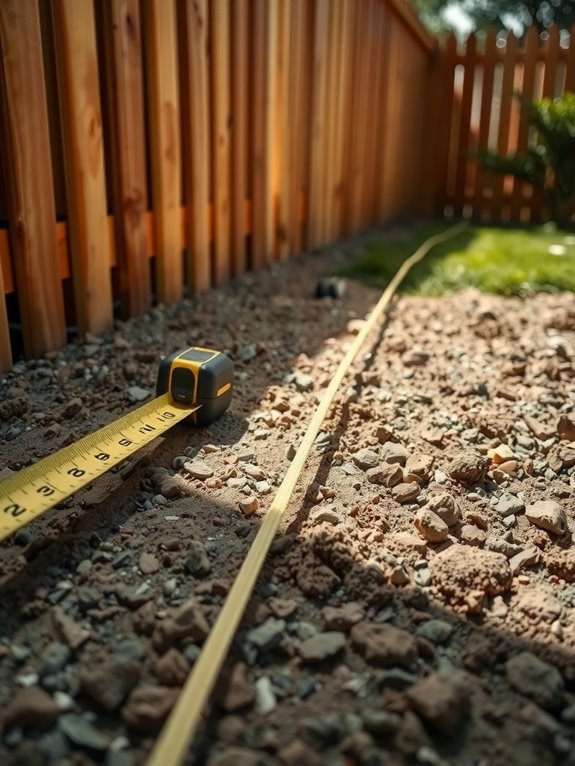
Measure your entire fence line, including any gate openings. This tells you the total length you need to cover. Mark gate locations with spray paint or chalk. This prevents confusion during installation.
Use a measuring wheel for longer distances. It provides more accurate measurements than a standard tape measure. Write down each section’s length as you measure.
Calculate how many fence panels you need by subtracting gate lengths from your total footage. For example, if your total fence line is 100 feet and you have two 4-foot gates, you need panels for 92 feet of fencing.
Calculating Total Fence Length
Accurate measurements of your fence line determine whether you purchase the correct amount of materials and install posts at consistent intervals. Establish your total fence length before beginning construction.
Steps to calculate total fence length:
- Measure the entire perimeter using a measuring wheel for long distances. Measuring wheels provide better accuracy than hand tape measures over extended layouts.
- Mark gate locations with spray paint or chalk. This allows you to identify which sections to subtract from your total measurements.
- Document all measurements by writing down each section. Written records prevent recalculation errors during installation.
Calculate actual panel length:
Subtract your gate locations from the total fence length. This figure represents the actual panels you need to purchase.
Determine post spacing:
Divide your total fence length by your desired spacing interval. Standard post spacing is 6 feet apart. This calculation ensures consistent post support throughout your fence layout.
Marking Gate Locations
Once you measure your total fence length, you need to mark where each gate will go. Use spray paint or chalk to outline your complete fence line on the ground. Place clear markers at gate locations based on your property layout.
Subtract the total length of all gates from your overall fence footage. This tells you how much space the panels will actually cover. Use this number to determine accurate post spacing and calculate the exact quantity of posts you need.
Label each gate position with visible markers during this planning stage. These reference points prevent mistakes during installation. Precise layout marking ensures your gates align properly with post spacing requirements and helps you avoid errors in your fence-building project.
Dig Post Holes and Set Posts in Concrete
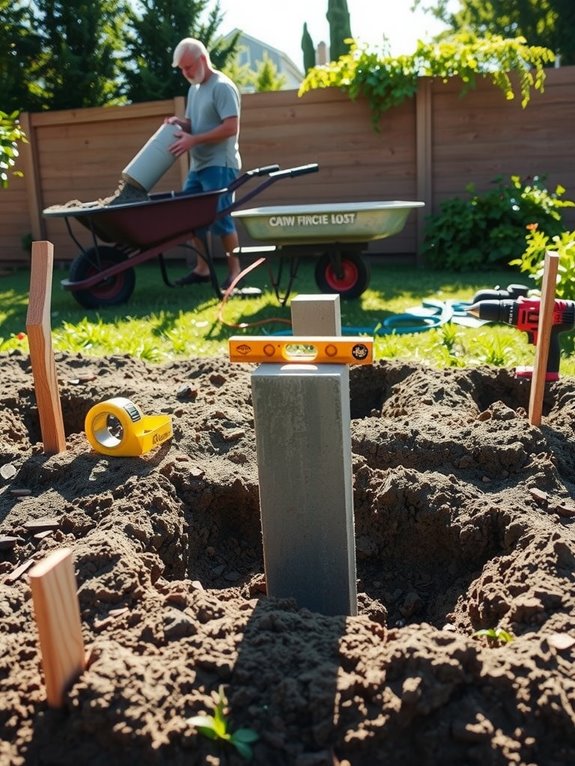
The foundation of your fence depends on properly positioned and secured posts. You’ll place posts every 6 to 8 feet along your fence line, starting with end posts for alignment.
Follow these steps to dig and set your posts:
- Dig post holes approximately 1/3 the height of your post—about 2 feet deep for a 6-foot post.
- Add 3–4 inches of gravel to each hole’s bottom for drainage.
- Pour 6–8 inches of concrete mix into the hole. Center your post and use a level to plumb it before the concrete sets.
For cedar posts, use gravel or a dry-set mixture around the base to promote drainage and prevent rot. Allow the concrete to cure for the manufacturer’s recommended timeframe, typically several days, before attaching rails or panels.
Install Rails Between Posts for Stability
Horizontal rails connect your fence posts and create a framework for panels or pickets. Install at least three rails on most privacy fences. Position one rail at the bottom, one in the middle, and one at the top. Space the rails evenly between posts and keep them perfectly level. This ensures your fence appears straight and professional.
Secure each rail to the posts using deck screws or nails. Tighten the fasteners so the rails remain firmly in place. The rails must not shift when pressure is applied to the finished fence.
Rail Spacing And Alignment
After setting your posts firmly in place, you can install the rails that connect them. Rails provide your fence with stability and strength.
Follow these steps for correct rail spacing and alignment:
- Install a minimum of three rails between posts for privacy fences. Position them at the bottom, middle, and top. This arrangement resists sagging and maintains structural integrity.
- Use a level when attaching each rail. This ensures horizontal alignment. Maintain consistent gaps between the bottom, middle, and top rails to support proper panel or picket installation.
- Space rails evenly across the distance between your posts. Keep alignment level throughout to maintain a uniform fence line. This proper spacing ensures your fence posts function as designed.
Check alignment frequently as you work. Regular checks prevent mistakes and structural problems.
Securing Rails To Posts
Once your posts are set and plumb, attach the rails to create your fence’s framework. For privacy fences, install at least three rails: bottom, middle, and top. Space them evenly between posts and check that they are level.
For traditional rail fences, fit round or split rails directly into the posts during installation. Secure them with optional 40D nails. For panel fences, lift pre-assembled panels between posts. Nail them to the post faces with 40D nails to keep them plumb.
You can add cap boards over the backside of rails for a finished appearance on both sides. Cap boards also increase rigidity. Verify rail alignment before installing pickets or panels. Proper rails prevent sagging and support all subsequent work.
Attach Pickets or Panels to the Frame
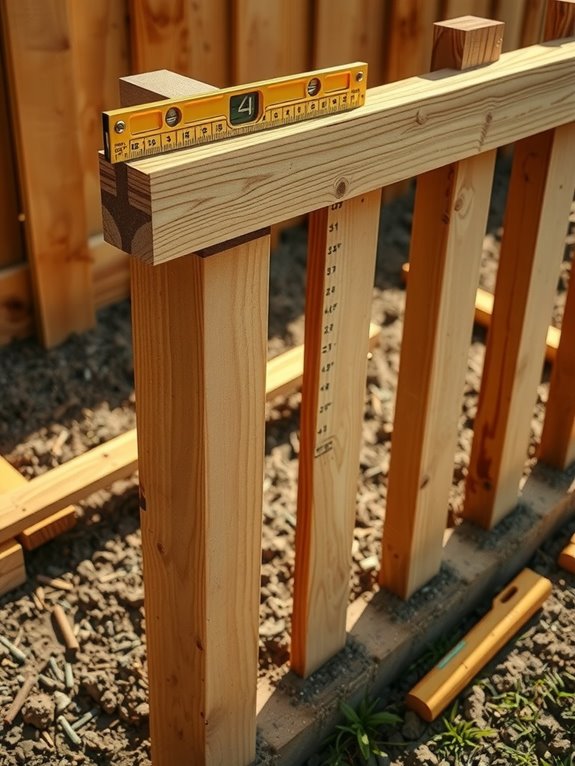
How you secure pickets or panels to the frame affects both the fence’s appearance and durability. You can use one of these attachment methods.
Fastening Individual Pickets
Drive 2-inch screws or use an air nailer to attach pickets to the rails and posts. Space each picket evenly and secure it firmly to create a uniform appearance.
Installing Privacy Fence Boards
Install boards with no gaps between them. Start with a full-length board positioned flush against the first post. This accounts for wood shrinkage that occurs over time.
Securing Pre-Assembled Panels
Lift pre-assembled panels between the posts. Secure each panel to the post faces using 40D nails. Check that panels are plumb before fastening.
Adding Access Points
Consider installing one removable panel in a strategic location. This allows access to your property during large deliveries or equipment movement.
Final Adjustments
Trim the last picket if needed to maintain an even top line across the entire fence. Match your design specifications for a finished appearance.
Build and Install Your Fence Gate
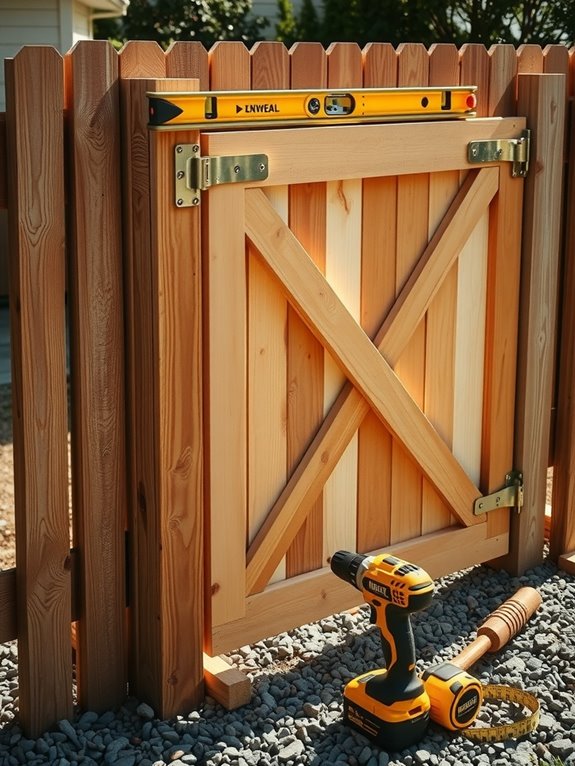
Your fence project needs a gate for access to your yard. A properly constructed and installed gate completes your fence and makes the yard functional.
Frame Construction
Build your gate frame using exterior 2×4 lumber. Add a diagonal cross brace to the frame to prevent sagging. Install a second brace if warping occurs over time.
Measurement and Installation
Measure your gate opening carefully before you begin. Predrill all hinge locations on both the frame and the fence posts. Use shims to level the frame, then install heavy-duty hinges. Mount the latch and handle at a height that is easy to reach during regular use.
Design Details
Match the picket style of your gate frame to the rest of your fence. Position the diagonal cross brace across the frame for maximum stability. This design keeps your gate structurally sound and visually consistent with your existing fence.