
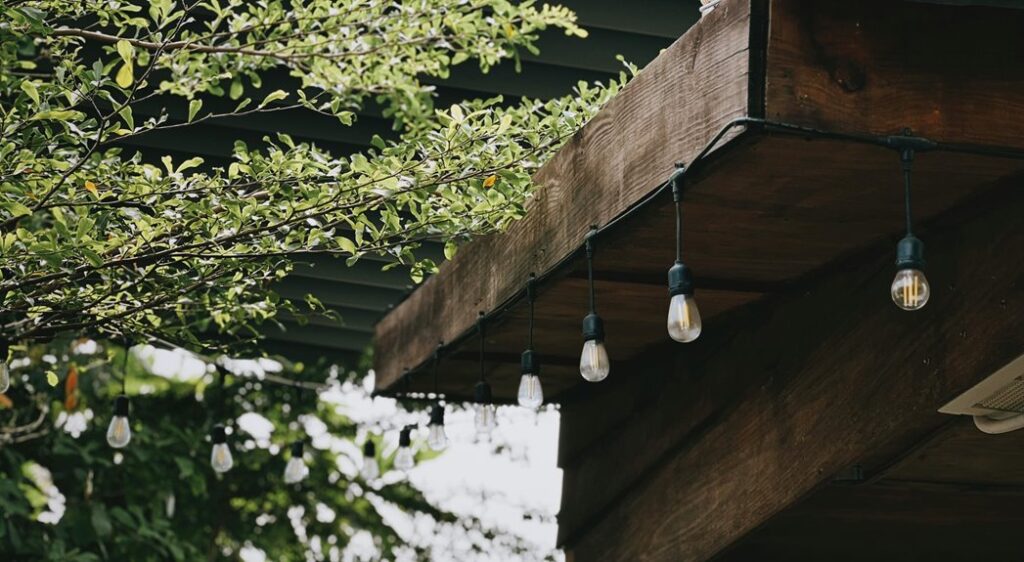
Start by measuring the distances between your pergola’s rafters and posts. This measurement determines how many lights you will need. Select outdoor-rated LED bulbs and waterproof sockets that can handle moisture exposure.
Gather your tools before beginning installation. You will need a ladder, measuring tape, extension cord, and access to a GFCI outlet. Install cup hooks or eye bolts along the beams. Space them 1 to 3 feet apart.
Drape the light strands from your power source outward. Keep consistent tension on the strands as you work. Use clips to secure the lights at 12 to 18 inch intervals.
Route all cords along the beams once the lights are in place. Test each bulb to confirm it works properly. Secure everything with zip ties to prevent movement or sagging. This installation method produces a complete, professional result.
Step 1: Plan Your Pergola Light Pattern and Measure Spans
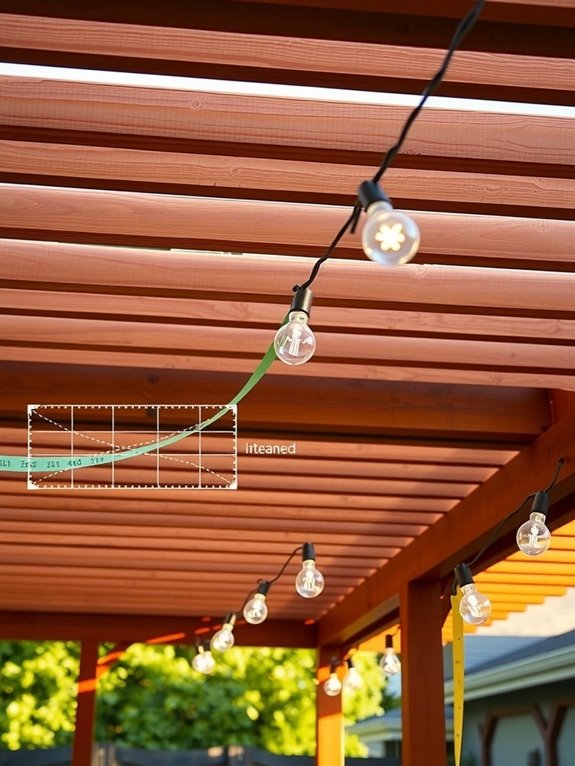
Your string light arrangement depends on two factors: the design you want and your pergola’s dimensions. Three main patterns are available to you: straight lines, zigzags, or a canopy design. Each pattern requires different measurements and spacing.
Your pergola’s string light arrangement depends on your design preference and dimensions—choose from straight lines, zigzags, or canopy patterns.
Measure the spans between your pergola’s rafters or posts first. Record these measurements so you know exactly how many lights you need. Write down the distance between each rafter and each post. Consistent spacing creates even light distribution across your structure.
Next, mark your mounting points along the rafters and posts using a measuring tape. Space each point at equal distances from the others. This determines how your lighting pattern will look and function. Planning your measurements before installation prevents errors and produces professional results.
Step 2: Select Weatherproof String Lights and Bulbs
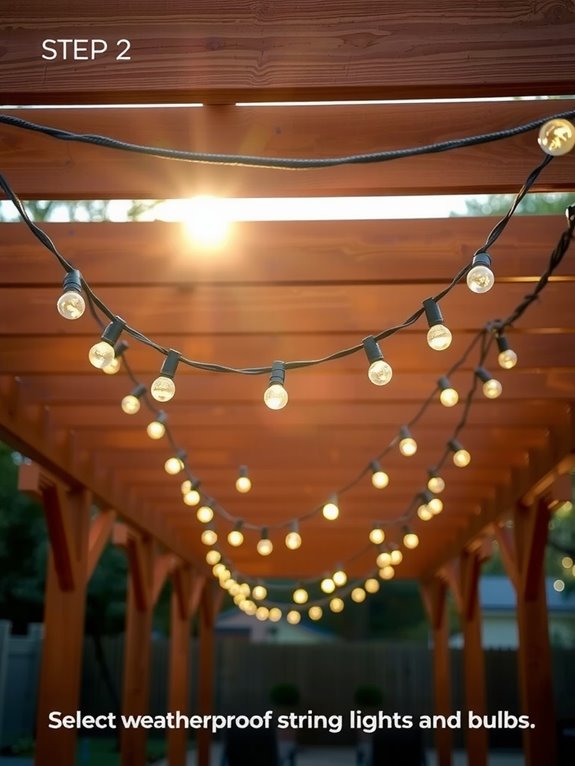
Select Weatherproof String Lights and Bulbs
The type of string lights you select determines their outdoor lifespan and performance. Purchase outdoor-rated lights that are specifically designed for moisture and sun exposure. LED bulbs last longer and use less energy than incandescent bulbs.
Waterproof sockets protect connections from water damage. Cooler-to-the-touch bulbs reduce heat hazards. Shatterproof bulbs resist breaking from weather conditions or physical impact.
If you plan to connect multiple strands, choose lights with end-to-end connection capabilities. This feature allows you to create longer continuous runs without gaps.
Consider your color temperature preference. Warm white lights (around 2700K) create a welcoming atmosphere on most pergolas. Check the total wattage and voltage specifications. These numbers must match your outdoor outlet’s capacity and any timers or dimmers you intend to use. Matching these specifications prevents electrical problems and ensures safe operation throughout the year.
Step 3: Assemble Your Tools and Mounting Hardware
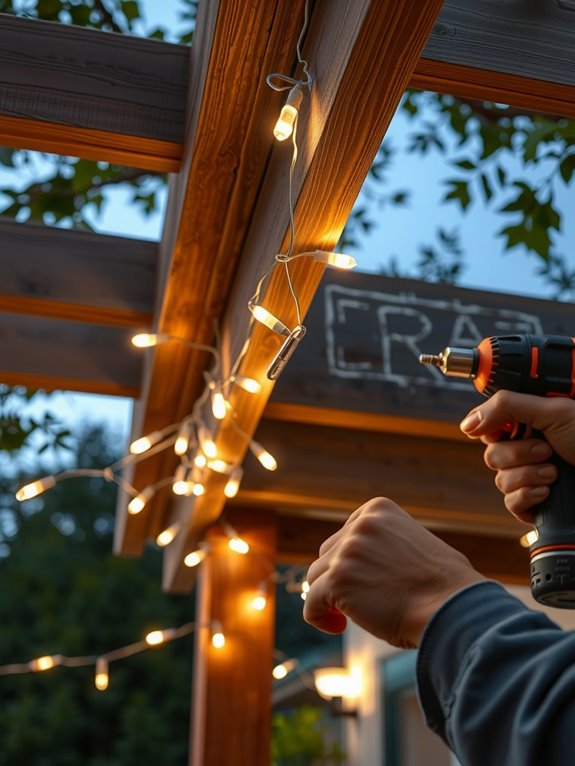
Before you hang your string lights, gather the necessary tools and hardware. You will need a ladder, measuring tape, and an outdoor-rated extension cord that reaches your GFCI outlet. These items ensure safe and secure installation.
Cup hooks or eye bolts serve as mounting points along your pergola’s beams and posts. Adhesive clips and cable ties hold the lights in place while protecting the wood from damage. Cable clips anchor the cords at regular intervals along the length of your installation.
Space your mounting points every 1 to 3 feet. The exact distance depends on the weight of your lights and your preferred pattern. Lighter fixtures allow for greater spacing, while heavier lights require closer intervals.
A timer is optional equipment that controls when your lights turn on and off automatically. Collecting all tools and hardware before you begin ensures the installation process proceeds without interruption or delays.
Step 4: Mount Anchor Points on Your Pergola’s Beams and Posts
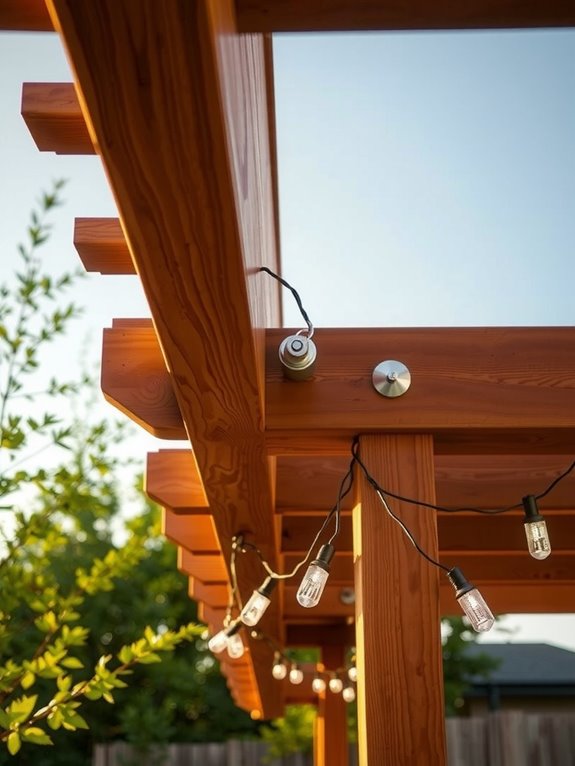
Install mounting points along your pergola beams and posts to hold string lights securely. Plan anchor point locations based on your chosen layout pattern. Space fasteners every 1 to 3 feet apart.
Choose outdoor-rated, weatherproof fasteners that resist corrosion and do not damage wood. Cup hooks work best for straight-line patterns and require 1- to 2-foot spacing. Zip ties suit temporary setups and space 2 to 3 feet apart. Adhesive clips provide damage-free mounting and work at 1- to 3-foot intervals.
For zigzag or canopy patterns, position anchors at opposite sides and ends. This arrangement creates balanced tension across your installation. Test each anchor point by gently pulling the strand before connecting power. Confirm that each mount holds the strand firmly without shifting or loosening.
| Fastener Type | Spacing | Best Use |
|---|---|---|
| Cup hooks | 1-2 feet | Straight lines |
| Zip ties | 2-3 feet | Temporary setups |
| Adhesive clips | 1-3 feet | Damage-free mounting |
Step 5: Hang and Drape the Light Strands
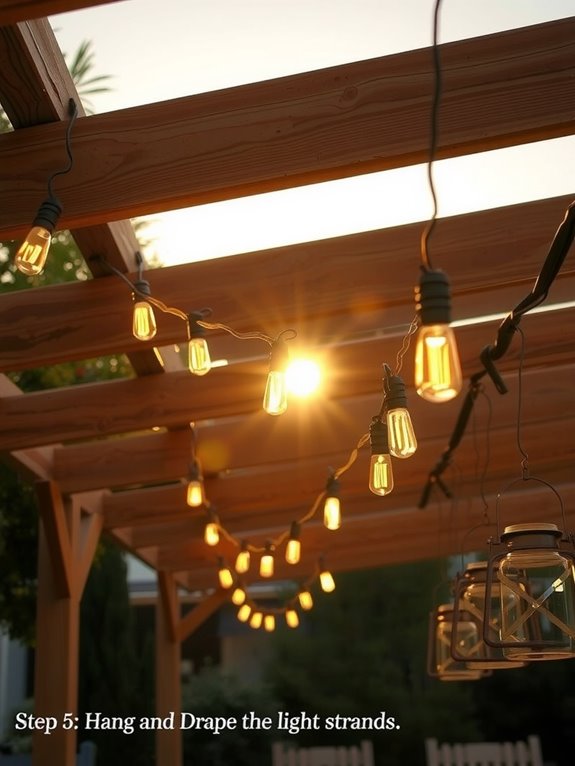
Start hanging your light strands from the power source. Work outward toward the anchor points. This prevents you from stretching wires too far and pulling them tight.
As you drape each strand, leave adequate slack between anchor points. The slack allows the lights to move freely in the wind. This movement prevents strain on the connections and anchors.
Keep the tension consistent along each strand by using clips and zip ties at regular intervals. Space these fasteners 12 to 18 inches apart along the wire. Even spacing maintains a straight, aligned appearance across your pergola’s frame.
Starting From Power Source
Now that your mounting points are secured, attach the light strands to your pergola. Begin at the power source location, which should be positioned at the bottom of a pergola post for safe wiring access.
Secure the first light strand directly at the power source point. Drape it along your planned pattern, whether in straight lines, zigzags, or canopy designs. Leave adequate slack in the strand to allow for natural draping and wind movement. This slack prevents excessive tension on mounting points and reduces sag over time.
Use cup hooks, zip ties, or adhesive clips to fasten the strand to rafters and beams as you progress along your pergola. Route all strands toward your GFCI outlet. Keep all connections secure and protected throughout the hanging process.
Maintaining Consistent Tension
Keep light strands from sagging by draping them with controlled slack along your support wires. This slack accommodates wind movement and thermal expansion without creating visible drooping.
Secure strands using clips or zip ties at 12–24 inch intervals along the wires. Even spacing maintains uniform tension throughout your installation.
For zigzag patterns or canopy layouts, anchor the opposite ends first. Then adjust the midpoints to ensure even pull across your entire design.
Recheck tension after you complete the installation. Following the first wind event, immediately retighten any visibly slack sections. This post-installation check prevents sagging problems before they become noticeable.
Monitor your pergola’s string lights regularly throughout the season. Consistent monitoring keeps them taut and maintains their appearance.
Step 6: Route Power and Conceal Cords
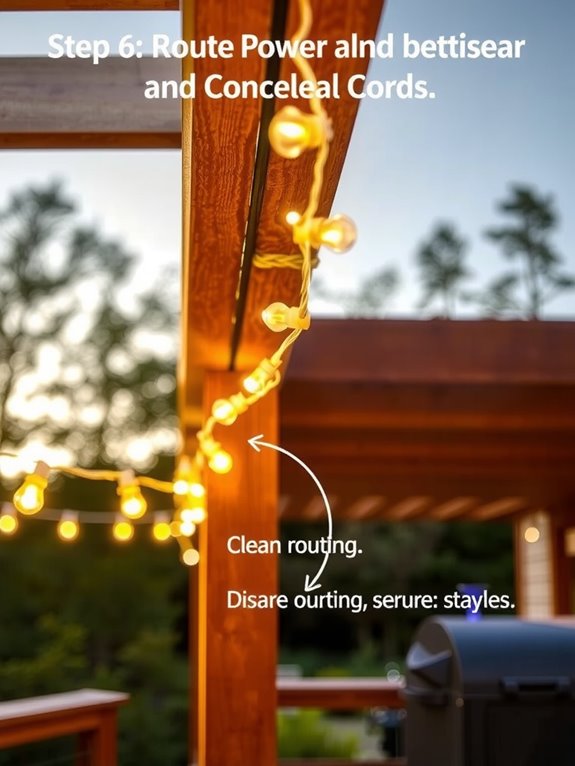
Once you’ve hung your light strands, route the power cords to a nearby GFCI outdoor outlet. GFCI outlets provide electrical protection in wet environments. Conceal the cords by running them along pergola beams or edges. Secure them with cord covers or clips. This creates a neat appearance and prevents tripping hazards in walkways.
If no outlet is within practical reach, consider battery-operated or solar-powered lights instead. These alternatives eliminate visible electrical lines while maintaining a clean aesthetic.
Power Source Management
Proper power source management keeps your string lights safe and functional on your pergola. Route an outdoor extension cord from your outdoor outlet using weatherproof practices that prevent moisture damage. Elevate the cord off the ground and use covers or channeling along beams to hide wires and eliminate tripping hazards.
| Power Management Task | Method | Safety Benefit |
|---|---|---|
| Outlet Selection | Use outdoor outlet | Weatherproof protection |
| Cord Protection | Install cord covers | Prevents water damage |
| Load Management | Don’t overload surge protector | Reduces electrical risk |
| Timer Setup | Install during initial setup | Ensures dimmer compatibility |
Do not plug more strands than recommended into a single surge protector. This prevents overloading and reduces electrical hazards. Test your timer setup and dimmer compatibility before final installation to verify the system operates correctly and safely throughout your weatherproof lighting installation.
Cord Concealment Techniques
Power cords for outdoor pergola lighting need proper routing to maintain safety and appearance. Route cords along beams or under deck edges to reduce visibility. Cord covers and LED conduit hide wiring that runs along posts, rafters, or under canopies.
Secure all loose cords with zip ties, clips, or adhesive cable clips. Space fasteners 1 to 3 feet apart to prevent sagging and eliminate tripping hazards. Position the plug end at the bottom of the post or along the base for easy access and discreet routing away from view.
For solar or battery-powered systems, route power from the solar panel or battery pack directly to the nearest light strings. This method reduces the amount of visible wiring throughout your lighting setup and creates a cleaner overall appearance.
Step 7: Power On, Tweak Spacing, and Make Sure Everything’s Secure
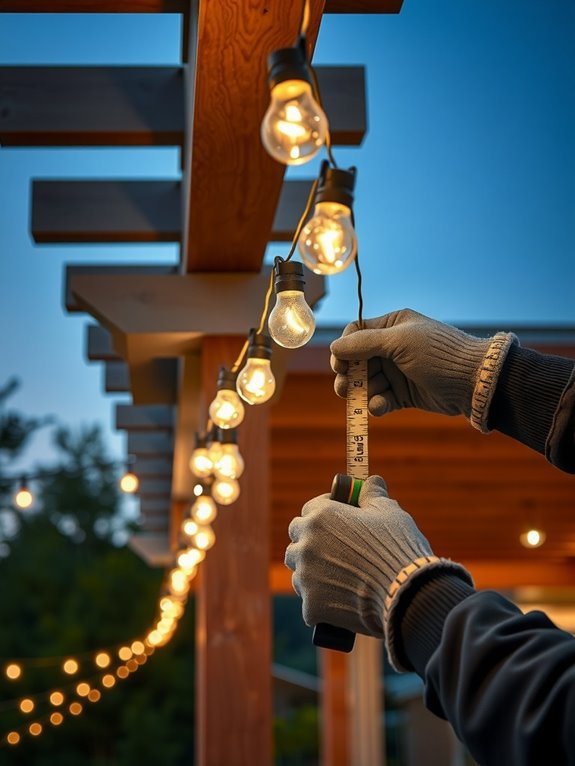
Plug your string lights into a GFCI outdoor outlet to test that power is live and verify all circuits are safe. Check the spacing across your entire pergola layout next. Adjust any sagging sections so the light distributes evenly and creates a consistent canopy effect across the structure.
Test all bulbs and connections to confirm they work properly. Replace any nonworking bulbs to ensure uniform brightness throughout the installation.
If your system includes a dimmer or timer, calibrate these devices now. Set them to achieve your desired lighting level and establish automatic on/off cycles that match your schedule.
Secure all cords and hardware by tucking away excess length. Make sure no cords cross walkways or create tripping hazards in the area where people walk and move. Your outdoor lighting system is now complete and ready to function safely in your pergola space.