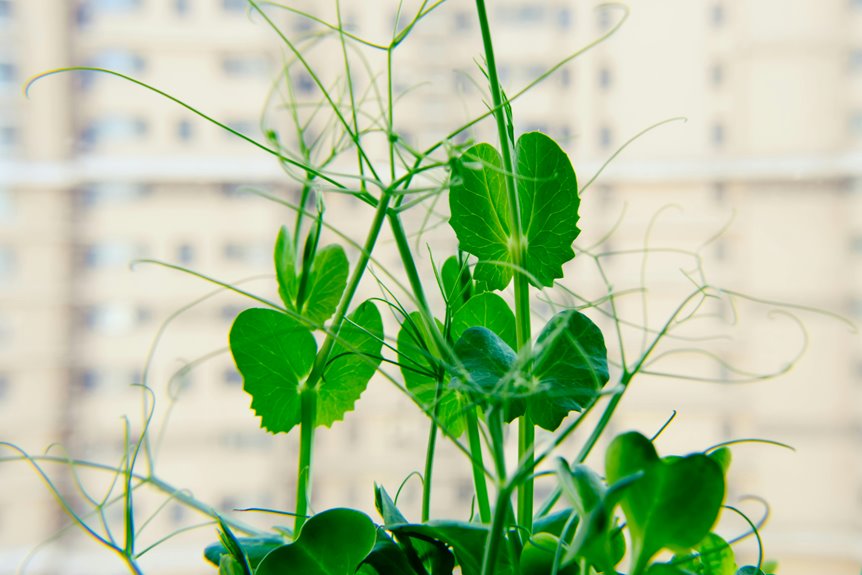
Not all garden peas need a trellis. Dwarf varieties that grow 50–60 cm tall can grow without support. A small trellis helps prevent these shorter plants from becoming top-heavy.
Taller varieties exceeding 60 cm require sturdy supports. These taller peas use their tendrils to grip and climb the structure.
Using a trellis provides three main benefits. First, it improves air circulation around the plants. Second, it reduces disease by keeping foliage off the ground. Third, it makes harvesting easier because the pods are more accessible.
Your pea variety determines whether you need a trellis. You should also consider your available garden space. Identifying your specific pea type helps you choose the best support setup for your growing conditions.
Do All Types of Peas Need a Trellis?
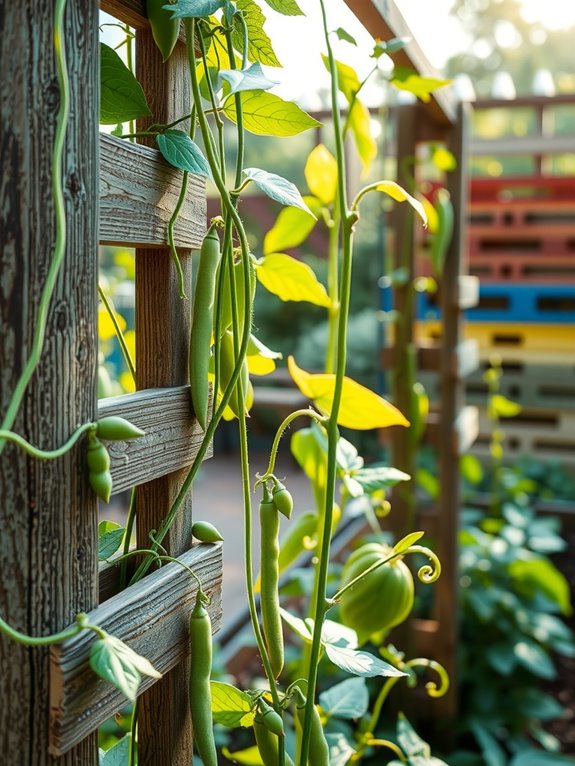
Not all pea varieties require a trellis. Dwarf cultivars that grow 50–60 cm tall may not need support. Taller varieties exceeding 60 cm require a trellis or frame for their tendrils to grip properly. Some varieties reach up to 2 meters and need robust support systems.
Even compact varieties benefit from some support structure. Without adequate support, unsupported plants become top-heavy and fall over. This results in lower yields and increased disease problems.
Check specific variety recommendations before planting. Your seed packet or plant label will indicate whether your peas need full support, light support, or no support. Understanding your particular variety ensures healthy growth and maximum productivity.
Why Tall Pea Varieties Need a Sturdy Trellis
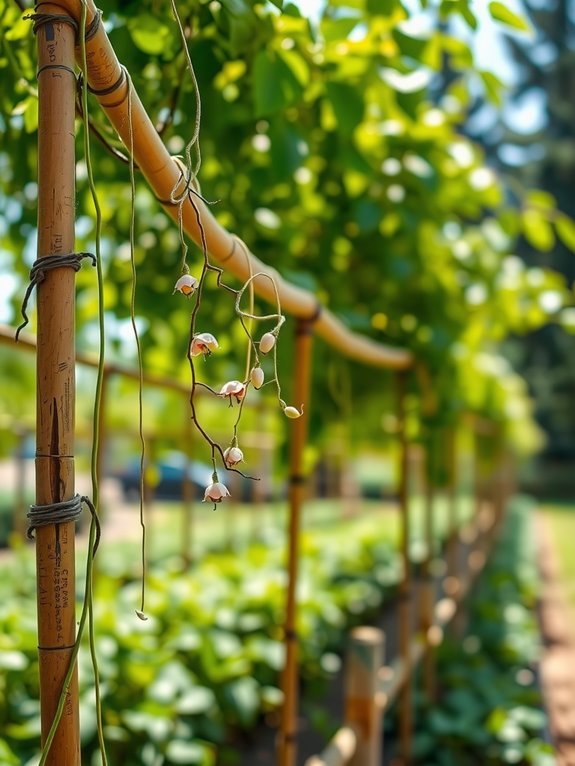
Tall pea varieties grow to heights of five feet or more. These plants require sturdy vertical supports, such as heavy-duty panels or welded wire structures, to remain upright during growth. Without adequate support, tall pea plants become top-heavy and fall over, which reduces fruit production and increases disease susceptibility.
A robust trellis provides an additional benefit beyond structural support. It improves air circulation around the plant’s vines. Better air movement reduces moisture buildup on leaves and stems, which prevents powdery mildew from developing on your plants.
Growth Height And Support
Tall pea varieties reach heights of up to 2 meters, or approximately 6.5 feet. When pea plants exceed 60 centimeters in height, they require a sturdy trellis for support.
A strong trellis prevents lodging, which occurs when heavy plants topple over due to their own weight. Without proper support structures, tall varieties become top-heavy and vulnerable to wind damage. Heavy-duty materials like cattle panels or multi-stake frameworks with properly spaced attachments provide maximum stability.
Vertical supports offer additional benefits beyond preventing damage. They keep pods elevated off the ground, which minimizes pod rot and makes harvesting easier. The trellis framework also improves air circulation around the foliage, reducing the risk of disease.
Weight Management And Stability
Pea plants reach heights of 1.5 to 2 meters as they mature. Their weight increases substantially at this stage. The pods and foliage become heavier, creating stress on the stems. Plants will collapse without proper support, a condition called lodging.
A sturdy trellis distributes the plant’s weight across vertical and horizontal supports. This design prevents stems from bending or breaking under pressure. Cattle panels and reinforced netting provide better support than lightweight structures for tall varieties.
Anchor your trellis securely with end stakes angled away from the center. This configuration withstands wind and the increasing weight of growing vines. Proper stability maintains plant health and productivity throughout the season.
How Pea Tendrils Grip Your Trellis
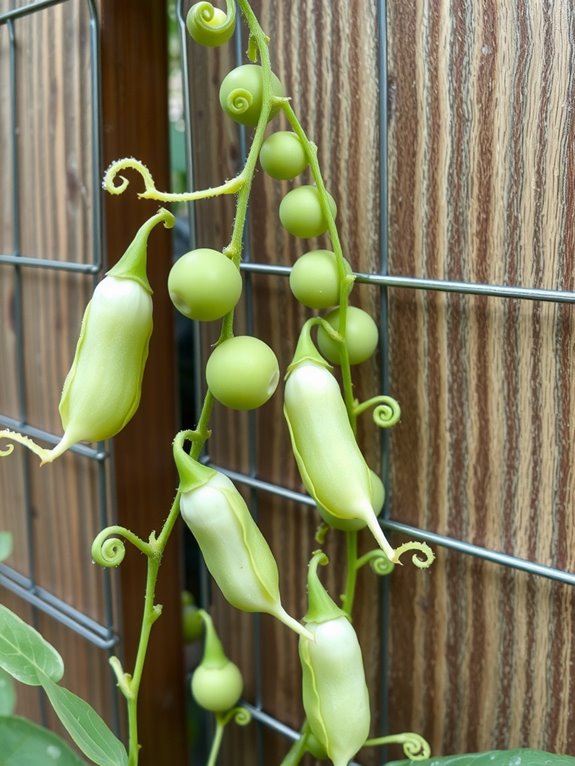
Pea tendrils are modified leaflets with a specialized structure for locating and gripping support systems. As young pea shoots grow, they extend tendrils that move in a gradual circular motion. These tendrils wind around whatever structure they contact.
Single tendrils first search for support. Once located, the plant develops multi-pronged tendrils that provide stronger attachment. The multi-pronged tendrils curl around horizontal or vertical elements of a trellis.
These tendrils grip by coiling tightly around the gaps and sturdy parts of the trellis structure. This attachment keeps the plant upright against wind while allowing vertical growth. The vines remain undamaged throughout this process.
Tendril Structure And Function
Pea tendrils are modified leaflets that grow from young shoots. These specialized appendages perform active searching movements in circular or spiraling patterns to locate support structures.
When a tendril makes contact with a surface, its hooked end grips the support firmly. The structure then undergoes developmental changes that increase its holding capacity.
| Tendril Stage | Structure | Function |
|---|---|---|
| Initial | Hooked end | Finds and grips support |
| Developing | Single coil | Secures attachment |
| Mature | Multiple prongs | Strengthens hold |
The hooked end initiates contact and provides the first point of attachment. As the tendril develops, a single coil forms around the support structure. In its mature stage, the tendril produces multiple prongs that wrap around the support material. This multi-pronged configuration distributes the plant’s weight more effectively and prevents the tendril from slipping.
When selecting a trellis or support structure, choose materials with diameters between 0.5 to 1 inch. This size range allows the tendrils to wrap around the support without gaps that would prevent secure attachment. Smooth or slightly textured surfaces work better than highly polished materials, as the hooked ends grip more effectively on these finishes.
Circular Motion Search Pattern
Pea tendrils do not immediately wrap around a support structure upon contact. Instead, the plant extends a single tendril that actively searches for attachment points. This tendril moves in slow, circular motions and spirals outward until it makes contact with a trellis or similar structure.
Once the tendril touches the support, it begins wrapping around it in a methodical spiral pattern. The hooked end of the tendril gradually coils tighter, securing the plant firmly to the structure. This slow wrapping process allows the plant to adjust its grip as wind shifts its position.
Young pea shoots develop multi-pronged tendrils over time. These multiple tendrils create several attachment points along the support structure. The circular motion and gradual wrapping pattern provide excellent stability for the plant. This attachment method reduces the risk of plant toppling during windy conditions and supports continued vertical growth.
Multi-Pronged Attachment Development
How do pea plants transform a single searching tendril into multiple gripping structures? After a pea vine makes initial contact with a trellis, it develops multi-pronged tendrils that enhance attachment stability. These specialized structures grow from the leaf axils and spread outward like fingers. Each prong wraps independently around the support material, creating multiple anchor points.
The branching pattern increases the surface area of contact between the tendril and trellis. As the tendrils mature, they thicken and harden, providing durable attachment. The plant strengthens its grip progressively, with each prong coiling tightly around the support.
This multi-pronged design distributes the vine’s weight across several connection points. The distribution of weight prevents stress fractures and ensures reliable support throughout the growing season.
How Trellising Keeps Peas Healthy and Productive
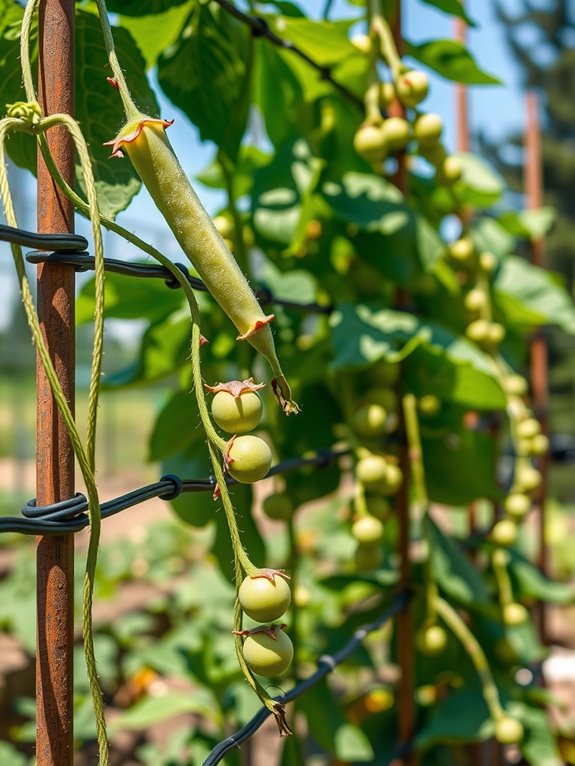
Pea plants need support to grow well. A trellis prevents plants from flopping over and breaking their stems. When you install proper support structures, you improve growing conditions for your plants.
Trellising provides several important benefits for pea production:
- Improves airflow around leaves and reduces disease risk
- Increases sun exposure to developing pods
- Maximizes vertical growing space to boost overall yield
- Elevates plants off the soil to reduce pest and disease pressure
Pea vines require regular maintenance as they grow. Keep twine taut and guide stems into the support structure consistently throughout the growing season. This ongoing care maintains structural support and creates optimal conditions for pod development.
Match Your Trellis to Your Pea Type: Dwarf, Bush, or Tall
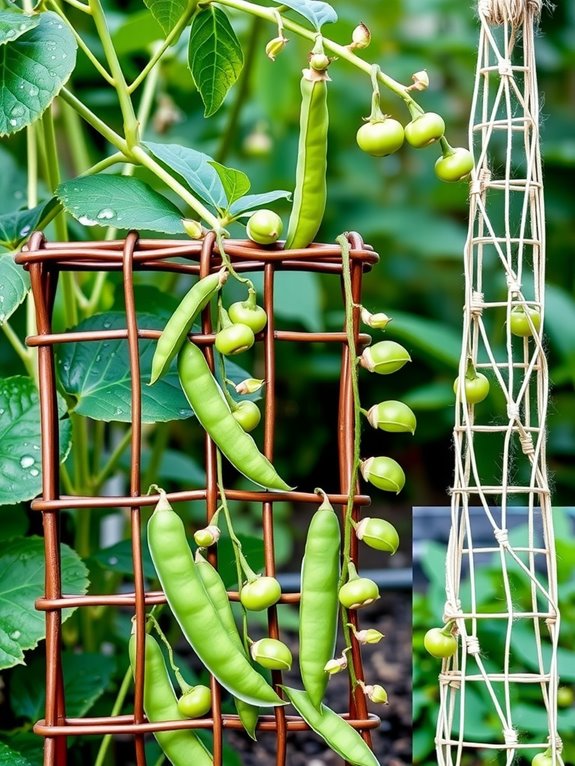
The right support structure depends on which pea variety you are growing. Different pea types reach different heights, and selecting an appropriate trellis ensures proper plant development.
| Pea Type | Height | Support Needed | Support Style |
|---|---|---|---|
| Dwarf | 50–60 cm | Optional | Small trellis |
| Bush | 2–3 feet | Beneficial | Medium trellis |
| Tall | 5 feet | Required | Sturdy frame |
| Very tall | Exceeds 60 cm | Essential | Reinforced support |
Dwarf cultivars may not require support, but a small trellis improves air circulation and reduces disease risk. Bush-type peas grow 2–3 feet tall and benefit from nearby support. This elevation keeps pods off the ground and increases airflow around the plant.
Tall pea varieties demand robust trellises or frames to prevent lodging and collapse under their own weight. For varieties exceeding 60 cm, sturdy supports such as cattle panels or wigwams work effectively. These structures accommodate the weight of mature plants and withstand wind exposure.
Lightweight Supports That Work for Compact Varieties
Compact pea varieties need support structures to grow upward. String stretched between stakes or lightweight pea sticks reaching 50 cm tall require minimal materials and space. These simple supports work well for dwarf plants without the weight of full trellises.
Chicken wire or woven mesh attached to wooden stakes creates an effective framework. This setup guides plants upward and remains easy to install and remove after harvest. The lightweight design suits small garden spaces.
Keeping compact peas off the ground improves air circulation around the vines. Better air movement reduces disease problems that occur when foliage stays wet or crowded. Lightweight support systems provide this benefit without heavy structural requirements.
Simple String And Stakes
Support compact pea varieties without heavy wooden trellises or metal frames. Simple string and stakes create an effective lightweight support system for pea plants.
Setting up the support system:
Tie string between two vertical stakes to guide climbing tendrils upward. Space stakes 3-4 feet apart for adequate support across your pea row. Use lightweight netting or yarn that pea tendrils can easily grip and latch onto. Position stakes firmly in the ground before planting to prevent shifting during growth.
Maintaining proper structure:
Maintain regular tension on horizontal strings to enable dense planting while preserving airflow between plants. This basic setup works well for dwarf and self-supporting cultivars. Your pea plants will climb naturally along the strings and remain upright with minimal hardware.
Benefits of vertical organization:
Harvesting becomes easier when plants remain organized vertically. The upright arrangement allows better access to mature pods and reduces plant damage during picking.
Pea Sticks For Dwarf Varieties
Dwarf pea varieties reach 50–60 cm in height and benefit from support structures. Pea sticks prevent plants from sprawling across garden beds. They improve air circulation around foliage and reduce fungal diseases.
Pea sticks should measure approximately 50 cm tall for dwarf varieties. This height matches the plant’s mature size without restricting growth. Lightweight supports made from bamboo canes, thin wooden stakes, or string grids between short posts work effectively. These materials guide plant tendrils and keep harvested pods within easy reach.
Position pea sticks close to planting rows so tendrils attach readily and plant contact with soil decreases. Even dwarf varieties that support themselves partially benefit from modest stakes. Better air circulation and reduced disease pressure result from this support system.
Chicken Wire Mesh Options
Chicken wire mesh works as a simple and affordable trellis for compact pea varieties. It is lightweight and does not require a large budget or complicated setup. This option suits gardeners with limited space and raised beds.
Key benefits of chicken wire mesh:
- The broad, evenly spaced surface allows pea tendrils to attach easily
- Peas can climb vertically while the mesh stays close to the ground
- The mesh supports the weight of pea plants and handles wind exposure for short-to-medium height varieties
- Installation between two posts requires no complex construction
- Both nylon and metal mesh options are available
To get the best results, stretch the mesh tightly between posts. Leave space at the base so pea stems can reach soil level when plants first emerge. Proper spacing increases airflow around plants and reduces the risk of disease throughout the growing season.
Building a Budget-Friendly String and Stake Trellis
A simple string and stake trellis supports climbing peas affordably. Place wooden stakes vertically at one-foot intervals along your pea row. Angle the end stakes away from the trellis to anchor the structure against wind pressure.
Weave cotton butcher’s twine or baling jute between the stakes in a tent-like or zigzag pattern. This cross-wrapping creates multiple contact points where pea tendrils can grip and climb. The material costs remain low because you use common stakes and affordable twine.
Build the trellis securely. Loaded vines catch wind like a sail, so structural strength matters. This budget-friendly approach provides reliable support for your peas throughout the growing season.
Building Heavy-Duty Trellises for 5-Foot Vines
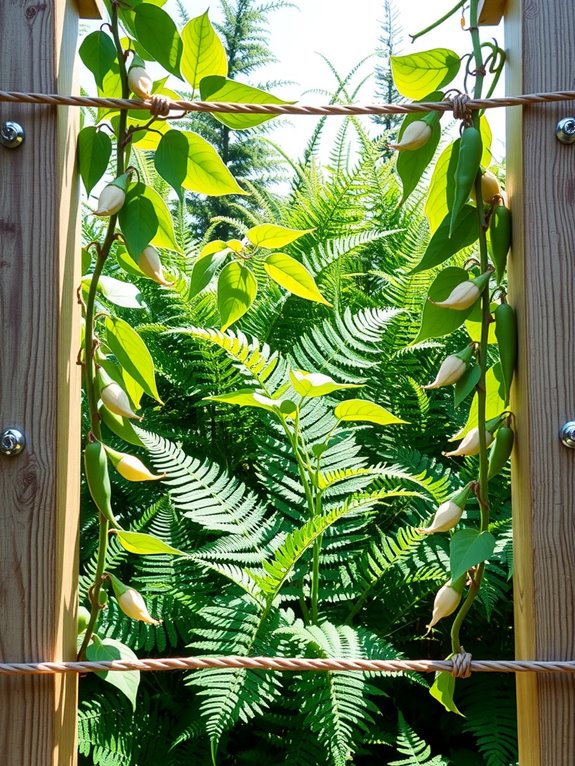
Tall pea varieties that reach 5 feet in height require heavy-duty trellises. The weight of mature vines and wind pressure demand stronger support structures than budget-friendly options can provide.
Several effective trellis options exist for this purpose:
- Cattle panel trellises offer maximum durability and stability.
- Nylon trellis nets rated for 60-pound capacity handle substantial vine weight.
- Reinforced frames with two or more stakes and securely tied mesh prevent the structure from toppling.
- Cross beams or additional canes create horizontal support lines that distribute weight.
- Deeply driven anchors withstand windy conditions and heavy fruit loads.
Construction requires specific placement and materials. Center stakes should be positioned at 12-inch intervals. End stakes should angle away from the structure for additional stability. Thick twine or mesh woven between stakes increases wind resistance. All connections must remain tight so vines distribute their weight evenly. Proper construction also maintains adequate airflow throughout the plant, which reduces disease risk and supports healthy leaf development.
Setting Up Your Trellis Before Planting
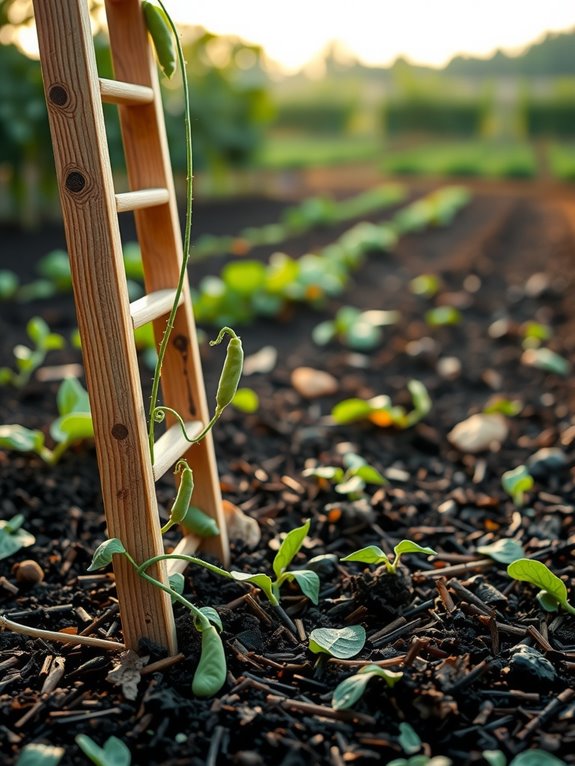
Install your trellis at the planting site before sowing seeds. Position the structure directly where you plan to plant peas so seedlings can access it immediately as they grow.
Create a support surface using two vertical stakes or posts with tensioned string, mesh, or netting stretched between them. Angle the end stakes away from the center and secure them firmly into the ground. This angled positioning provides lateral stability against wind and prevents the trellis from tipping over.
Space your trellis rows adequately so pea vines have room to climb without crowding each other. Taller varieties require more robust, higher supports than bush types. For example, tall varieties may need supports 6 feet high, while bush types typically need 2 to 3 feet of support. Installing your support structure before planting ensures peas have a continuous framework for their tendrils to latch onto as they develop.
Training Young Pea Shoots Onto Your Support
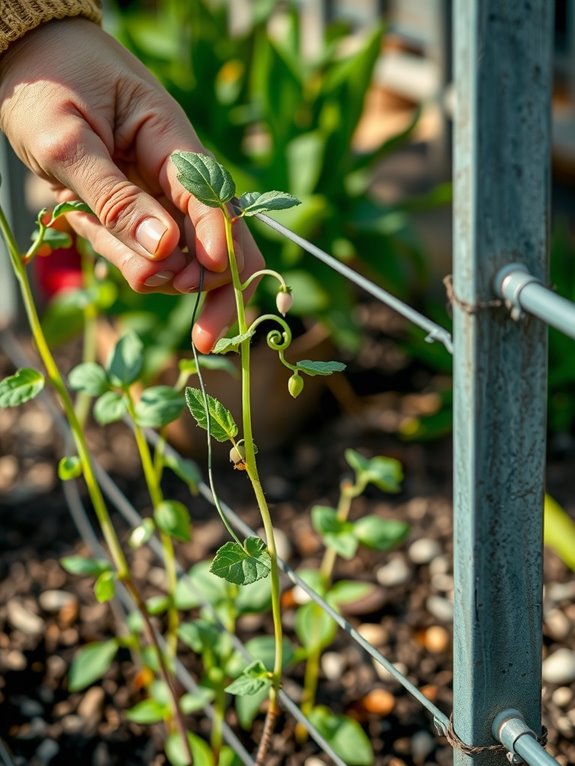
Young pea plants naturally seek support structures. You can speed up this process by positioning shoots near the trellis during early growth stages.
Initial Training Steps:
- Tuck early shoots gently into trellis openings to distribute growth evenly across the structure
- Allow tendrils to contact the support material
- Tendrils will wrap and coil around the trellis once contact occurs
- Monitor shoot positioning during the first two weeks of growth
Once pea plant tendrils make contact with the trellis, they grip and cling without additional help. This attachment happens because tendrils are modified leaf structures designed to curl around supports.
Benefits of Early Training:
Guiding shoots upward promotes vertical growth and increases air circulation among the leaves. Improved airflow reduces moisture on foliage, which lowers the risk of fungal diseases. Taller pea varieties (such as *Pisum sativum* var. saccharatum) particularly benefit from early guidance because even distribution along the support prevents overcrowding. This spacing supports normal leaf development and allows light to reach lower portions of the plant.
Maintaining Your Trellised Peas: Watering, Pruning, and Pest Watch
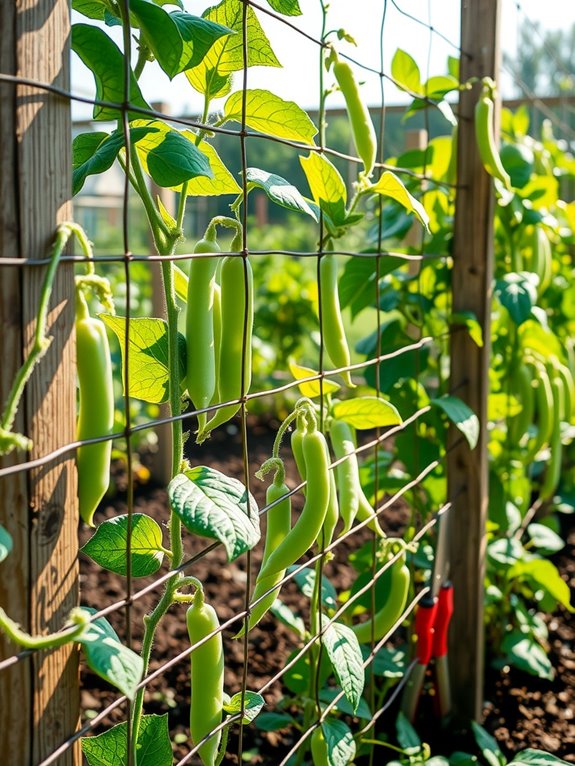
Water your pea plants at the base of the trellis on a regular schedule. The soil should stay evenly moist but not waterlogged, as excess water causes root rot. Apply water directly to the soil rather than wetting the foliage.
Prune your plants by removing only damaged or diseased tendrils. Keep the main shoots attached to the trellis support system. This practice maintains airflow around the plant and reduces the risk of fungal diseases.
Check your plants regularly for powdery mildew and other common pests. Remove any leaves that show signs of infection immediately. Improve air circulation by spacing plants appropriately and avoiding overhead watering.
Mulch around the base of the trellis with 2-3 inches of organic material such as straw or shredded leaves. Mulch conserves soil moisture, suppresses weed growth, and keeps the area around the trellis clean. These tasks combine to support healthy plant development and consistent pea production throughout the growing season.
Harvesting Is Easier When Peas Climb
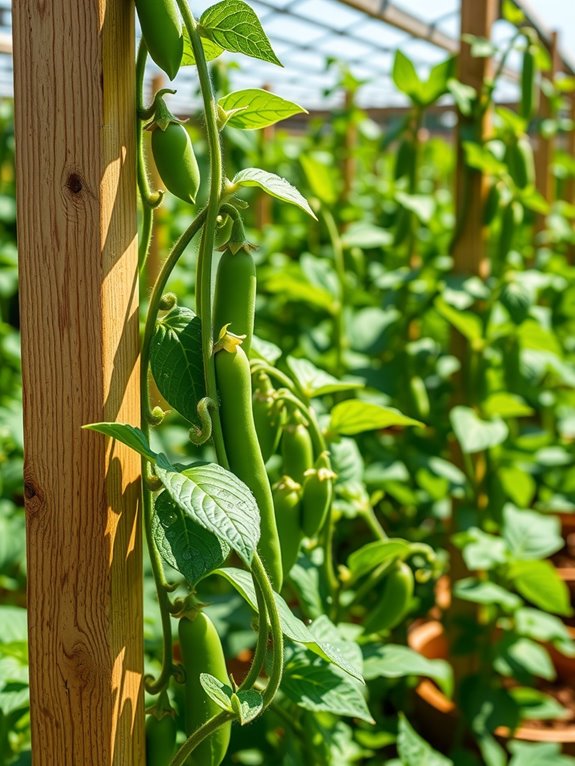
All your maintenance work pays off when it’s time to pick your peas. Trellised peas offer significant harvesting advantages that make picking faster and easier.
When you grow peas on a trellis, you’ll experience these benefits:
- Pods stay elevated off the ground, making them accessible without excessive bending
- Climbing vines use tendrils to attach firmly, reducing damage during harvest
- Vertical growth improves air circulation and sun exposure for even pod maturation
- You’ll spot ripe pods more quickly on upright plants than on sprawling vines
- Shared trellises support multiple rows, increasing your overall harvest efficiency
Better ventilation around foliage reduces disease pressure during picking. Your peas mature uniformly when they receive consistent sunlight and airflow. These conditions mean you’ll harvest more pods in less time with less physical strain. Trellising transforms harvesting from tedious work into an efficient process.
Extend Your Harvest: Trellising for Longer Seasons
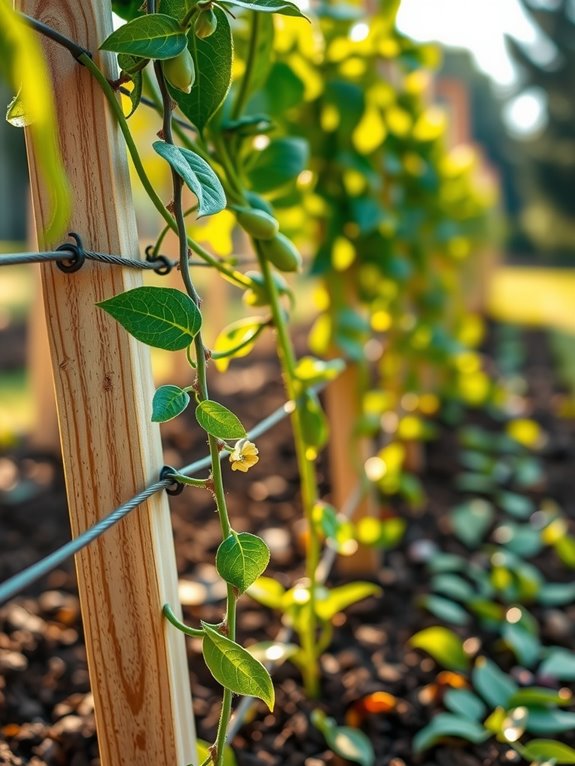
Trellised peas grow upright instead of sprawling across the ground. This vertical growth pattern produces pods for a longer period. Upright growth also improves air circulation around the plants, which reduces disease pressure and keeps plants healthier throughout the season. More leaves receive direct sunlight when plants grow vertically, allowing continued pod production well into the season.
A sturdy trellis prevents tall pea varieties from flopping over as they reach heights up to 2 meters. Tent-like or wigwam-shaped trellises provide strong wind resistance and support the weight of maturing plants. Regular maintenance of the trellis structure extends your harvest substantially. Adjusting and weaving stems into the support system keeps peas producing pods longer, maximizing yield in limited garden space.