Wire gauge selection depends on the weight of your crops. Beans and other light crops work well with 14–17 gauge wire. This thinner wire is simpler to handle and install. Grapes and other heavy fruits require 9–12 gauge wire because it can support loads up to 1,300 pounds.
Install the wire horizontally across cattle panels or posts. Space the wire 12 inches apart. Secure it using clamps or zip ties. Galvanized wire is the best choice for outdoor use because it resists rust and lasts longer than untreated wire. The exact spacing, tension level, and tools you need will depend on your specific garden setup.
Wire Gauge Fundamentals: Strength, Workability, and Cost
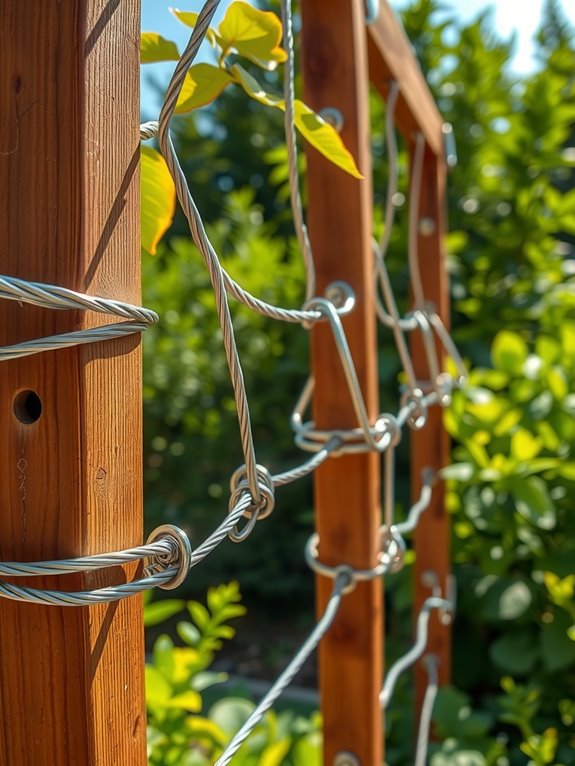
Wire gauge selection for garden trellises involves choosing between sizes 9 to 14, each with distinct strengths and limitations. Heavier gauges like 9 ga support substantial loads up to 1000–1300 lbs, making them suitable for heavy grape canes. However, heavier gauges are difficult to handle and install. Lighter gauges like 14 ga are easier to work with and provide adequate strength for tomato supports and many trellis applications.
Your choice depends on three factors: planting size, row length, and installation difficulty. For longer rows with heavier plants, use 12 or 9 ga wire. For smaller gardens, 14 ga wire works well. Galvanized wire resists rust in outdoor conditions and extends the lifespan of your trellis system.
Balance your strength requirements against practical workability. Consider how difficult the wire will be to bend, attach, and maintain. Availability of specific gauges in your area may also affect your final decision.
Choose Your Wire Gauge by Plant Type and Trellis Design
When you plan a trellis, match your wire gauge to the plants you’re growing. Light crops like berries and brambles need 12–14 gauge wire. Heavy fruits like grapes and muscadines require stronger 9 gauge or 12.5 gauge wire to support their weight.
Your wire choice also depends on whether you’re building for annual plants or perennial vines. Annual plants get replanted each year. Perennial vines stay on the trellis for many seasons. Permanent structures benefit from heavier gauge wire because it provides extra strength.
Post spacing affects your wire planning. A 20-foot distance between posts requires careful wire anchoring to prevent sagging under your crop’s load.
Light Crops Need Less Support
Some plants require heavy-duty wire for support. Others do not. Light crops like pole beans and Malabar spinach need less robust support systems than heavier plants. You can use lighter gauge wire or fewer tensioned lines when growing these vegetables on a cattle panel or arch trellis.
14 gauge wire works well for light, seasonal crops. This thinner wire is easier to handle and install than heavier gauges. Pole beans and Malabar spinach produce minimal weight, so your trellis will not experience significant sag or structural stress.
Simpler designs with fewer support lines work for light crops. This approach saves materials and labor while providing adequate support for plant growth throughout the growing season.
Heavy Fruits Require Stronger Wire
How much weight can your trellis support? Heavy fruits like grapes place significant demands on wire systems. A single case of grapes can weigh 1000–1300 pounds. This heavy load makes wire gauge selection critical for preventing sagging and maintaining structural integrity.
For muscadines, 9 gauge wire is the recommended choice. Some growers successfully use 12.5 gauge wire for heavy blocks. Thicker wire options provide additional strength and support.
Multiple wire lines distributed across your cattle panel or trellis system help spread the weight more evenly. Thicker, heavier gauge wires offer superior support but require more effort to handle during installation. Evaluate your specific plant type and trellis design before selecting a wire gauge. Grapes and similar heavy-bearing plants justify the investment in sturdier wiring solutions.
Annual Versus Perennial Considerations
Annual Versus Perennial Considerations
Wire gauge selection depends on whether you are building a trellis for annual or perennial crops. Annual crops like beans and peas require lighter gauges around 14 ga. You remove these trellises seasonally, so lighter wires work well. These wires are stiffer and quicker to install and adjust.
Perennial crops like grapes need heavier gauges, typically 12.5–14 ga, because they remain in place year-round. Perennial trellises support continuous loads of 1000–1300 lbs. You must use multiple wire lines or thicker gauge wire to handle this weight. Install deeper end posts and secure anchoring systems for these permanent structures.
Annual and perennial trellises also differ in attachment methods and wire line placement. These differences reflect whether the trellis serves as temporary or permanent support.
14 Gauge Wire: The Best Choice for Most Garden Trellises
When selecting wire for a garden trellis, 14 gauge offers a practical balance between strength and usability. This wire gauge provides enough durability to support common climbing plants like tomatoes. It remains manageable during installation and maintenance compared to thicker gauges such as 12 gauge. The middle-ground option allows you to build a sturdy trellis structure without handling heavy materials or dealing with overly flexible, thin wire that bends under plant weight.
Strength Meets Workability
Selecting the right wire gauge for a garden trellis requires balancing durability with ease of installation. The choice involves weighing workability against load capacity.
Consider these key factors:
- 14 gauge wire allows easier handling and suits lighter crops. This gauge requires more wires to distribute weight across the structure.
- 12.5 gauge wire provides solid strength for heavy-duty trellises. Most growers find this gauge manageable to install and work with.
- 9 gauge wire delivers maximum strength for muscadines and loads between 1000 and 1300 pounds. Installation requires more effort and specialized equipment.
Heavier gauges support larger loads more effectively. However, they become harder to bend, cut, and position during installation. Lighter gauges install more easily but may require additional support or reinforcement for heavy crops.
Your choice depends on two main factors: the weight of your crop and your row length. For most garden situations, a combination of 12 to 14 gauge wire offers the practical balance between strength and workability you need.
Practical Installation Advantages
For most gardeners, 14 gauge galvanized wire provides a practical balance between strength and ease of installation. This gauge supports moderate plant weights without requiring specialized equipment. Basic hand tools are sufficient for installing 14 gauge galvanized wire, making the task accessible for gardeners building their first trellis system.
If load testing reveals excessive sag or plants become heavier than anticipated, you can upgrade to 12 gauge wire. Starting with 14 gauge allows you to assess your specific needs before purchasing specialized crimping tools. Heavier gauges between 9 and 12 require professional-grade equipment and installation techniques. For most home gardeners, 14 gauge galvanized wire delivers adequate strength while keeping installation straightforward and manageable.
12 Gauge Wire: When Extra Strength Matters
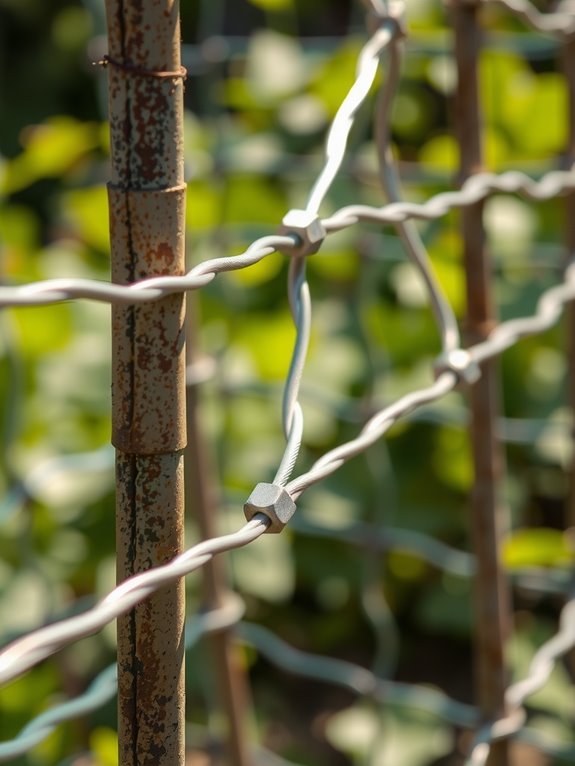
Use 12 gauge high-tensile wire for heavy-bearing grape varieties like muscadines. These varieties exert 1000–1300 pounds of force on trellis structures. The heavier wire distributes intense loads more effectively than lighter gauges.
Installation Requirements
Install robust end posts with secure anchoring systems to withstand high tension. Run multiple wires in parallel along your trellis to share the weight burden. Space support posts closer together along longer rows to minimize sag.
Trade-offs to Consider
12 gauge wire is markedly harder to handle and install manually, especially across long spans. For shorter rows or lighter crops, 14 to 14.5 gauge wire often proves sufficient and more manageable. Evaluate your vineyard’s specific needs before choosing the heavier wire. The extra strength comes at the cost of increased installation difficulty and handling requirements.
Lighter Wire Gauges (16–17): Best for Annual Crops
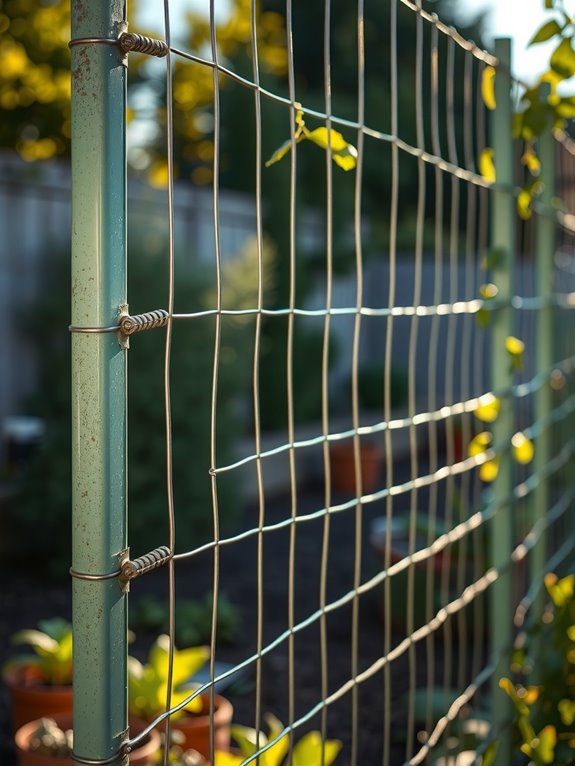
Lighter Wire Gauges (16–17): Best for Annual Crops****
Wire gauges 16–17 work well for annual crops like beans and lightweight vines. This wire size is easier to handle and install than thicker gauges. Most gardeners can set up these supports without special equipment or extensive experience.
Wire gauges 16–17 are ideal for annual crops, offering easy installation without specialized equipment or extensive gardening experience.
Plants that grow quickly and produce light fruit loads do well with this wire gauge. The support capacity matches the weight these plants develop during a single growing season. You will not see significant sagging if you choose the correct installation method.
The trade-off involves more frequent adjustments. As plants grow, you may need to reposition or tighten wire attachments. Using multiple wire lines reduces sagging and distributes weight more evenly across the trellis structure. A cattle panel hybrid trellis design offers another option for improved weight distribution.
These methods keep installation simple and costs reasonable for seasonal gardens. The combination of lighter wire with strategic placement choices provides adequate support without the expense of heavier materials.
Wire Installation Tools and Materials
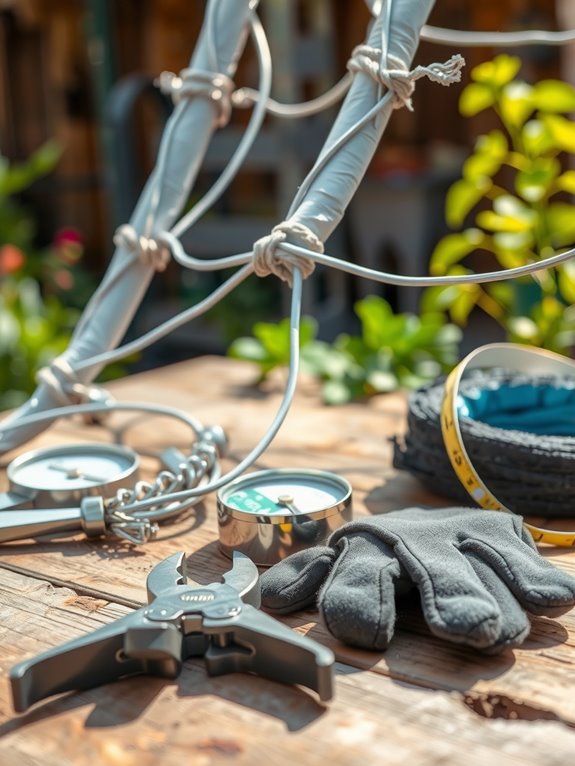
Before you begin installing a cattle panel trellis, gather the necessary tools and materials. Your specific needs depend on your attachment method and the conditions at your installation site.
Materials and Tools Required
You will need approximately 24 heavy-duty UV-resistant zip ties, or you can use alternative wire attachments for increased durability. Obtain four 6-foot-tall T-posts and a small sledgehammer to drive them into the ground. A torpedo level ensures that your structure maintains square alignment during setup.
Installation Process
Position your cattle panel in an arch formation. Drive each of the four posts straight into the ground using the sledgehammer, and check the alignment with your torpedo level as you work. Space the arch legs approximately 5 feet apart to maintain stability.
Attach your chosen fasteners to secure the panel to the posts. Zip ties work well for annual crops and seasonal structures. Wire provides longer-lasting results for permanent installations. Your attachment location matters based on available space. Position the arch outside posts to avoid exposing sharp tips, or place them on the inside to prevent outward movement of the panel.
Installing Wire on Your Cattle Panel Trellis
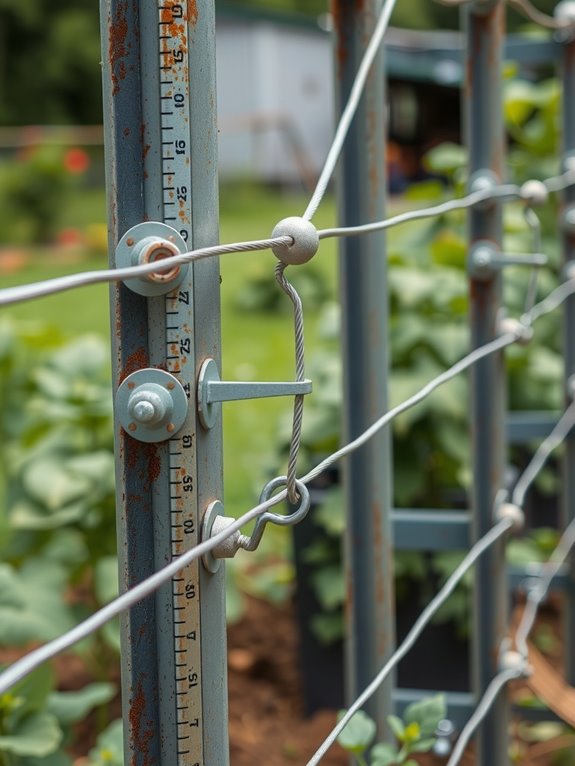
After you secure your cattle panel to the T-posts, add wire for additional support and load capacity. High-tensile wire strengthens your cattle panel trellis when growing heavy-bearing grapes like muscadines.
Use 12.5-gauge high-tensile wire as your primary option. This gauge provides durability and strength for the structure. Run horizontal lines of wire across the panel at 12-inch intervals, starting from the bottom. Attach each wire line securely to the T-posts using clamps or staples.
Use 12.5-gauge high-tensile wire at 12-inch intervals, securing each line to T-posts with clamps or staples for maximum durability.
Maintain the thicker 12.5-gauge for your outermost lines to maximize support. Inner lines can use slightly lighter gauge wire if needed. Your end posts must be deeply set and anchored to prevent sagging under the weight of mature vines.
This multi-wire approach distributes the load effectively across your entire trellis structure. The spacing and gauge selection work together to support the combined weight of the panel, wire system, and producing vines.
Wire Maintenance and Annual Tension Checks
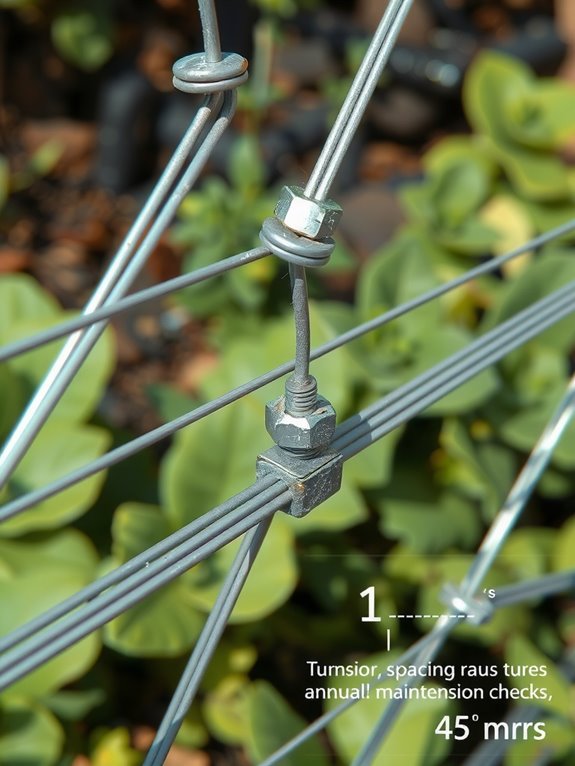
After winter freeze-thaw cycles end, perform annual tension checks on all trellis wires. Cold months cause cattle panels and wire systems to shift. You must address these problems before planting begins.
Inspection Steps:
- Check the entire structure for sag, loose connections, and shifted posts.
- Examine end posts and anchors for loosening. Re-secure or re-hammer them to prevent failure.
- Replace or adjust wires and fasteners like zip ties to maintain proper load distribution.
Ongoing Maintenance:
Monitor tension as crops grow heavier. Add support lines or tighten existing ones when grain or fruit load increases. Use sharp cutting tools and barbless wire to prevent damage. Clean knots and crimps during maintenance work to avoid wire damage.