

Building a pergola requires ten essential steps that progress from planning to completion. Start by planning your layout and checking local building codes. These codes specify how deep your posts must go and how far they should be set back from property lines. Measure your space carefully and sketch your design on paper or use SketchUp software to visualize the final structure.
Order pressure-treated lumber and necessary hardware before you begin construction. Simpson Strong-Tie connectors and 3½-inch screws are appropriate fasteners for this project. Dig post holes 30 inches deep, making sure they reach below your local frost line. The frost line is the depth at which soil freezes in winter, and digging below it prevents frost heave from shifting your posts.
Install the posts into the holes with temporary bracing to hold them in place. Check that each post is plumb, or perfectly vertical, using a level tool. Attach beams to the posts using bolts rather than nails. Position joists 16 inches apart along the beams for even weight distribution. Fasten the joists with angled screws to create a stronger connection than straight screws would provide.
Seal all the wood after fastening is complete. This protects the lumber from moisture and extends the structure’s lifespan. Inspect every connection and joint before considering the pergola finished. Each step in this process depends on the accuracy of previous steps to ensure the pergola remains structurally sound.
Step 1: Plan Your Layout and Check Building Codes First
Before purchasing materials or digging post holes, you need to plan your pergola’s location, size, and design. Check your local building codes and safety regulations first. These codes specify the required post depth and the minimum distance posts must sit from property lines.
Create your layout using stakes and string lines. Mark each post location and verify that all points align evenly. Call your local utility locating service to identify the positions of underground gas, water, and electrical lines before you dig.
Consider how your pergola will connect to existing patios or decks. Decide on post spacing based on your chosen style and materials. Posts typically space between 4 and 8 feet apart, depending on beam size and the load the structure will support. Planning ahead prevents costly mistakes and ensures your pergola meets all local safety requirements.
Step 2: Measure Your Space and Design on Paper or SketchUp
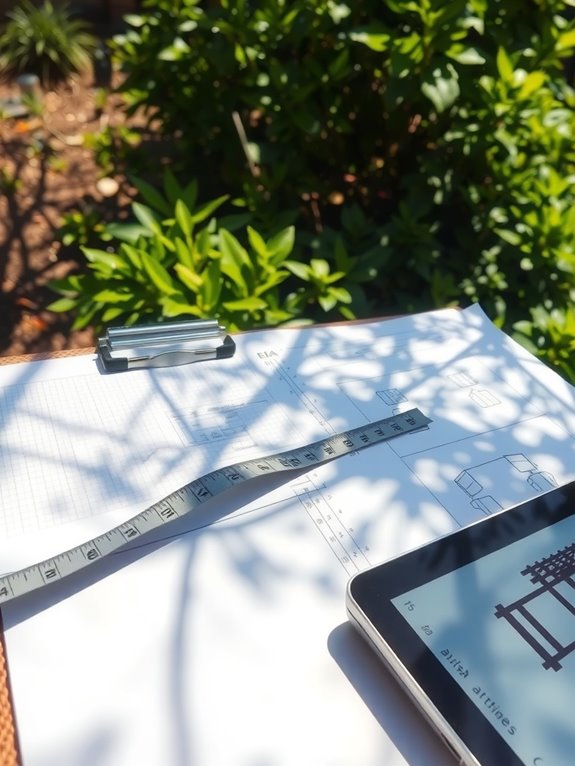
Start by measuring your desired pergola area with precision. Record the exact dimensions that fit your backyard space. Next, choose your design method. You can sketch your layout on paper, or you can use Google SketchUp for a digital visualization. SketchUp lets you see the pergola’s footprint and post locations clearly.
Create a detailed structural plan once you finish your design. This plan should show beam lengths, purlin spacing, and any decorative elements such as lattice panels. Having these measurements and details ready allows you to order materials accurately and avoid purchasing incorrect quantities.
Determine Your Pergola Dimensions
Measure your outdoor space to find the right pergola size for your yard. Use a tape measure to record the length and width of the area where you want to place your pergola. Common pergola sizes range from 10 by 12 feet to 16 by 20 feet, depending on how much space you have available.
Write down your measurements on paper or enter them into Google SketchUp. This tool helps you visualize your pergola before you build it.
Space the posts 8 to 10 feet apart to keep your structure stable. During the planning stage, also decide where your beams and purlins will go. Consider how close the pergola will be to your house and whether it will connect to your patio or stand alone.
Keep all posts the same distance from each other. Your layout should be symmetrical and balanced. These measurements will help you calculate how much lumber you need and ensure your project succeeds.
Choose Your Design Software
Choose Your Design Software
After measuring your outdoor space and determining your pergola’s footprint, create a detailed design plan. Two approaches work well for pergola design: digital sketching software or traditional pen-and-paper sketches.
Google SketchUp provides a free option for visualizing dimensions, spacing, and post locations in three dimensions. This software displays your project from multiple angles. Multiple viewing angles help you identify potential problems before construction begins.
Simple pencil sketches on graph paper work for straightforward designs. Mark beam lengths, rafter spacing, and post placement directly on the paper.
Your design must include all measurements and account for site irregularities. Reference standard 16-foot board lengths in your plan. This design plan becomes the foundation for your cutting list.
Sketch Structural Layout Plans
After measuring your outdoor space and selecting your design method, create a detailed structural layout plan. This plan becomes your guide for the entire project.
Begin by marking post hole locations on paper or in SketchUp. Space the holes evenly across your design to maintain balance. The distance between posts depends on your specific design, but each post must be equidistant from its neighbors and positioned symmetrically.
Next, plan where your beams and cross-beams will go. Note the bottom height of each beam to ensure proper alignment. Use temporary 2x3x12 braces to hold components in place while you work on the initial layout.
Mark the attachment points for shade joists, rafters, and lattice sections. Align all components with your chosen roof line. Include detailed reference notes on your plan that show cut sizes for each piece and the exact locations of all joints.
Your completed structural layout serves two critical purposes. First, it guides your material calculations before you order lumber. Second, it helps prevent mistakes during construction. An accurate layout ensures your pergola will stand stable and remain structurally sound.
Step 3: Order Pergola Materials (Lumber and Hardware)
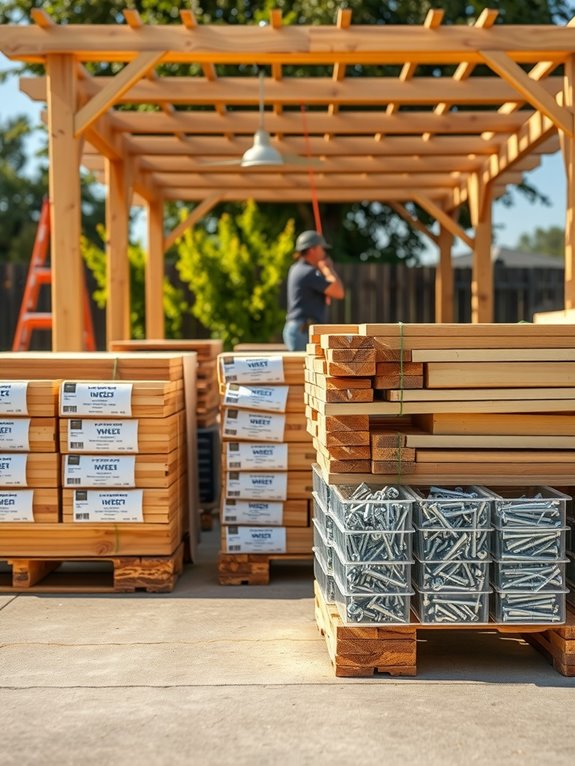
Before ordering materials, gather all the lumber and hardware your pergola requires. Select pressure-treated pine for posts and beams that contact soil. Brown-stained options are available to coordinate with outdoor decor. Determine whether larger cross beams need special ordering or if standard shelf stock fits your project dimensions.
Order these essential hardware items:
- Simpson Strong-Tie Outdoor Accents and 90-degree angles for structural connections
- 3½-inch structural screws and hex head washers for secure fastening
- Deck joist ties to reinforce beam connections
Calculate your exact lumber quantities based on your planned dimensions. A typical pergola measuring 14.5 × 16 feet requires 16-foot boards for all components. Account for site variability and placement differences when submitting your order.
After receiving your materials, seal or finish the lumber. Apply protective sealant to the bottom 24 inches of each post. This coating guards against water damage and extends the structure’s lifespan.
Step 4: Dig Post Holes for Your Pergola Foundation
Step 4: Dig Post Holes for Your Pergola Foundation
Determine the proper hole depth before digging. Local climate and soil conditions affect how deep you need to go. Holes that are approximately 30 inches deep provide better stability in areas with frost or loose soil. Shallower holes work in areas with stable, compact soil.
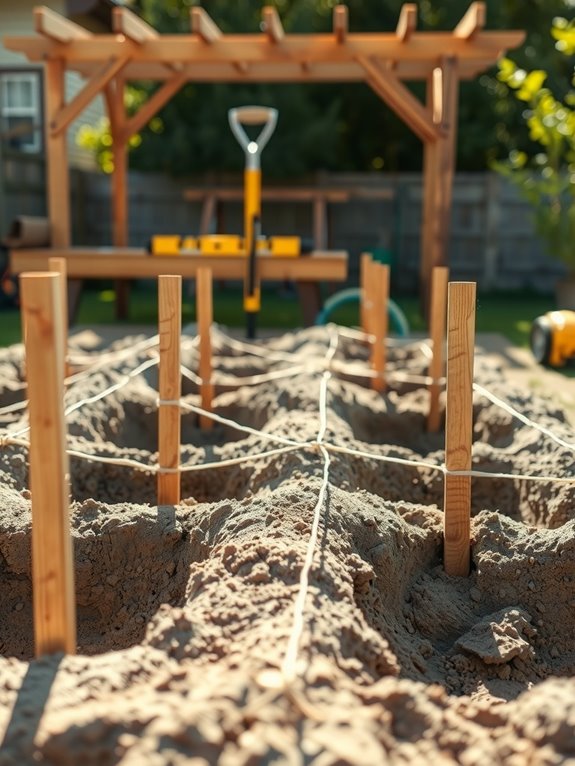
Use a masonry line and stakes to mark where each of your six holes will go. Measure the post spacing accurately to ensure the holes are evenly distributed. Even spacing creates a balanced pergola structure.
Clear away grass and debris from each spot before you dig. This preparation step makes the actual digging easier and gives you a clean work surface.
Determining Proper Hole Depth
How deep should your post holes be? You need to dig below your local frost line. This prevents posts from shifting during freeze-thaw cycles. Frost line depth varies by region, so check your area’s specific measurement first.
Post holes for standard pergola posts should be approximately 30 inches deep. This depth must extend below your region’s frost line. When you calculate total post depth, account for the gravel bedding you will add.
Fill each hole with about 6 inches of gravel before setting the posts. Gravel provides drainage and leveling for the foundation. This foundation prevents water accumulation and frost heave damage. After you place each post, use a level to verify it sits plumb. A stable foundation creates a long-lasting pergola structure.
Measuring Post Spacing Accurately
With your holes dug to the proper depth and filled with gravel, you’re ready to mark where each post will go. Accurate post spacing determines your pergola’s structural integrity and visual balance.
Start by measuring the intended distances according to your pergola plan. Use stakes to mark each post location precisely. Stretch a tight string line between stakes to ensure level offsets across all positions. This measurement accuracy prevents uneven post placement that could compromise stability.
Mark remaining post positions with stakes and outline them using a masonry line. Maintaining consistent spacing throughout the frame creates a sturdy, professional-looking structure. Double-check all measurements before proceeding. Proper post spacing establishes the foundation for your entire pergola project, so take time to verify each location carefully.
Preparing Ground Before Digging
Before you dig post holes for a pergola, you need to prepare the ground carefully. This preparation keeps your pergola foundation stable and safe.
Start with a safety check. Contact local utilities to have them mark underground gas and water lines on your property. Marking these lines prevents dangerous accidents while you dig.
Gather your digging supplies before you begin. You will need a post hole digger, ground break bar, or spade shovel. You will also need a 6-inch gravel layer for each hole and stakes with masonry line for marking.
Mark your post hole locations using stakes spaced evenly apart. Even spacing creates symmetry for your pergola design. Check the frost line depth for your climate zone, which typically reaches 24 to 30 inches deep.
Understand your soil conditions to select the right digging tool. Compact soil requires a ground break bar to break through hard earth. Loose soil works with a standard post hole digger.
Step 5: Install Posts With Temporary Bracing
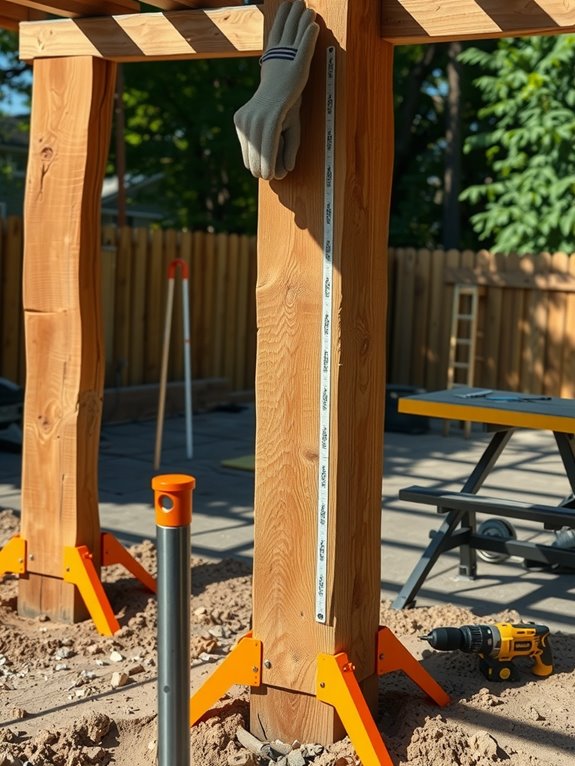
When it’s time to set your pergola’s posts, you’ll need to prepare the ground first and then secure each post in its proper position. Cut 1×2 temporary support stakes about 4 feet long for bracing each post. Dig holes at your marked locations. Fill them with approximately 6 inches of gravel for leveling and drainage.
Place your posts in their marked spots. Check that they’re plumb on all four sides using a level or post level. Install the temporary braces to hold your posts steady while you finalize alignment.
Verify that all posts are vertically aligned and square to the outline before you attach cross beams. This foundation ensures your pergola structure stays stable and true.
Step 6: Attach Pergola Beams With Bolts
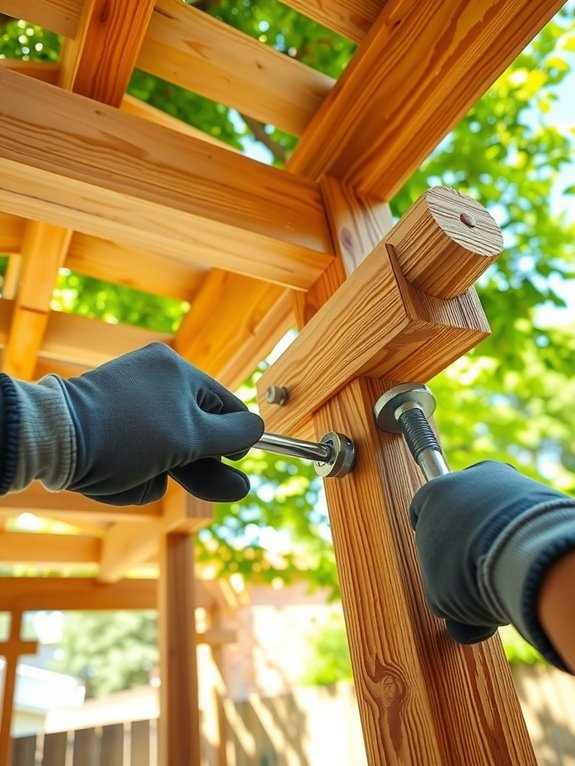
Step 6: Attach Pergola Beams With Bolts****
With your posts secure and plumb, you can now attach the main beams that form the pergola’s framework. Mark the bottom height for cross beams on each post. Place the beams on top of 2x3x12 braces and temporarily secure them with decking screws to maintain alignment during assembly.
Secure beams atop braces and use decking screws to maintain alignment during pergola assembly.
Drill through the beams and posts using a 5/8-inch auger bit. This creates the bolt holes needed for permanent fastening. Insert galvanized bolts with washers and nuts through each drilled hole. Use wrenches to tighten the bolts securely.
Check that all beam joints align at the correct height and angle before you complete the final tightening. Repeat this bolting process for each remaining beam. Keep the alignment consistent across all connections throughout the structure.
Step 7: Cut and Position Joists With Even Spacing
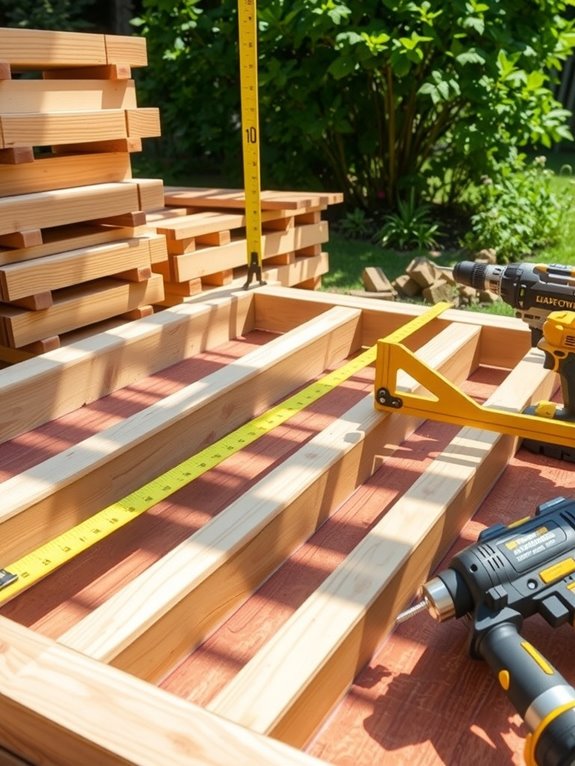
With your beams bolted in place, install the joists to create the shade structure. Plan your joist spacing at 16 inches on center. You can adjust this spacing to 10–16 inches if needed for even distribution across your pergola.
Position each joist perpendicular to the beams on top. Align the joists with your design plans. Attach joists using 3½-inch screws. Drive the screws at 45-degree angles on both sides for secure fastening.
Check that all joists are level and straight. Make fine adjustments to maintain consistent spacing throughout the structure. Verify that the bottom edges create a uniform plane across the entire pergola. This positioning ensures your shade system looks even, stays stable, and remains properly supported for long-term use.
Step 8: Fasten Pergola Joists With Angled Screws
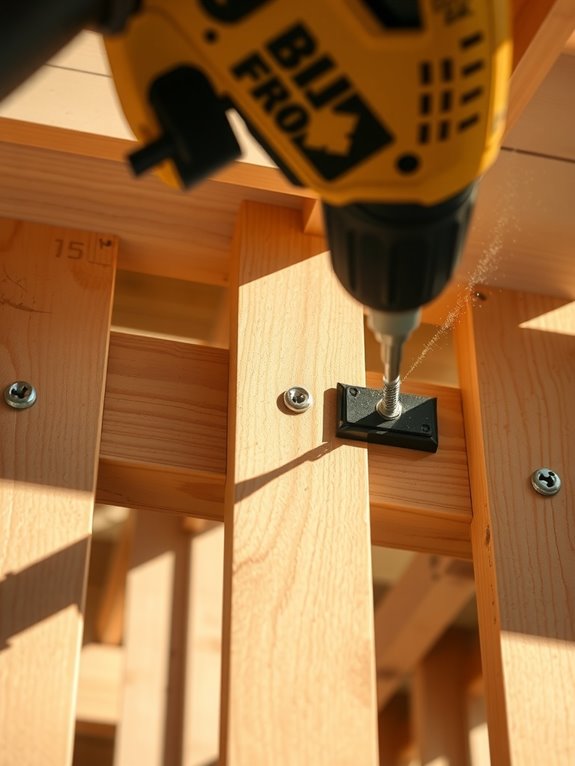
Step 8: Fasten Pergola Joists With Angled Screws****
Angled screws create stronger connections than straight fasteners. They resist pulling and twisting forces better because the angle distributes the holding power across the supporting beams.
Follow these steps to secure your joists:
- Drill pilot holes through the joists and into the supporting beams using long auger bits. This creates clean, precise entry points for your screws.
- Drive three 3-1/2 inch screws at a 45-degree angle from both sides of each joist. The angled approach from both sides distributes stress evenly.
- Tighten all screws completely after positioning them.
Check that your joists remain level and evenly spaced as you work. The angled fastening technique provides the solid foundation your pergola needs to withstand weather exposure and regular use over many years.
Step 9: Seal and Finish Your Pergola Wood
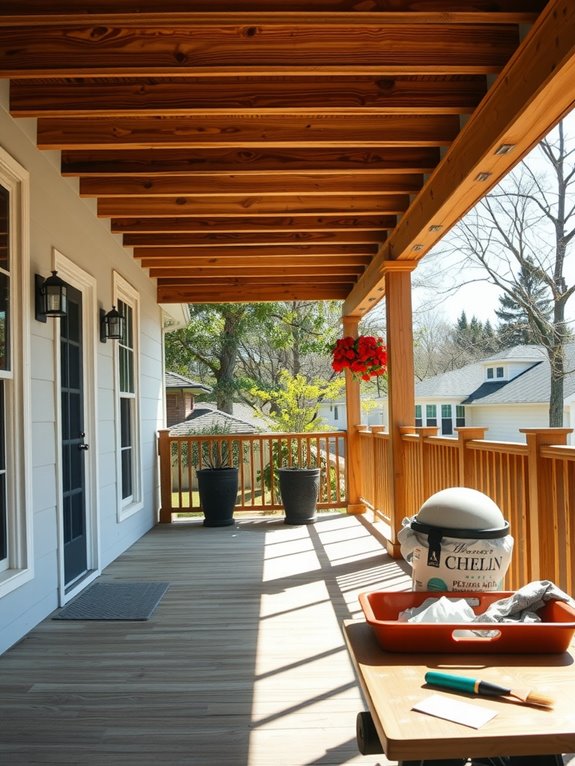
Your pergola’s wood needs protection from weather, UV rays, and moisture. After assembly, apply an exterior finish to all exposed wood surfaces. Exterior latex, acrylic, or oil-based sealants work well for outdoor structures. These products come in various colors that match your house fascia or existing decor.
Pay special attention to the bottom 24 inches of each post. This area absorbs water most easily and develops rot quickly. Apply sealant around all cut ends with even coverage. Between coats, allow 24 to 72 hours for drying. The exact time depends on the product type and your climate. Wait for the finish to fully cure before the pergola faces rain, sun, or humidity.
Maintain your pergola every 3 to 4 months. Clean the surfaces and reapply sealant as needed. Regular maintenance keeps the wood protected and the structure looking good for many years.
Step 10: Inspect and Landscape Your Pergola
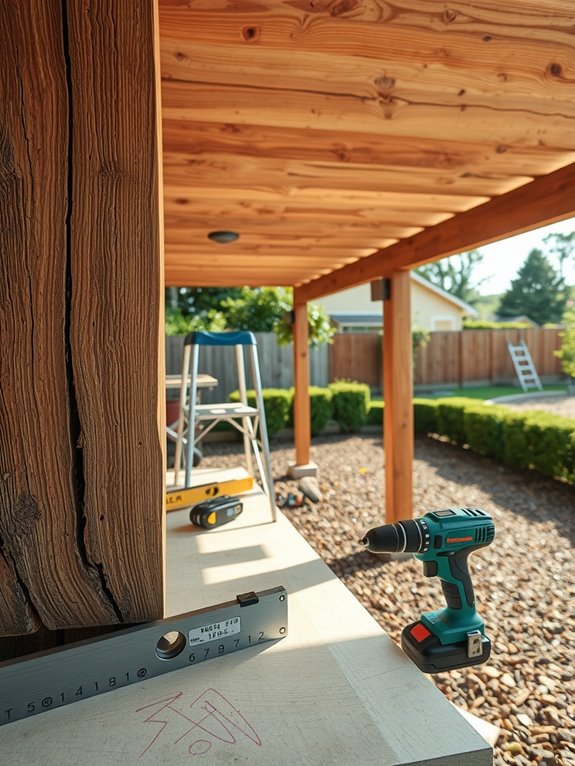
Step 10: Inspect and Landscape Your Pergola****
Once the final coat of sealant cures completely, inspect the entire pergola structure before adding plants and landscaping features.
Verify that all posts stand plumb and attach securely to the foundation. Check that beams are level and firmly connected at each joint. Examine rafters for consistent spacing and confirm that purlins fasten securely. Look throughout the structure for damage, cracks, loose fasteners, or areas of weakness. Fix any problems immediately before proceeding with landscaping.
Plan your landscaping with these options:
- Install gravel pathways around the pergola base for drainage and visual definition
- Plant flowering vines such as clematis (Clematis species) or jasmine (Jasminum officinale) to climb the structure
- Add climbing ivy (Hedera species) for additional shade and visual coverage
After you confirm structural integrity, you can add lighting fixtures or decorative elements. Maintain your pergola by cleaning it and inspecting it every three to four months. Regular maintenance prevents rot and decay in the wood and fasteners.