You can create backyard privacy without a fence by using several effective methods. Dense hedges like privet work well for this purpose. Space them 3 to 6 feet apart and prune them two to three times each year. Pergolas with climbing vines provide another option. Jasmine and ivy grow quickly and block views from neighboring properties. Portable planters arranged at different heights offer flexible screening that you can adjust as needed. Awnings positioned above seating areas add an additional layer of coverage.
These methods create natural barriers while allowing air to flow and light to enter your yard. Combining multiple methods produces stronger privacy results than using just one approach. Unlike solid fences, these options maintain visibility and openness while still blocking sight lines from neighbors.
Plant Hedges and Shrubs as Fast Privacy Alternatives
You can create backyard privacy without building a fence. Hedges and shrubs grow quickly and provide screening alternatives to traditional fencing. Privet, cherry laurel, bamboo, and Leylandii are excellent choices because they grow densely and provide year-round screening. These plants create a natural barrier that is often denser than fences while adding foliage and dampening sound.
Plant hedges and shrubs for natural privacy screening that rivals traditional fences while dampening sound.
Space your hedge plants according to their mature width. Privet should be planted 3 to 6 feet apart. Select varieties suited to your climate and soil conditions for best results.
Regular pruning is essential. Prune your hedges two to three times yearly to encourage dense growth and prevent gaps that reduce privacy. Layering plants at varying heights creates depth and a natural appearance. Plant tall trees in the back, mid-height shrubs in the middle, and low ground cover in front. This arrangement produces an organized and effective privacy screen.
Build Pergolas and Trellises With Climbing Vines
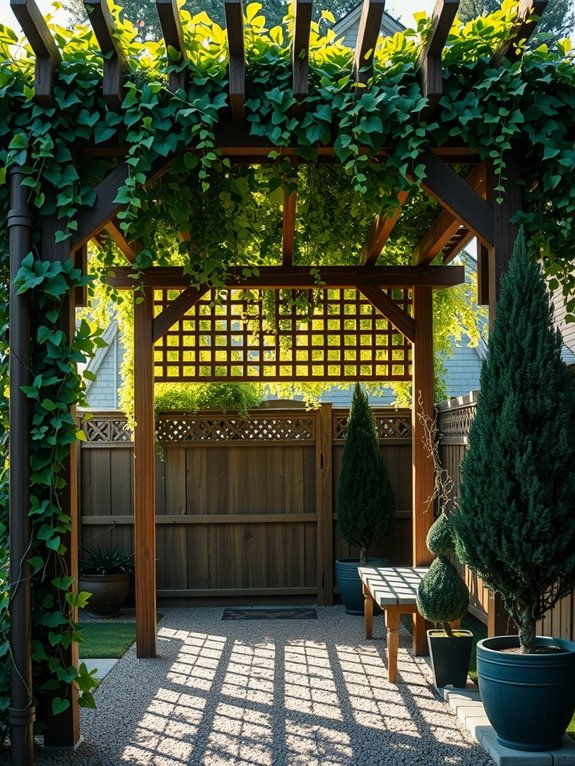
Pergolas and trellises provide privacy without using solid walls or fences. These structures create separate spaces while keeping your backyard open and airy.
Climbing vines like morning glory, ivy, and jasmine grow quickly along pergolas and trellises. As these plants develop, they increase both shade and privacy screening. Trellises attached to pergolas support tall climbing plants that block views from neighboring properties by creating vertical barriers.
You can add side panels or screens to pergola structures for extra privacy. This method increases seclusion while still allowing air to flow through and light to enter your space.
Regular pruning and training keep climbing vines under control. Select plant species that grow well in your climate zone to maintain consistent privacy coverage and prevent excessive growth that damages the structure.
Layer Portable Planters, Awnings, and Lighting for Flexible Privacy
Layer Portable Planters, Awnings, and Lighting for Flexible Privacy
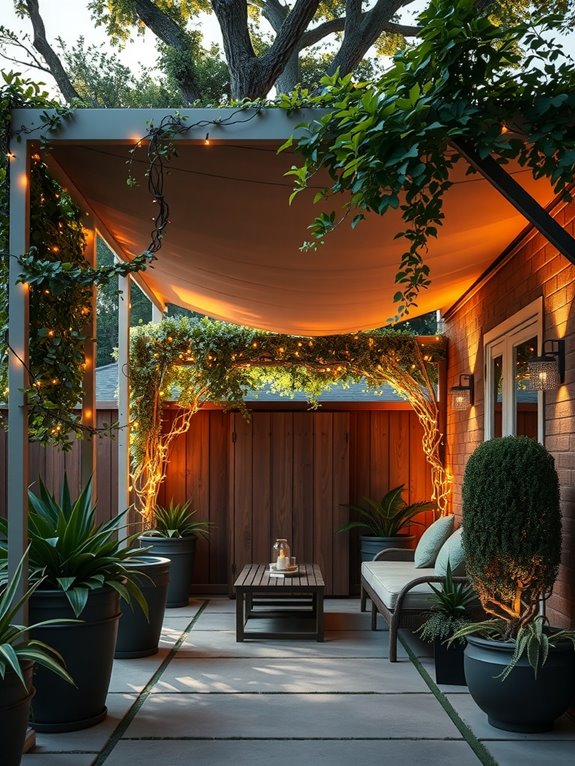
Pergolas and trellises provide permanent privacy solutions, but you can also create flexible screening by layering portable planters, awnings, and lighting in your backyard.
Position planters strategically. Arrange planters at varying heights and depths to build natural visual screens without solid fences. This layering creates boundaries that you can rearrange seasonally based on your needs.
Install awnings above seating areas. Awnings provide side and overhead privacy while allowing airflow and natural light to reach your space.
Choose appropriate climbing plants. Drought-tolerant, evergreen, or flowering climbing species work well for portable setups. Clematis and jasmine offer year-round coverage and seasonal visual interest. These plants grow on trellises within your layered planter system.
Combine outdoor lighting with your layered setup. Outdoor lights soften the appearance of boundaries after dark and create plant silhouettes against the evening sky. Position lights behind or beneath plants to emphasize their shapes.
These flexible privacy options adapt to your changing needs. They maintain an open, welcoming atmosphere in your outdoor living area without requiring permanent installation or structural changes.