

You’ll need to install a pool fence that’s at least 4 feet tall around your pool area. The fence must be made of solid wood, metal, or mesh with openings no larger than 4 inches. Gates must be self-closing and self-latching with latches positioned 54 inches above ground. You should also check your state and local building codes, as Texas requires 48-inch minimum heights with specific setback distances. There’s more to know about gap restrictions and door barriers for complete pool safety.
State and Local Compliance: Where to Start
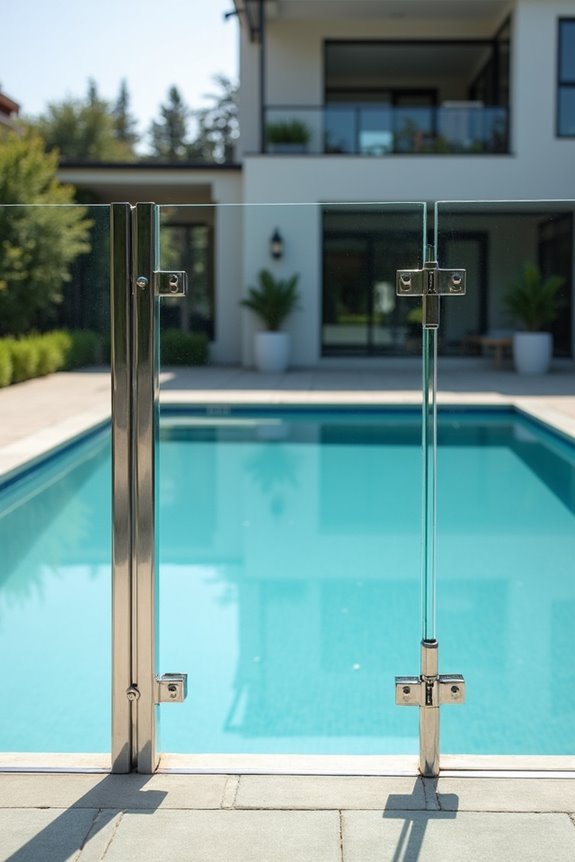
Where do you start when you’re planning to install a pool fence? You’ll need to check both state law and local ordinances, since pool fence requirements differ noticeably. In Texas, you’re looking at a minimum fence height of 48 inches with self-closing/self-latching gates. Your local building department may add stricter rules beyond these state minimums.
Pool fence requirements vary by state and locality—check both before installation to ensure compliance with safety standards.
Before you begin, confirm the pool setback distances, typically around 4 feet from the pool edge. You’ll also need to verify that your fence uses non-climbable materials with restricted gaps. Complete the permit and approvals process through your building department or homeowners association.
Finally, engage a licensed contractor familiar with local codes. They’ll verify that your design, materials, and gate hardware meet all applicable requirements, protecting your investment and your family’s safety.
Minimum Height and Material Standards
How tall should your pool fence be? Your fence must meet minimum height and material standards to keep your pool secure. You’ll install a barrier that’s at least 4 feet tall, measured from the ground on the exterior side. Your fence also needs to be non-climbable and prevent unauthorized access.
What you need to know about acceptable materials and specifications:
- Use solid wood, metal, or mesh for sturdy, durable barriers
- Ensure openings don’t exceed 4 inches in size
- Keep decorative cutouts smaller than 1 ¾ inches to prevent slipping through
- Avoid chain-link fences if you’re constructing after January 1, 1994
These standards work together to create a secure pool fence that protects your family and meets legal requirements.
Gap Restrictions and Non-Climbable Design
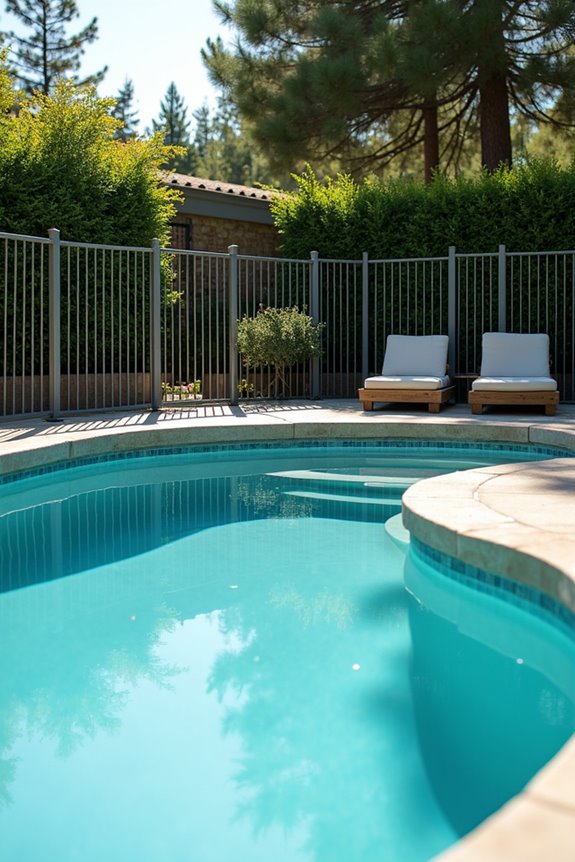
Beyond meeting height requirements, your fence must also prevent climbing and eliminate gaps that could allow someone to slip through. Your pool barrier needs a gap-free design throughout its entire structure. You must restrict all openings to prevent passage—general fence gaps shouldn’t exceed 4 inches, while openings between horizontal and vertical members can’t permit a 1 1/3-inch diameter sphere to pass through. Decorative items or cutouts must have opening size limits of 1 ¾ inches maximum in any direction. Your climbing prevention strategy includes eliminating footholds and handholds along the fence perimeter. Acceptable materials like barrier mesh, solid wood, or metal work well when they maintain non-climbable design. Safety compliance requires you to inspect your pool barrier regularly, confirming it remains gap-free and secure against unauthorized access.
Pool Fence Gates: Self-Closing and Latch Requirements
Gates are critical components of your pool fence system because they control access to the water area. You’ll want to understand the requirements that keep your family safe.
- Self-closing gates automatically return to a closed position after each use, preventing accidental entry to the pool.
- Self-latching gates engage an automatic latch when the gate closes, maintaining continuous barrier integrity.
- Latch height of 54 inches above ground ensures children can’t easily reach the mechanism.
- Outward-opening gates swing away from the water area, preventing people from falling into the pool.
Your gate hardware must function reliably to meet pool gate height standards and safety requirements. These outward-opening gate features work together to create a dependable barrier around your pool area.
Door and Window Barriers on Pool-Facing Sides
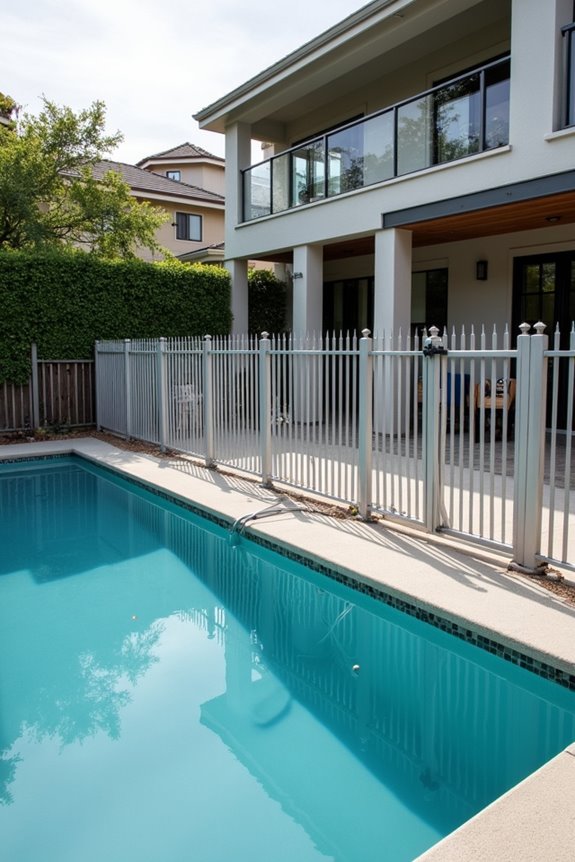
While pool fences form your first line of defense, you’ll also need to secure doors and windows that open directly to the pool area. Door barriers and window barriers on pool-facing sides require automatic closing features to prevent unauthorized pool access control. You must install self-closing hinges or automatic door closers that ensure openings close independently after someone passes through them. Additionally, you’ll need interior floor bolting devices positioned 36–48 inches above the interior floor to lock openings from inside. Alarms on these entry points alert you when access attempts occur. Safety devices like keyed deadbolts, keyless bolting mechanisms, or sliding door security bars provide enhanced protection. Your specific requirements depend on local regulations, so you’ll want to verify which door barriers and window barriers your area mandates for complete pool safety.