Your gazebo can blow away in strong winds without proper protection. Temporary pop-up gazebos withstand winds up to 30 mph, while hard-top models resist up to 100 mph. Ground anchors, weighted bases, and tie-down straps provide stability. Combine stakes driven 1–2 feet into soil, ratchet straps on each corner, and sandbags around legs for maximum protection. Location matters too—avoid hilltops and open fields. The specific steps to secure your gazebo properly are covered in detail ahead.
Will Your Gazebo Blow Away?
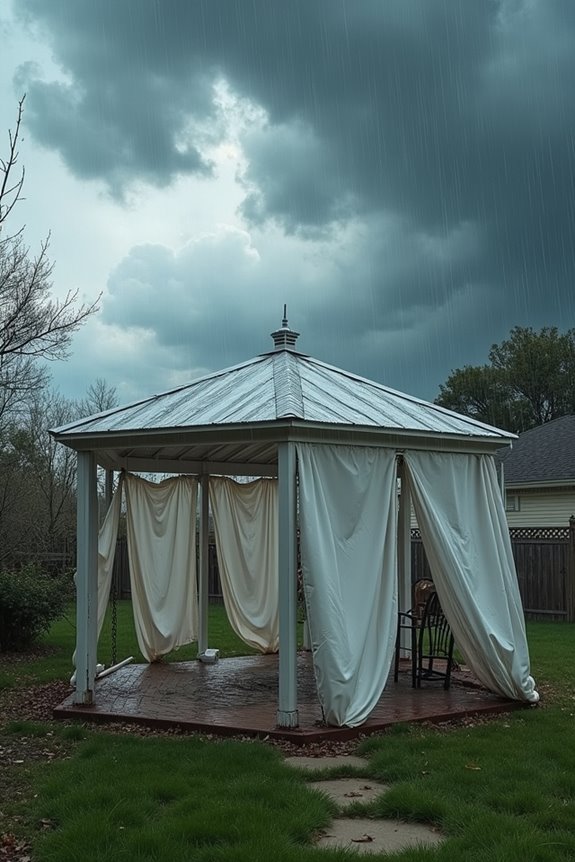
Whether your gazebo will blow away depends on the type of structure you own and how well you’ve secured it. Temporary vinyl and mesh pop-up gazebos withstand winds up to 30 mph, but stronger gusts can turn them into kites without proper anchoring. Hard-top gazebos with solid metal or wooden roofs offer greater wind resistance, with some models documented to withstand up to 100 mph. You’ll need secure ground anchors, weighted bases, and tie-down straps for deck or patio setups to prevent movement or uplift. Regular maintenance—tightening fasteners, inspecting anchors, and removing loose items before storms—significantly lowers blow-away risk. Open-sided designs reduce wind pressure, though you should keep sides fully open or fully closed to avoid pressure differences that cause uplift.
Assess Your Wind Risk
You need to evaluate your local wind conditions and understand your site’s exposure level before setting up your gazebo. Check your area’s average wind speeds and historical storm data, then assess whether your location sits in an open field, near trees, or close to buildings that might block or redirect wind. Your gazebo’s vulnerability depends on both the strength of winds in your region and how exposed your specific placement is to those winds.
Local Wind Conditions
How exposed is your gazebo location to wind? You’ll need to evaluate your specific wind conditions to understand your anchoring requirements. Consider these factors:
- Prevailing wind direction in your region and seasonal wind patterns
- Wind gusts recorded in your area during storms and typical weather events
- Nearby obstacles like buildings, trees, or fences that block or redirect airflow
- Terrain features such as slopes or hills that accelerate wind velocity
Open areas without protection experience higher wind speeds than sheltered locations. Buildings and trees reduce wind exposure by creating barriers. Elevation changes and hills accelerate wind as it flows over them, increasing uplift forces on your gazebo. Historical weather data shows you typical gust speeds for your region. Understanding these wind loads helps you determine whether your gazebo needs permanent anchoring or seasonal removal during severe weather periods.
Site Exposure Evaluation
Where you place your gazebo on your property affects how much wind it’ll face. Open exposure areas without trees, fences, or structures create higher wind load on your gazebo. You’ll need stronger anchoring systems in these locations. Evaluate your site by observing wind direction during different seasons and times of day. Position your gazebo so its open sides face perpendicular to prevailing winds, reducing direct wind entry. Avoid placing it on slopes or hilltops, which redirect and accelerate wind velocity toward your structure. Use existing shelter features like your house, mature trees, or fences as windblocks. Your site assessment determines what anchoring methods you’ll need. Consider local ordinances and required setbacks when evaluating potential placement locations for safety and compliance.
What Determines Wind Resistance
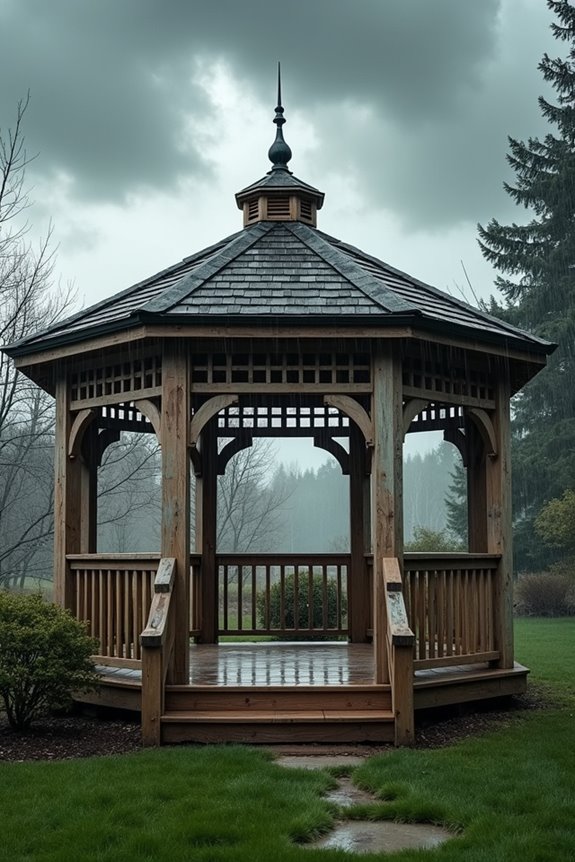
Several key factors work together to determine whether your gazebo can withstand strong winds or will blow away.
- Weight of the frame – Heavier frames provide better stability because they resist tipping and shifting during gusts.
- Roof material – Fabric roofs tear easily and catch wind like a sail, while solid metal or polycarbonate panels withstand stronger forces.
- Height and structure design – Taller gazebos catch more wind. Removable panels transfer wind loads differently than permanent panels, affecting overall resistance.
- Anchoring and installation type – Permanent installations with concrete footings offer the highest wind resistance. Portable or pop-up models without secure anchoring fail first in strong winds.
Combining heavy frames, solid roofing, proper anchoring, and permanent installations creates your strongest defense against wind damage.
Pick a Gazebo That Can Handle Wind

You’ll want to choose a gazebo with a hard-top frame made from sturdy materials like aluminum or steel, which can withstand winds up to 100 mph compared to soft-top or vinyl models. Check the manufacturer’s wind rating benchmarks to confirm your gazebo matches the typical wind speeds in your area, and remember that heavier gazebos generally resist wind better than lightweight portable versions. The combination of quality materials and an appropriate weight rating provides the best protection against wind damage.
Material And Weight Matters
Why does one gazebo stand firm in strong winds while another topples over? The answer lies in material and weight. You’ll find that heavier gazebos with sturdy frames offer better wind resistance than lighter, portable models. Your choice of roof materials significantly impacts stability too.
Consider these key factors:
- Hardtop designs provide greater wind resilience than soft-top or pop-up gazebos
- Solid metal or polycarbonate roofs resist tearing and uplift more than fabric canopies
- Double-vented or double-tier roof designs reduce wind pressure by allowing airflow
- Gazebo weight combined with proper anchoring creates maximum stability
However, don’t assume that weight alone protects your investment. You must secure your gazebo with anchoring and ballast regardless of its weight. Proper securing improves stability in windy conditions and protects your structure from damage.
Wind Rating Benchmarks Guide
Anchoring and weight form a solid foundation, but knowing your gazebo’s wind rating tells you exactly how much wind it can handle. Wind ratings measure how strong gusts your structure can withstand without failing. A hardtop gazebo typically handles winds up to 100 mph, making it the most wind-resistant option available. Wooden hardtops manage around 50 mph, while professional-grade canopy tents reach 75 mph. These benchmarks help you choose a gazebo suited to your climate. Steel or aluminum frames, combined with proper anchoring, support these wind ratings effectively. When you understand these specifications, you can select equipment that matches your area’s weather patterns. Matching your gazebo’s rating to local wind conditions keeps your investment secure during storms.
Select the Right Location to Shield From Wind
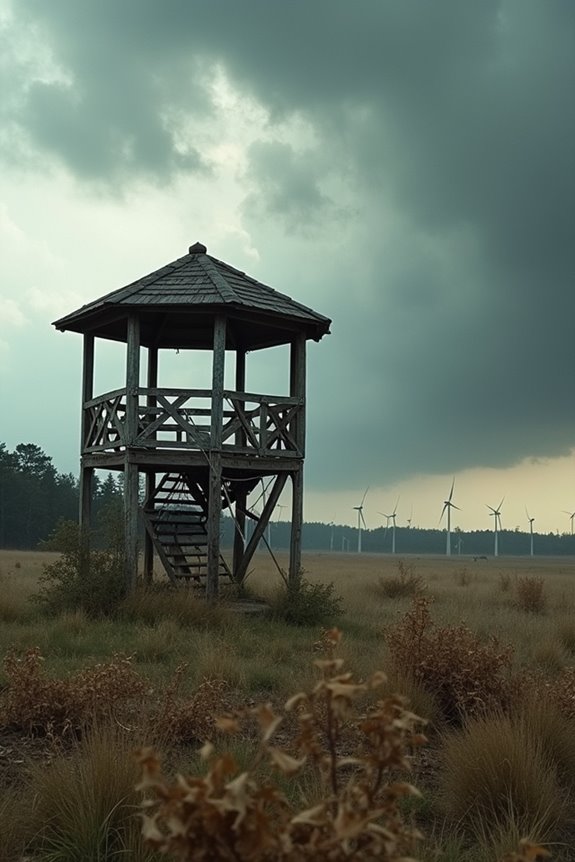
Where you place your gazebo affects how well it’ll withstand wind. You’ll want to select a location that provides shelter and wind protection while maintaining proper airflow. Consider these placement strategies:
- Position your gazebo near but not directly against your house or trees to gain wind protection while allowing air circulation.
- Orient the open sides perpendicular to your prevailing wind direction to minimize wind entry and reduce uplift risk.
- Avoid southern exposures where consistent strong winds occur in windy conditions.
- Choose a flat area instead of slopes or hills, which redirect and increase wind velocity.
Check your local ordinances and required setbacks before finalizing placement. Proper positioning shields your gazebo from harsh conditions and supports safe wind performance.
Position to Block Wind
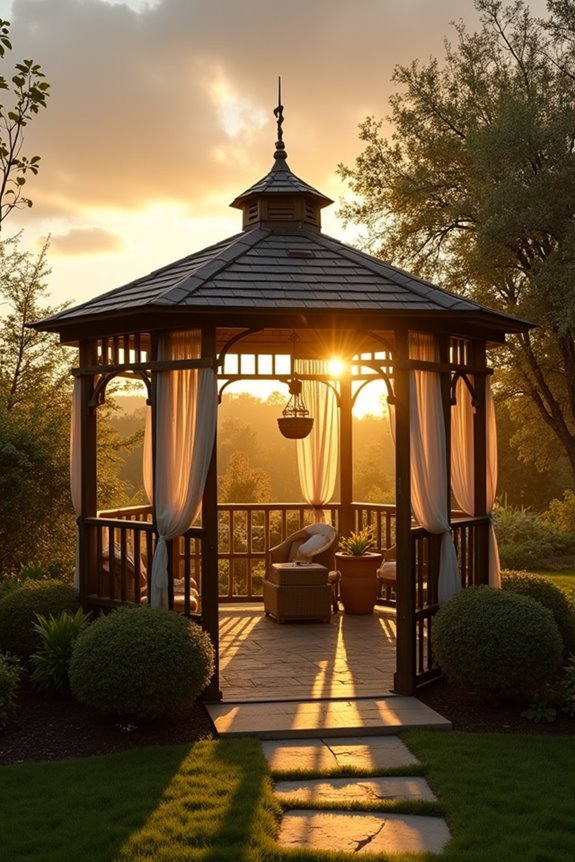
Strategic positioning of your gazebo creates an effective wind barrier that protects the structure from strong gusts. You’ll want to align your placement with local wind direction patterns to minimize wind exposure. Position open sides away from prevailing winds whenever possible. Use nearby natural windbreaks like walls, tall shrubs, or fences for shielding without blocking airflow completely.
| Windbreak Type | Effectiveness |
|---|---|
| Wooden fences | High shielding |
| Shrub rows | Moderate protection |
| Tree clusters | Excellent coverage |
| Stone walls | Strong barrier |
Avoid open slopes and southern exposures where wind speeds increase. Place your gazebo near your house or trees for shelter, but maintain distance to prevent direct impact. This strategic positioning reduces gust intensity while maintaining comfortable ventilation around your structure.
Anchor Portable Gazebos With Heavy-Duty Kits and Stakes
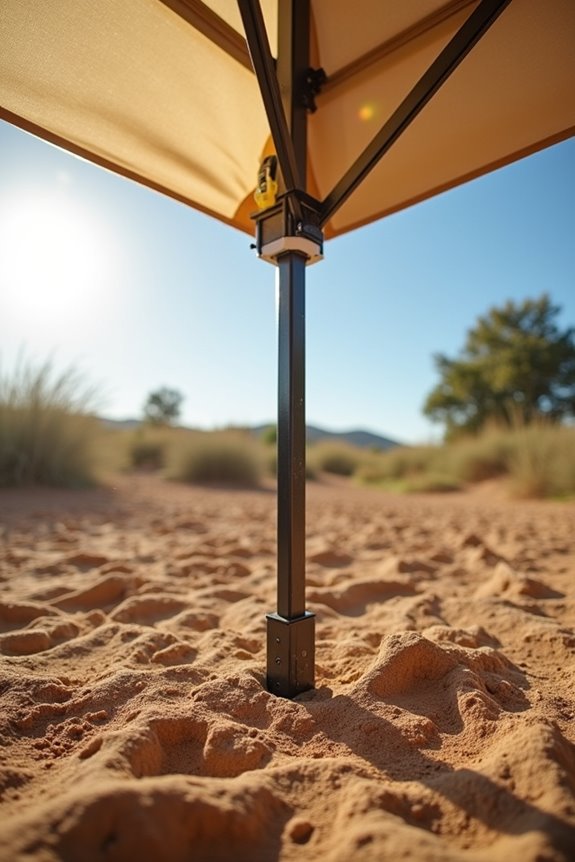
You’ll install anchor kits by attaching heavy-duty stakes to your gazebo legs using straps or cables, which allows you to secure your portable structure without drilling into the ground. The stakes you choose—whether plastic spikes for grass or metal auger-style anchors for stronger grip—determine how well your gazebo resists wind, and driving them deep into the soil or weighting them with sandbags provides additional stability. You can tighten the securing straps around each leg connection point to keep the anchors holding your gazebo firmly in place during breezy conditions.
Anchor Kit Installation Methods
How do anchor kits keep portable gazebos grounded during windstorms? You’ll secure your portable gazebo by attaching heavy-duty stakes to the legs using straps or cables. This installation method prevents your structure from shifting or collapsing in strong gusts.
Follow these steps for proper anchor kit installation:
- Drive stakes into the ground at 45-degree angles, positioning them away from gazebo legs for maximum wind resistance
- Attach straps or cables from stakes to gazebo leg attachment points, ensuring tight connections
- Use plastic anchors for grass surfaces or metal galvanized stakes for harder ground
- Install auger-style screw anchors by rotating them clockwise into soil for superior grip
You’ll achieve balanced tension across all four corners. This approach keeps your portable gazebo stable and secure without permanent ground modifications.
Stakes and Ground Penetration
The stakes you choose and how deep they penetrate the ground determine whether your gazebo stays put during windstorms. You’ll want to drive stakes 1–2 feet long and 1–2 inches wide fully into the ground for stability. Plastic stakes work well on grass, but metal or galvanized stakes provide better wind resistance in challenging conditions. Auger-style anchors grip soil more effectively than straight spikes, especially in loose earth. You can combine auger-style anchors with weighted feet for increased holding power. Attach stakes to each gazebo leg using heavy-duty straps or cables from your anchor kits. This reinforced ground penetration system secures your structure. After windstorms, inspect all anchors carefully. Remove and store stakes when you dismantle the gazebo to prevent loss or injury.
Strap Securing Techniques
Once you’ve driven your stakes into the ground, the next step involves securing your gazebo’s legs with heavy-duty straps or cables from anchor kits. Proper strap securing techniques improve your gazebo’s wind resistance during wind events.
Follow these steps for optimal securing:
- Use ratchet straps on each corner to apply strong, even tension across all legs
- Attach straps to stake anchors via the gazebo anchor kits’ built-in connection points
- Distribute load evenly by tightening tie-down straps in a crisscross pattern
- Verify all connections remain tight before and after severe weather
Ratchet straps are preferable because they maintain consistent pressure without loosening. Check your anchor system regularly. Inspect all straps for damage or fraying. This multi-point securing method prevents sway and keeps your gazebo stable and secure.
Anchor Every Corner With Tie-Down Straps

Why do tie-down straps matter so much for portable gazebos? They anchor every corner of your structure directly to the ground, distributing wind resistance evenly across all attachment points. Without proper tie-down straps, your gazebo’s stability depends only on its weight, which isn’t enough during strong gusts.
Secure straps to solid anchor points like ground stakes or reinforced frame brackets, never to weak components. Choose ratchet straps for maximum tension or cam buckle straps for adjustable security. Both provide reliable locking mechanisms that keep your gazebo firmly in place.
Conduct regular straps inspection before each use, checking for fraying or damage. Replace worn straps immediately. After dismantling your gazebo or when high winds approach, remove straps completely to prevent trip hazards and loss.
Add Weight to Stop Wind: Sandbags and Concrete Blocks

Adding extra weight around your gazebo’s base is one of the most effective ways to keep it grounded during windy conditions. You can use sandbags or concrete blocks as ballast to increase stability and wind resistance. Here’s how to do it properly:
- Stack sandbags or tie them around each gazebo leg to lower the center of gravity
- Distribute concrete blocks evenly around all legs for proper balance and support
- Use protective pads or wraps on legs to prevent abrasion and damage from ballast contact
- Remove weights when gale-force winds are expected to avoid overloading the structure
After wind events, inspect your ballast and leg connections for any displacement or wear. Store your weights securely when you’re not using them. This approach keeps your gazebo stable and protected.
Drive Anchor Stakes Into the Ground

While sandbags and concrete blocks help weigh down your gazebo, driving anchor stakes into the ground creates a more permanent solution that directly ties your structure to the earth. You’ll drive stakes by each gazebo leg to create ground attachment and resist uplift forces in wind. Use stakes that are 1-2 feet long and 1-2 inches wide for sufficient penetration into grass, dirt, or similar substrates. For sandy soils, opt for longer, wider stakes; in grass, use auger-style or screw anchors for a stronger hold. Regularly inspect stakes after wind events and remove or reset them as needed to prevent displacement. Combine stake anchoring with additional methods like weights or straps for improved gazebo stability in exposed or high-wind sites.
Anchor Permanent Gazebos With Concrete Bolts
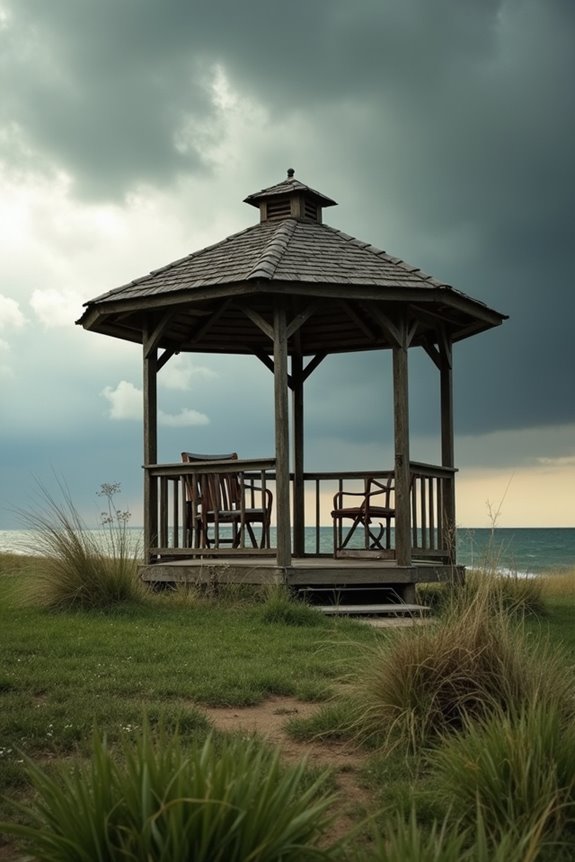
For gazebos that’ll stay in one spot permanently, anchoring them to a concrete slab with bolts provides the strongest wind resistance possible. This permanent installation method creates a high-strength connection that keeps your structure secure for years.
Here’s how to anchor your gazebo posts properly:
- Drill pilot holes into your concrete slab where gazebo posts’ll attach
- Install concrete anchors—wedge, screw, or adhesive types—into the pre-drilled holes
- Insert lag bolts through your post bases and tighten them securely
- Apply proper torque following manufacturer guidance to achieve rated holding strength
You’ll need to inspect these concrete anchors regularly for corrosion or loosening. Check them seasonally and re-tighten or replace them as needed. This maintenance keeps your wind resistance reliable and your gazebo stable against harsh weather conditions.
Lock Adjustable Legs With Canopy Clamps
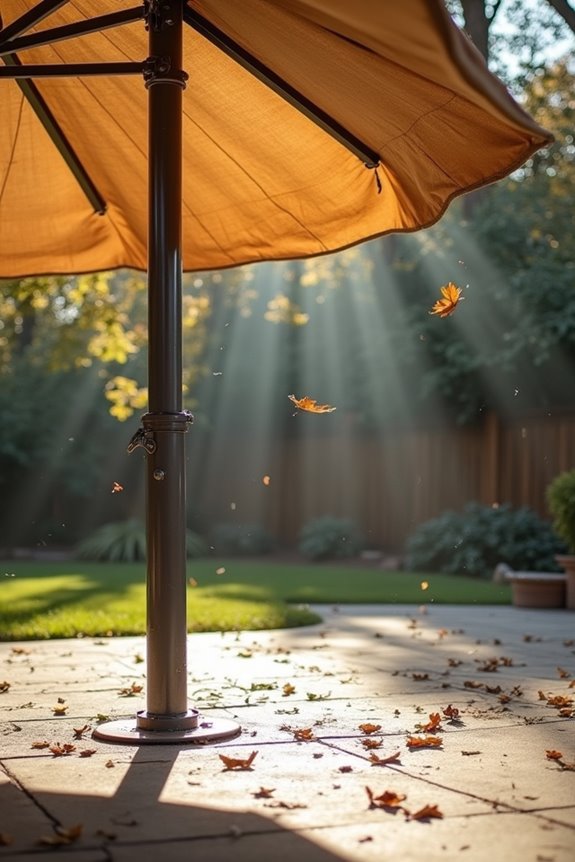
You can lock your gazebo’s adjustable legs in place with canopy clamps, which grip both the inner and outer leg sections when you tighten them. Installing clamps on each adjustable leg following the manufacturer’s directions and hand-tightening them until snug prevents inward collapse and improves your gazebo’s rigidity during windy conditions. Proper clamp installation creates a stable foundation that works best when you combine it with other anchoring methods like stakes, straps, and weights, particularly at exposed sites.
Clamp Installation and Tightening
How do canopy leg clamps improve your gazebo’s stability? These clamps lock your adjustable legs in place, creating a secure foundation that resists wind and movement. Install them correctly to maximize your gazebo’s wind resistance.
Follow these installation steps:
- Position clamps on every adjustable leg after frame erection
- Grip both inner and outer leg sections when tightening
- Tighten by hand until snug, creating noticeable stability gains
- Inspect knobs and hardware regularly for wear or damage
Hand-tightening clamps ensures proper tension without over-tightening. The clamps prevent inward collapse by securing both leg sections simultaneously. For increased stability, use clamps alongside other methods like stakes, straps, and weights. Remove clamps when dismantling your gazebo to prevent trip hazards during storage.
Leg Stability and Rigidity
Properly installed clamps hold your gazebo’s adjustable legs firmly in place, and this locked position directly builds on the foundation you’ve created. Once you’ve erected your frame, you’ll install clamps on each adjustable leg following the manufacturer’s directions. Hand-tighten each clamp until it’s snug, and you’ll notice improved stability, especially in windy conditions. These clamps prevent inward collapse by securing legs at fixed angles. For maximum wind resistance and gazebo stability, you’ll combine clamps with other reinforcements like gussets and cross bracing. This layered approach to leg rigidity works together to strengthen your entire structure. After setup, routinely inspect clamp knobs and mounting points for wear or looseness, then re-tighten as needed to maintain consistent leg rigidity and overall wind resistance throughout the season.
Reinforce Your Gazebo Frame for Wind Resistance
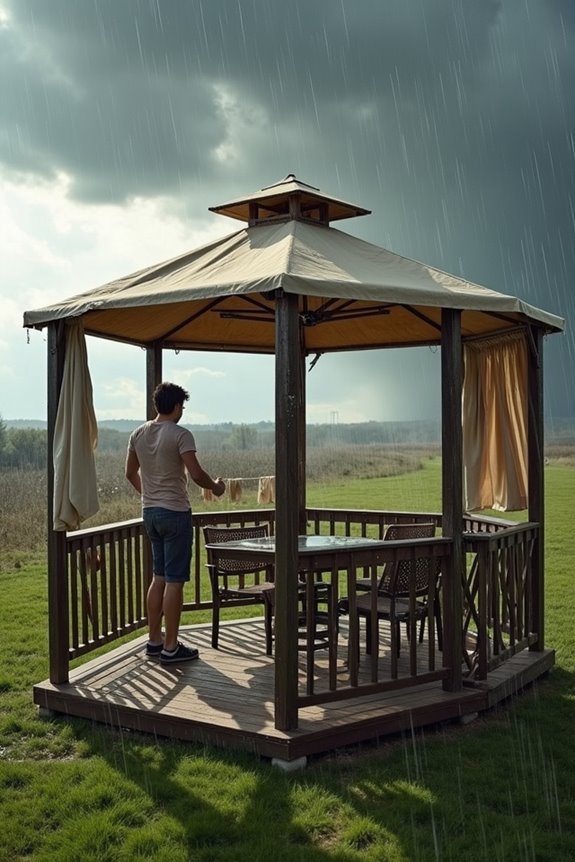
Why do some gazebos stand firm while others sway and buckle? The answer lies in reinforcement and structural integrity. You’ll strengthen your gazebo’s wind resistance by implementing these proven techniques:
- Install corner gussets and cross bracing to transfer wind forces away from weak points
- Add roof purlins and diagonal braces that improve rigidity against lateral wind loads
- Mount canopy clamps on adjustable legs to lock frames and prevent inward collapse during gusts
- Select hardtop roofs with powder-coated steel or aluminum framing for superior bending resistance
Before storm seasons arrive, inspect all connections and tighten loose joints. Replace worn components immediately. These reinforcement measures work together to create a structural frame that resists deformation. Your gazebo will remain stable and secure when you prioritize these wind-resistant upgrades.
Inspect and Maintain Anchor Points After High Winds
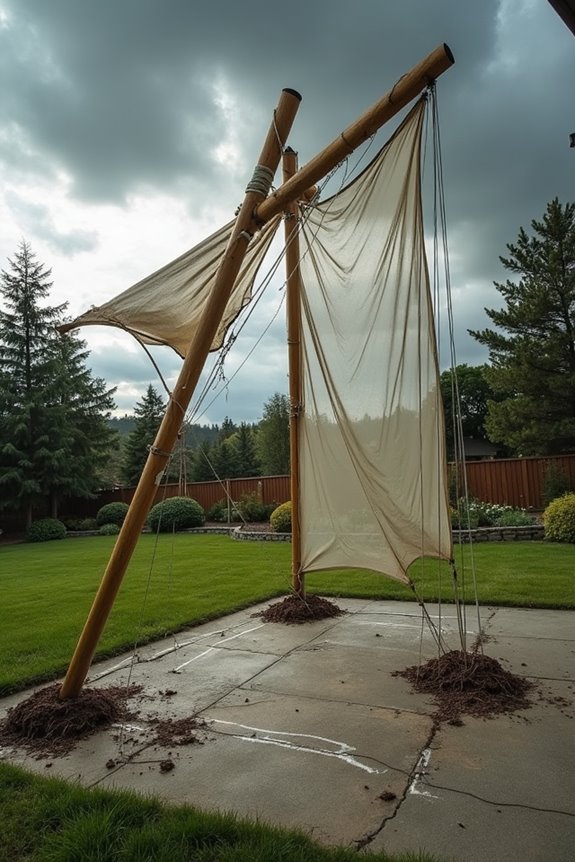
Your reinforced frame won’t stay secure without proper anchor point maintenance. After high winds pass through your area, inspect all ground anchors, bolts, and brackets for looseness, rust, or displacement. Check your tie-down connections, including stakes, straps, and wind ropes, for signs of wear or movement. Tighten or replace any damaged components before the next weather event arrives. Verify that weights or ballast remain evenly distributed across all legs, ensuring no leg has shifted or sunk into the ground. Examine posts, canopy attachments, and roof connections for structural stress or cracked fittings that could indicate compromised anchorage. Document your inspection results and schedule proactive maintenance to address vulnerabilities before future high-wind conditions occur.
Use Anchors, Weights, and Straps Together for Best Protection
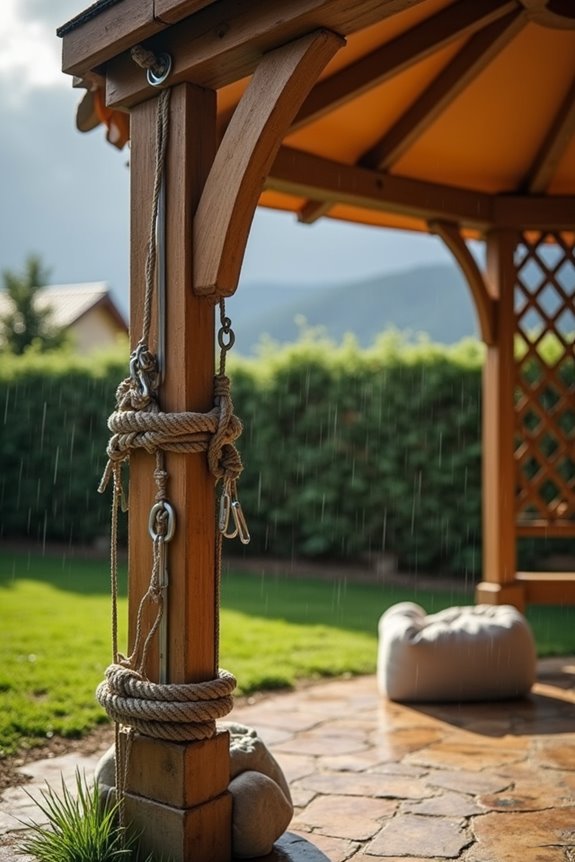
While a single anchoring method can provide some wind resistance, combining anchors, weights, and straps together gives your gazebo stronger protection against high winds. You’ll create a comprehensive system that addresses multiple stability challenges at once.
- Drive stakes 1–2 feet into the ground at each corner to create solid anchor points that resist upward and lateral forces.
- Attach tie-down straps using ratchet or cam-buckle styles to distribute tension evenly across all four legs and minimize sway.
- Place weights like sandbags or concrete blocks around all four legs to lower your gazebo’s center of gravity.
- Use anchor bolts to secure straps and weights together in one integrated system.
This layered approach maximizes wind resistance. Before extreme weather arrives, remove temporary weights and detachments to protect your gazebo effectively.