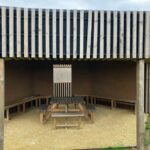

You can space fence posts 10 feet apart on flat, stable ground with light materials like wire fencing, but you’ll need to adjust spacing closer to 6–8 feet for sloped terrain, soft or sandy soils, heavy wood panels, or tall fences over 4 feet.
Wind exposure and soil drainage also affect your spacing decisions.
Proper measurement, terrain assessment, and adequate post depth prevent common installation mistakes that compromise stability and appearance.
Understanding your specific conditions ensures your fence lasts longer.
When 10-Foot Spacing Actually Works (And When It Doesn’t)
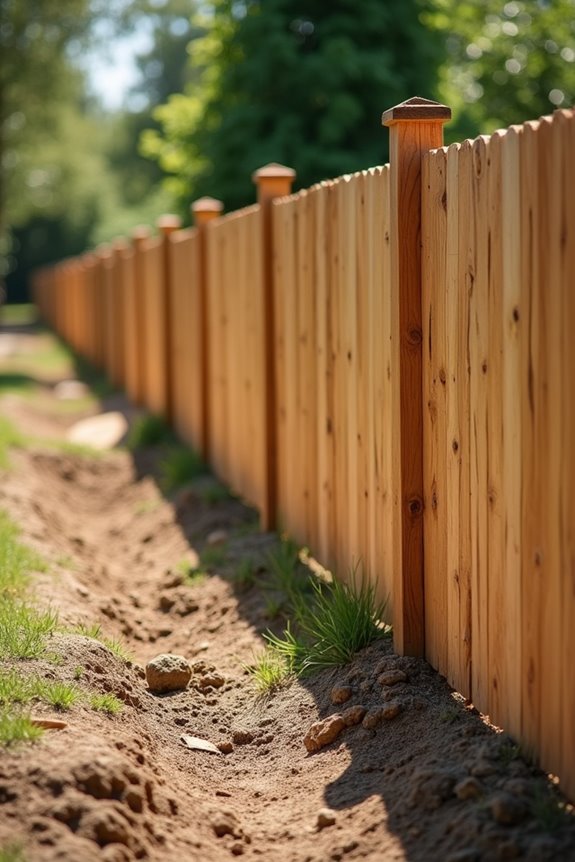
How do you know whether 10-foot spacing will work for your fence project? You’ll find that 10 feet apart works best for high-tensile fencing on flat, stable ground with minimal animal pressure and normal wind load. Your fence posts maintain better stability when soil conditions are firm and well-drained.
However, 10-foot post spacing requires adjustments in challenging situations. In damp or sandy soils, you’ll need deeper installation depth—30 to 36 inches—with reinforced anchors to prevent sagging. On ground slope or uneven terrain, you should reduce spacing to shorter spans or use stepped layouts instead.
For tall or security-focused fences, 10 feet apart can reduce structural integrity. You’ll need additional braces or shorter actual spacing to maintain tension and prevent failure.
Material Type and 10-Foot Fence Spacing
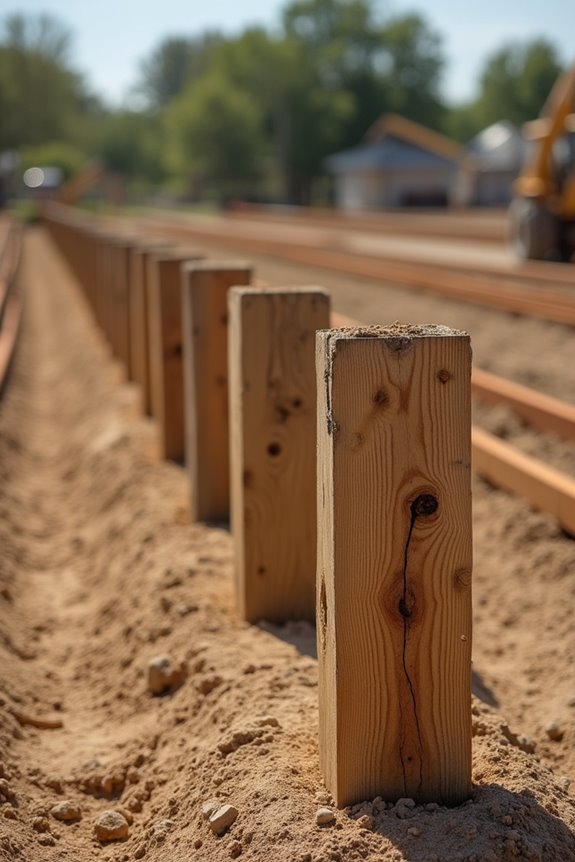
What you’re installing matters considerably when you’re deciding whether 10-foot spacing will work for your fence. Lighter materials like electric wire or woven wire handle 10 feet apart well, even on level ground. However, heavier options such as wood panels or composite boards require shorter post spacing, typically 6 to 8 feet, to maintain structural integrity. High-tensile fence systems commonly use 10-foot post spacing successfully. When you’re working with the Timeless Fence System, you’ll want to verify material compatibility before committing to 10-foot intervals. If you choose longer spans, you’ll need droppers or line stays to manage sag and preserve alignment. Soft soils and slopes may demand closer post spacing regardless of material type to prevent leaning and maintain stability throughout your fence installation.
Adjusting 10-Foot Spacing for Terrain
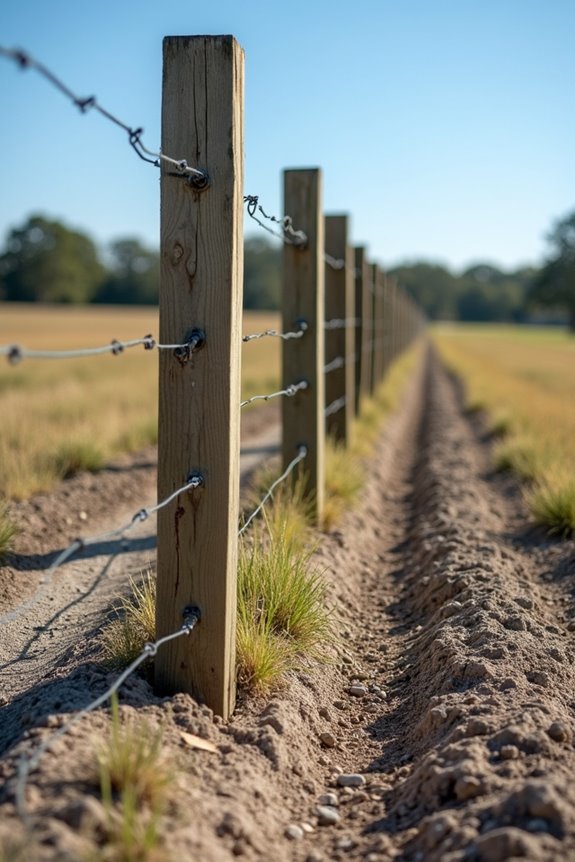
Terrain conditions directly determine whether you can maintain 10-foot post spacing or need to adjust your installation plan. On flat, stable ground, you’ll use standard 10-foot fence post spacing for wire fences. However, sloped ground requires closer spacing to reduce wire fence tension and prevent post leaning. You should shorten your post spacing adjustment below 10 feet on hills to maintain structural integrity.
Rocky or dense soil presents different challenges. You can maintain near-10-foot spacing, but you’ll need larger posts and deeper concrete footings for soil stability. Severe slopes demand contour fencing or step fencing techniques instead of uniform spacing. These installation techniques keep fence height constant and distribute tension evenly. Wind exposure and high-pressure livestock applications also necessitate spacing closer than 10 feet to improve overall resilience and security.
Calculate Posts and Plan Your Layout
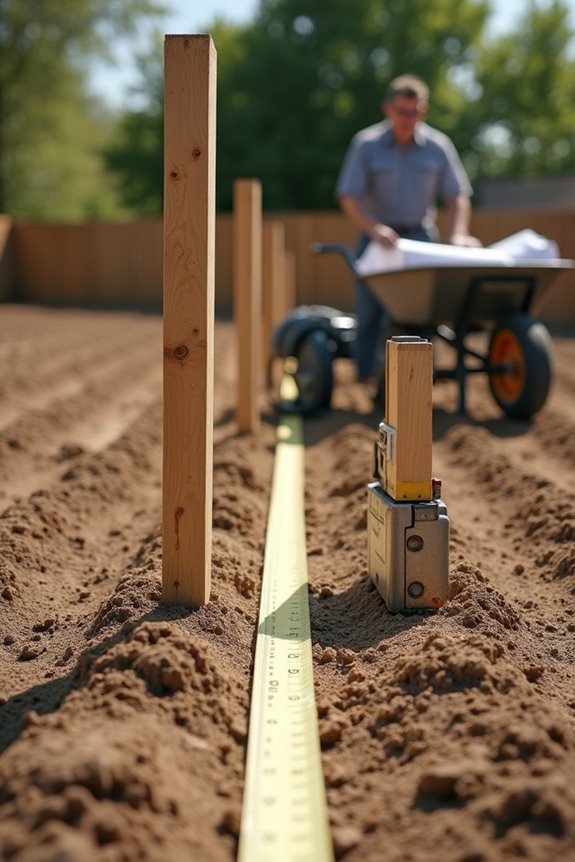
You’ll need to measure your total fence length and divide it by 10 feet to determine how many spans you’ll create, then add extra posts for corners, ends, and gates. Using string lines and stakes, you can mark each 10-foot interval along your fence line before you start digging, which helps keep your posts evenly spaced and properly aligned. This planning method gives you an accurate post count and prevents spacing mistakes that could weaken your fence structure.
Measuring Span Distances
How do you guarantee your fence posts stay evenly spaced across your entire property? You’ll measure center-to-center spacing from one post to the next. This method ensures consistent fence spans throughout your straight run. Use a string line secured to a fixed stake at each end to establish proper post alignment. Check that each intermediate post aligns within 1/8 inch of the line. This alignment tolerance prevents visible gaps and maintains structural integrity.
| Measurement Type | Distance | Purpose |
|---|---|---|
| Center-to-center spacing | 10 feet | Ensures uniform fence spans |
| Alignment tolerance | 1/8 inch | Verifies post alignment accuracy |
| End post inclusion | Add 2 posts | Completes your fence perimeter |
| Span count | Total length ÷ 10 | Estimates post count estimation |
Maintaining 10-foot spacing creates a uniform, professional fence. Your post count estimation becomes straightforward when you divide total fence length by ten and add end posts. This approach yields accurate results for planning materials and labor.
Layout Planning Tools
Before you dig a single hole, proper planning keeps your fence posts evenly spaced and properly aligned across your entire property. You’ll need essential layout planning tools to mark exact post locations accurately. Start your layout from a fixed corner, then work outward to maintain uniform 10-foot center-to-center spacing. Use a string line and markers to maintain straight alignment, especially across curves or slopes. Calculate the total number of posts by dividing your fence length by 10 feet, then add end posts as needed. For varying terrain, adjust spacing between posts while keeping end posts aligned. Always verify utilities and obstacles with a Before-You-Dig plan first. Sketch your property map showing fence lines, gates, and brace posts before installation begins.
Wire Fencing at 10-Foot Intervals
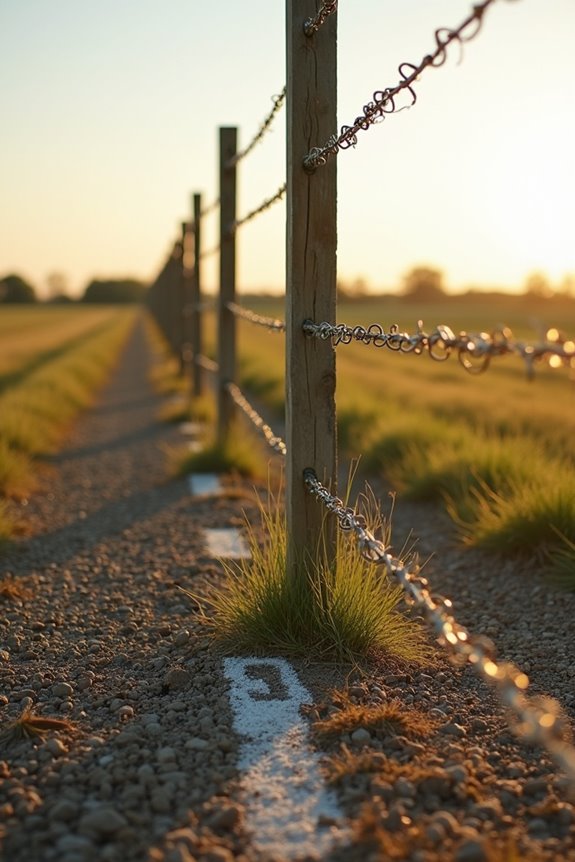
Wire fencing commonly uses post spacing of 8 to 12 feet apart, and 10 feet represents a standard interval for many field and ranch applications. 10-foot intervals work well for most field fencing projects when you properly manage tension and sag control.
To maintain structural integrity at 10 feet apart, install braces at your end posts and intermediate supports. These braces distribute tension evenly across your fence line. For uneven terrain or windy conditions, reduce spacing to 8 feet or less.
You can also use line stays or droppers along 10-foot spans to control sag without adding extra posts. These devices support the wire between posts effectively. Proper bracing and tension management keep your wire fencing straight and functional for years.
When 10 Feet Is Too Wide for Wood

While 10-foot spacing works well for high-tension wire fences, wood fences need closer post intervals because wood lacks the same tensile strength and can sag or lean under stress. You’ll find that wood fences typically require 6–8 feet between posts to maintain proper support, and anything wider risks increased warping, especially on panels taller than 4 feet or in windy and wet climates. If you must use 10-foot spacing with wood, you’ll need to add extra horizontal rails or internal bracing and ensure deeper post setting in unstable soil conditions to prevent structural failure.
Wood Fence Material Limitations
Can you space wood fence posts 10 feet apart? Wood fence material has real limitations when you stretch post spacing to 10 feet. Standard wood fence panels work best with 6 to 8 feet between posts, so wider spacing creates structural problems. Taller privacy fences suffer most from sag resistance issues at 10-foot intervals. The wood rails connecting your fence posts will bend and sag over time under their own weight and wind load pressure. You’ll need heavier rails, extra cross-bracing, and treated posts rated for durability to make 10 feet work. Even with these reinforcements, expect more maintenance. In windy areas or poor soil conditions, reducing spacing to 4–6 feet prevents angle changes and extends your fence’s lifespan.
Structural Integrity and Sagging
Why does sagging become such a serious problem when you space wood fence posts 10 feet apart? The distance between posts directly affects how much your rails bend under weight and wind load. When you place posts 10 feet apart, the rails spanning that distance experience excessive stress, causing noticeable sagging over time. This sagging compromises your fence’s structural integrity and visual appearance.
Wood fences typically need post spacing of 6–8 feet to prevent this problem. At 10 feet apart, post rotation and settlement accelerate, particularly in soft soil conditions. Taller fences over 4 feet require intermediate supports to maintain stability. Without additional bracing or intermediate rails, your fence panels warp and misalign. The cumulative bending moments stress your entire structure, reducing long-term durability and requiring costly repairs.
Recommended Spacing Adjustments
How much closer should you space your fence posts to prevent structural problems? You’ll want to reduce your fence post spacing to 6–8 feet in most situations. Windy areas demand tighter spacing because wider gaps increase wind load on panels. Softer or wetter soil types require closer spacing for better load distribution and to prevent post leaning. Heavier wood panels and taller fences need 6-foot spacing or less to maintain post stability and sag resistance. Steep slopes and uneven terrain also benefit from shorter spacing to counteract increased tension. While 10-foot spacing works for low-load decorative fencing, most insurers and local installation guidelines recommend 6–8 feet for reliability. Adjusting your fence height and soil conditions supports long-term durability.
Installation Errors That Ruin Even Spacing
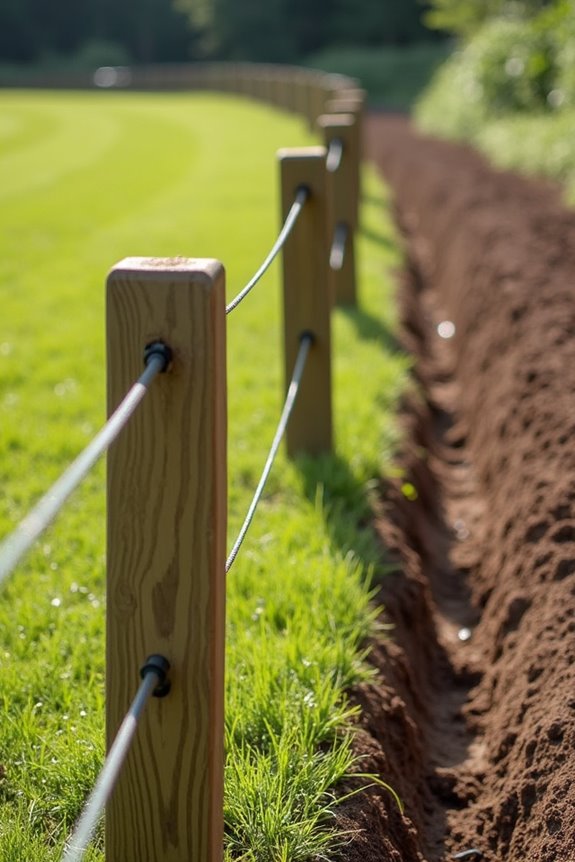
Even small mistakes during installation can destroy the 10-foot spacing you’ve carefully planned. Eyeballing post positions instead of measuring creates inconsistent gaps that lead to sagging posts and reduced fence stability. Uneven terrain presents another challenge—slopes and curves cause variable post centers that violate your intended spacing. Neglecting to use a string line or level results in posts that aren’t plumb, compromising straightness and appearance. Ignoring local codes and end post requirements forces spacing adjustments that weaken structural integrity. Post depth and concrete anchorage matter considerably too. Insufficient concrete or poor drainage allows posts to shift and rotate, destroying even spacing over time. Precise measurement, terrain assessment, and proper anchorage prevent these installation mistakes and keep your fence stable and properly spaced.
Installing Posts at 10-Foot Intervals
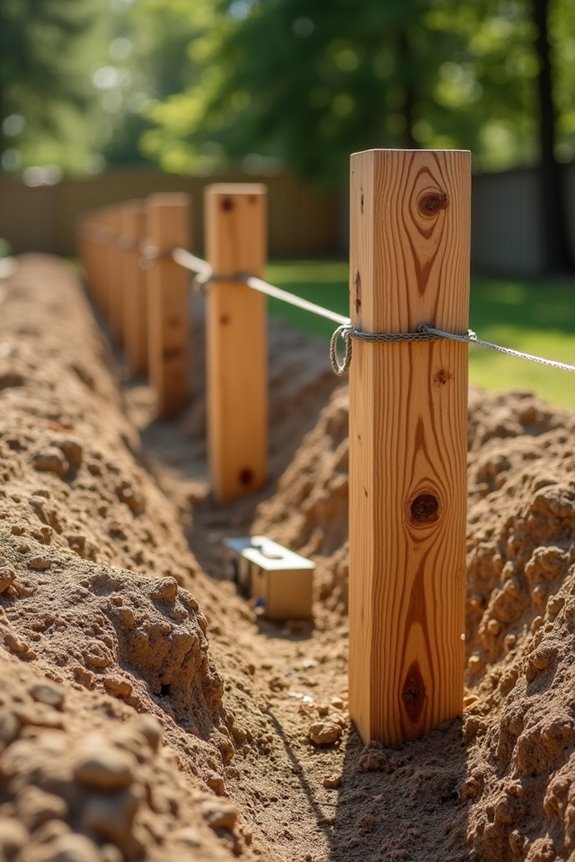
Once you’ve avoided the common installation mistakes that undermine spacing, you’re ready to position your posts correctly at 10-foot intervals. You’ll want to mark your fence line with string and measure ten feet apart for each post location. T-Posts or steel posts work well for this spacing since they handle mid-span loads and wire tension effectively. Before you dig, evaluate your soil conditions carefully. Looser or rocky ground may require deeper footing depth or closer spacing for stability. You should also consider bracing posts at intervals if you’re building high-tension or taller fences. Check local codes and fence guidelines first, as some applications demand tighter spacing like eight feet. Proper installation at ten feet apart balances practicality with effective tension management.