Yes, fences and walls count as different structures in Pokopia. Walls are heavier, load-bearing elements with higher durability and greater damage resistance, while fences are lighter boundary markers with lower hit points. They follow separate upgrade trees and require different materials. Walls provide primary defense around critical areas, whereas fences mark property lines and serve secondary roles. You can stack both types together to multiply blocking effects and extend breach time. Understanding each structure’s strengths helps you design your base’s optimal defense strategy.
Fences vs. Walls: Core Structural Differences in Pokopia
How do fences and walls actually function differently in Pokopia? Fences and walls serve distinct purposes in your property design. Fences are lighter boundary structures made from lighter materials at lower heights, designed primarily for delineation and visibility around your perimeter. Walls, by contrast, are heavier load-bearing elements constructed from solid materials at greater heights, providing security, privacy, and structural support. When you’re planning your layout, remember that fences don’t contribute to your building’s structural integrity. Walls, however, do count as integral architectural components that support your structure. You can place fences for outlining property boundaries, but you’ll need walls to create enclosed, secure rooms with higher durability. Understanding these differences helps you design your Pokopia property effectively.
Durability and Defense: Why Walls Outlast Fences?
Durability and Defense: Why Walls Outlast Fences?
Why do walls consistently outlast fences in Pokopia’s defensive systems? Walls provide superior durability because they’re built with more resources and reinforced materials, giving them markedly higher hit points than fences. You’ll notice walls maintain their structural integrity longer against common attack types due to their increased damage resistance ratings.
The game mechanics assign walls a reinforcement level that extends their maintenance window considerably. This means you don’t need to repair them as frequently as fences. Fences, by comparison, require more frequent upkeep because their lower intrinsic durability makes them vulnerable to breaches.
When you’re planning your defense strategy, understanding these durability differences matters. Walls serve as your primary defensive structures, while fences work better as secondary or temporary barriers. This distinction affects your resource management and long-term protection planning.
Where and How to Build Fences vs. Walls?
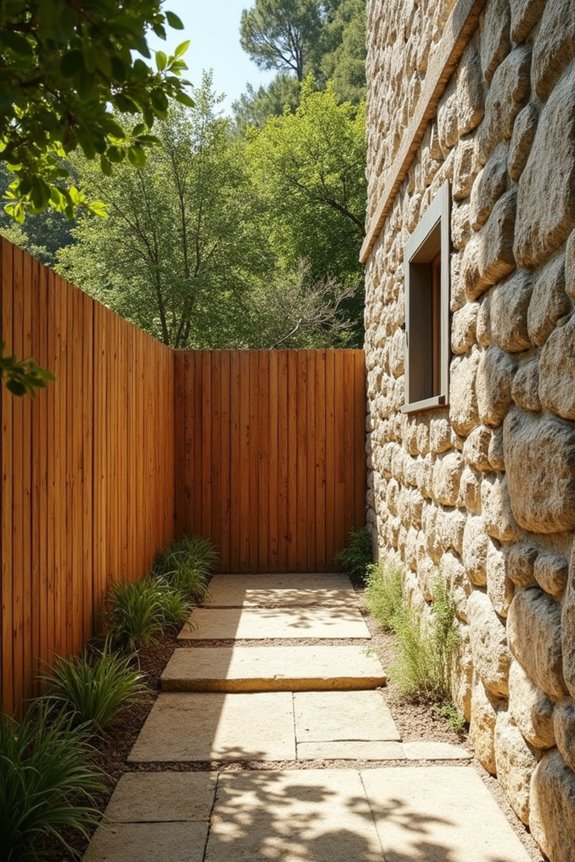
When you’re deciding between fences and walls for your Pokopia property, your choice depends on what you’re trying to accomplish and where you’re building. Fences work best along property lines where you want visibility and lighter boundaries. Walls suit enclosed areas requiring privacy or protection.
Fences mark property lines with visibility; walls enclose interior zones for privacy and protection based on your Pokopia property needs.
Consider these placement guidelines:
- Place fences on flat terrain along open borders to mark space without obstruction
- Build walls around interior zones needing full enclosure and security
- Check biome restrictions, as some zones limit fence height to 1.5 meters
- Use walls in weather-prone areas where fences can’t withstand heavy storms
You’ll invest fewer resources in fences initially, but walls provide lasting solutions for demanding locations. Select based on your terrain type and desired function.
Materials and Upgrades: Comparing Fence and Wall Progression
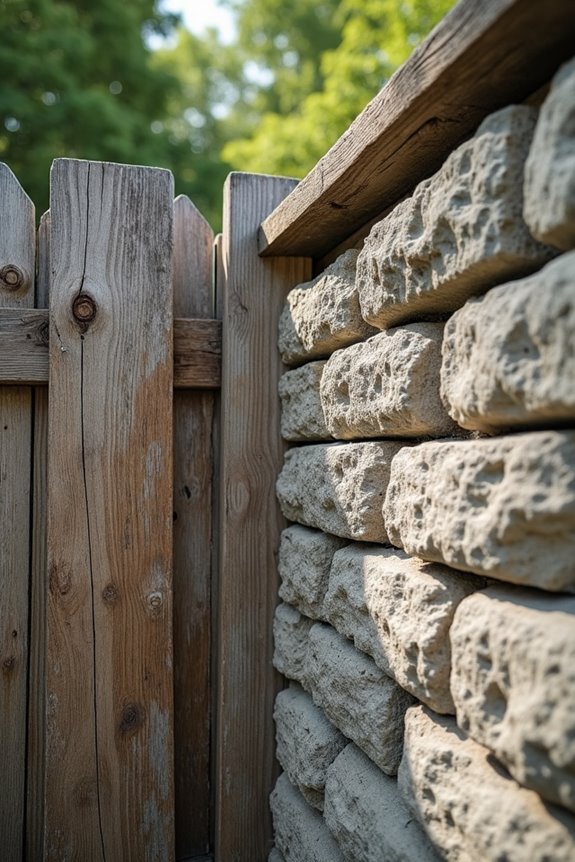
Now that you’ve placed your fences and walls in the right locations, you’ll need to understand how to upgrade them. Fences and walls follow completely separate upgrade trees in Pokopia. Fences use lighter materials and provide smaller HP gains, while walls require sturdier resources and grant larger durability increases. Each structure type has distinct material costs and level requirements that affect how quickly you can advance. When you upgrade a fence, it won’t influence your wall upgrades, and vice versa. This separation means you’re making independent progression choices for each structure. Walls unlock different defensive bonuses than fences do. Understanding these differences helps you plan your defensive strategy and allocate your resources wisely between the two structure types.
When to Use Each Structure in Your Base
How you position fences and walls throughout your base determines how effectively they’ll protect your resources and organize your space. You’ll want to strategically place each structure type based on its strengths and limitations.
Consider these placement guidelines:
- Use fences around perimeter zones and gates to create flexible, expandable boundaries
- Position walls at critical entrances to reinforce security around valuable assets
- Deploy fences for delineating different zones and connecting outdoor spaces
- Install walls as solid, unbroken enclosures protecting key areas
Fences work best for light containment and decoration, while walls offer higher damage resistance for permanent protection. Walls require slower placement but provide superior durability. You’ll maximize your base’s defense by combining both structures strategically, using fences for adaptable boundaries and walls for secure, high-priority locations.
Can You Stack Fences and Walls for Better Defense?
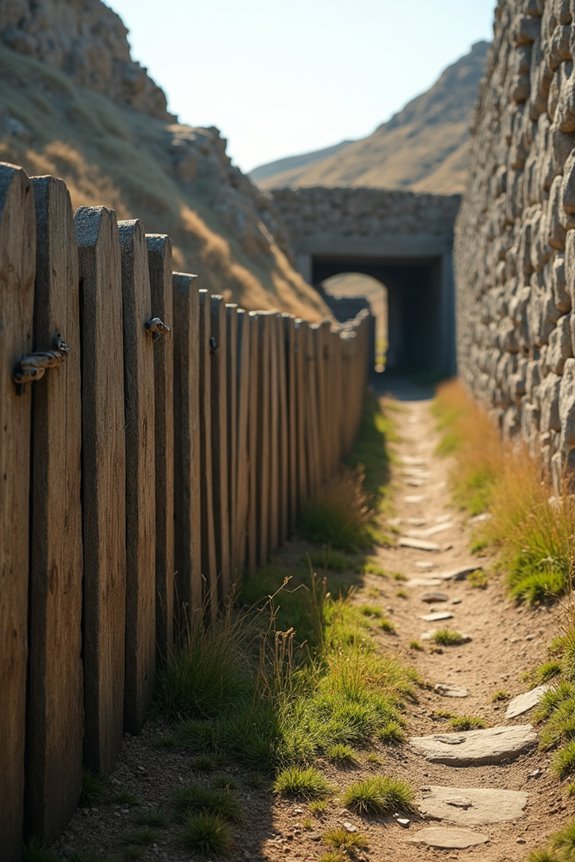
You’ve learned how to position fences and walls individually throughout your base, but you might wonder if combining multiple layers of both structures creates stronger defenses. You can stack fences and walls together to improve your overall protection. However, their defensive benefits don’t combine identically. When you layer fences with walls, you create multiplied blocking effects that slow enemy advancement. Each additional layer adds hitpoints and extends the time enemies need to breach your perimeter. You’ll want to experiment with different stacking patterns in your base layout. Some players prefer alternating fence and wall layers for balanced coverage. Others concentrate walls in high-traffic areas while using fences elsewhere. Test various combinations to find what defensive strategy works best for your playstyle and resource availability.