Transform your front yard into a stunning low-maintenance oasis with rock landscaping – we’re here to show you how creative stone design can boost your home’s curb appeal while saving you time and money on upkeep.
Rock landscaping isn’t just about throwing some stones around your property. We’ve discovered that strategic placement of different rock types, sizes, and colors can create dramatic visual impact that rivals any traditional garden. From elegant river rock pathways to bold boulder arrangements, rock landscaping offers endless possibilities for every style and budget.
Whether you’re dealing with challenging soil conditions, water restrictions, or simply want to reduce your weekend yard work, we’ll guide you through innovative rock landscaping answers that’ll make your neighbors stop and stare. These drought-resistant designs not only look spectacular year-round but also add important value to your property.
Create a Stunning Rock Garden Entrance
Transforming your front yard entrance into a captivating focal point requires strategic rock placement that immediately draws attention. We’ll guide you through creating an impressive gateway that showcases your property’s best features while maintaining the low maintenance benefits of rock landscaping.
Choose Bold Statement Rocks
Large boulders serve as the foundation of any dramatic rock garden entrance, creating instant visual impact that establishes your industry’s character. We recommend selecting stones that measure 2 to 4 feet in diameter, such as granite boulders, sandstone formations, or limestone blocks. Position these anchor pieces at the corners of your entrance pathway or flanking your driveway to frame the space naturally.
Natural weathered rocks provide authentic texture that complements your home’s architectural style. Consider fieldstone varieties like Pennsylvania bluestone, Colorado red rock, or local quarried stone that reflects your region’s geological character. Place these statement pieces asymmetrically to avoid a rigid, unnatural appearance while ensuring they don’t obstruct foot traffic or vehicle access.
Vertical stone placement adds height dimension to otherwise flat entrance areas. Stack flat fieldstones or position tall, narrow rocks like slate columns to create natural pillars that guide visitors toward your front door. These vertical elements work especially well when combined with low growing plants like sedums or ornamental grasses.
Design Symmetrical Rock Formations
Balanced rock arrangements create formal elegance that appeals to homeowners seeking sophisticated curb appeal. We suggest placing matching medium sized rocks, typically 12 to 18 inches in diameter, on both sides of your main walkway at equal distances. This symmetrical approach works particularly well with colonial, traditional, or contemporary home styles.
Mirrored groupings establish visual harmony throughout your entrance industry design. Create identical clusters of 3 to 5 rocks on opposite sides of your driveway, using similar colors and sizes to maintain consistency. Popular combinations include white quartz with gray river rock or brown sandstone with black lava rock.
Geometric patterns provide structured beauty that complements modern architectural elements. Arrange rocks in triangular formations, parallel lines, or circular patterns that echo your home’s design features. Use measuring tape to ensure precise spacing of 18 to 24 inches between major rock groupings for optimal visual balance.
Add Colorful Accent Stones
Vibrant pebbles inject personality into neutral rock garden foundations without overwhelming the overall design scheme. We recommend incorporating colorful varieties like red jasper, blue slag glass, or yellow quartzite in 1 to 3 inch sizes as border elements or pathway accents. These smaller stones work best when used sparingly to highlight exact areas.
Contrasting colors create depth that makes your entrance appear more spacious and professionally designed. Pair light colored stones like white marble chips with dark basalt or charcoal slate to establish striking visual boundaries. This color contrast technique works especially well around mailbox areas, driveway edges, or walkway borders.
Seasonal stone rotation maintains year round interest in your rock garden entrance design. Replace or supplement accent stones with seasonal colors like orange carnelian in fall, white snow quartz in winter, or green aventurine in spring. Store alternate stones in your garage or garden shed for easy seasonal swapping that keeps your industry fresh and captivating.


Last update on 2026-02-27 / Affiliate links / Images from Amazon Product Advertising API
Build Elegant Rock Borders and Edging
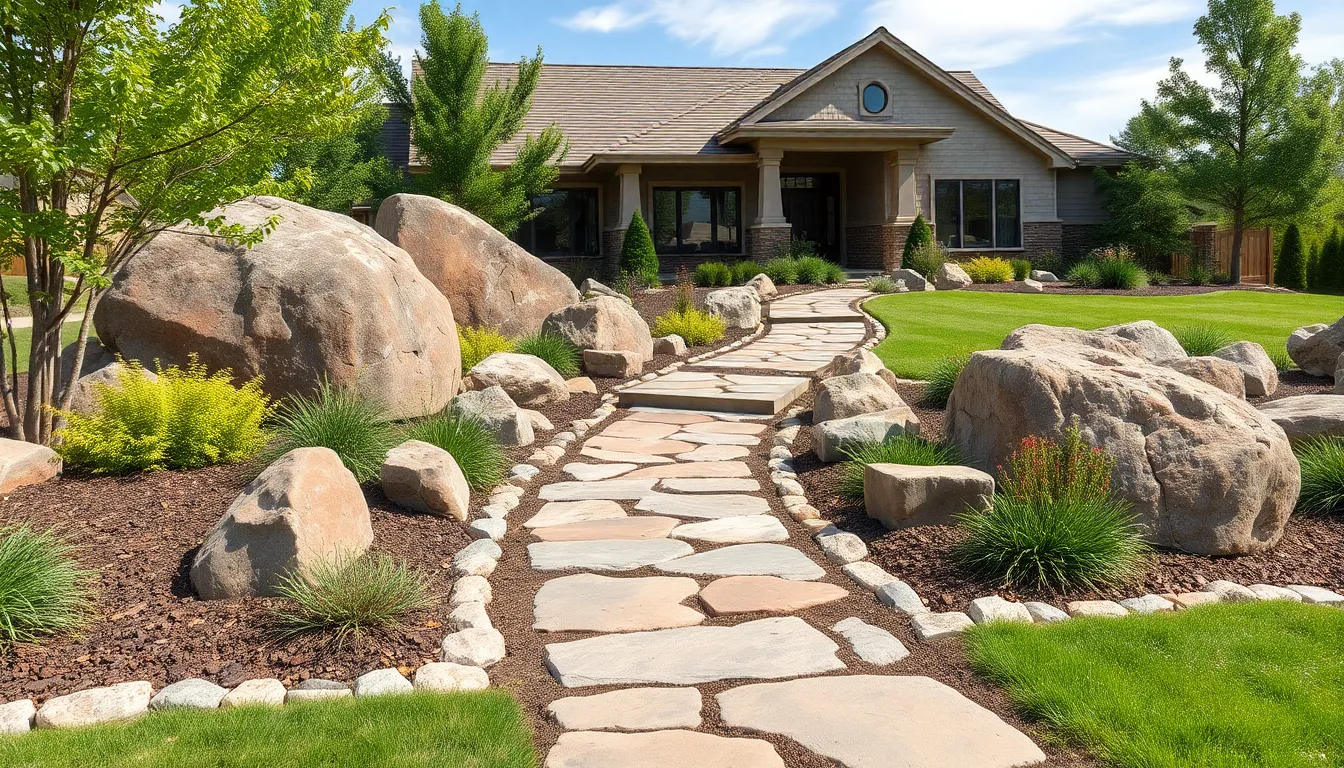
Rock borders transform ordinary garden beds into sophisticated industry features that define spaces with natural elegance. We’ll explore three essential techniques that create stunning boundaries while maintaining the organic flow of your front yard design.
Install Natural Stone Pathway Borders
Natural flat stones create the most enduring walkway borders that seamlessly blend into any industry design. We recommend using irregular shaped stones along pathway edges to add visual charm and earthy appeal that complements your existing rock garden entrance.
Stepping stones work beautifully when bordered with gravel to define walkways and maintain clean lines. This combination prevents mulch or soil from spilling onto paths while creating a low maintenance solution that enhances your front yard’s professional appearance.
Stone edging along garden paths ensures crisp boundaries between different industry zones. We find that layering various stone sizes creates depth and texture that guides visitors naturally through your outdoor space.
Create Curved Rock Garden Edges
Curved edges soften harsh transitions between lawn areas and flower beds using flowing rock arrangements. We design these borders to create smooth lines that add visual interest and help guide the eye naturally across the industry.
Medium and large boulders serve as dramatic focal points when positioned along curved edges. These arrangements lend texture and height variation that transforms flat garden spaces into ever-changing outdoor environments.
Layering rocks of different sizes along curved borders adds dimensional appeal without creating rigid straight lines. We strategically place these elements to enhance your garden’s aesthetic while maintaining the natural flow established by your rock garden entrance.
Use River Rocks for Soft Transitions
River rocks provide the perfect solution for creating gentle transitions between different landscaping elements. We use their smooth, rounded shapes and natural colors to fill spaces between stepping stones and line garden beds effectively.
Drainage benefits make river rocks ideal for creating gentle slopes that manage water flow naturally. These stones complement plants and other materials while providing a tactile, pleasing surface that enhances your front yard’s overall texture.
Natural water drainage answers emerge when we incorporate river rocks into border designs. Their placement creates practical benefits that reduce maintenance requirements while maintaining the elegant aesthetic you’ve established throughout your rock landscaping project.


Last update on 2026-02-27 / Affiliate links / Images from Amazon Product Advertising API
Design Eye-Catching Rock Water Features
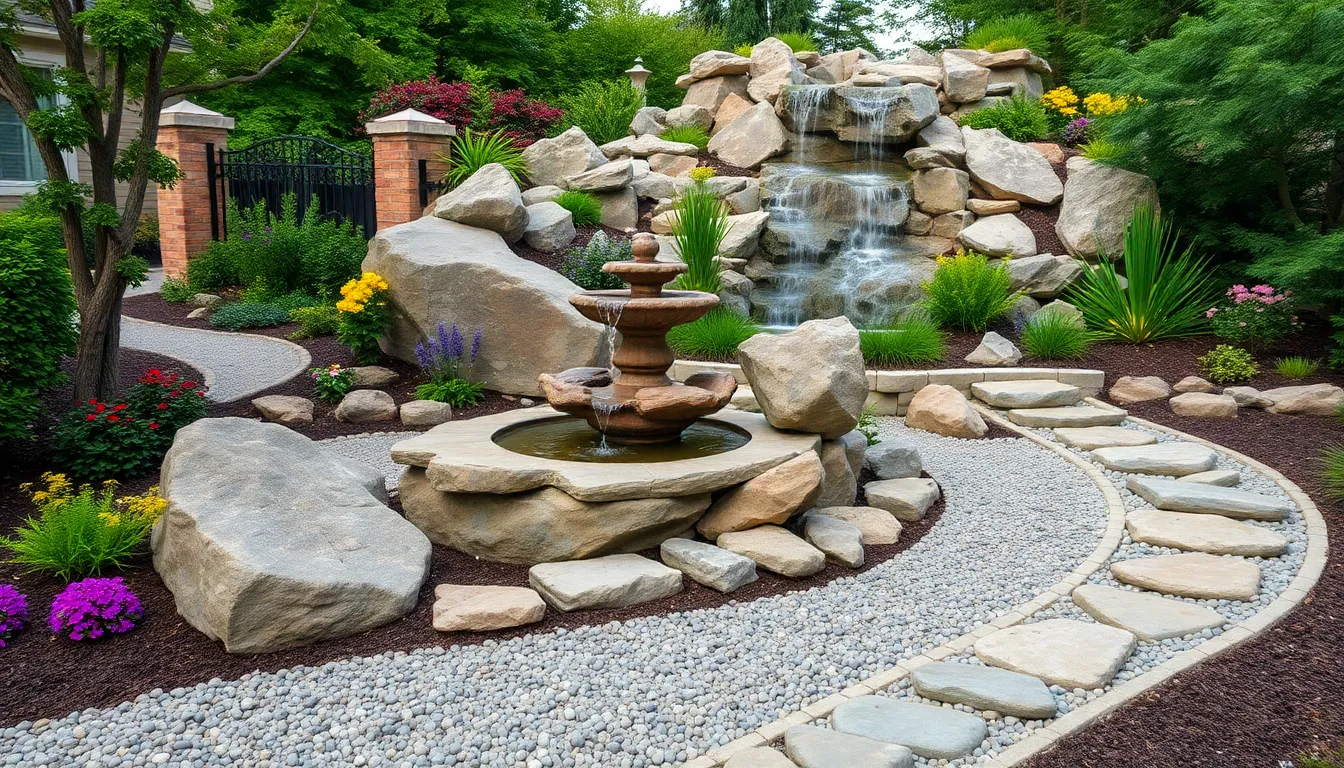
We can transform our front yard rock landscaping into a mesmerizing oasis by incorporating water elements that blend seamlessly with natural stone. These features create striking focal points while adding the soothing sounds of flowing water to our outdoor space.
Construct a Rock Fountain Centerpiece
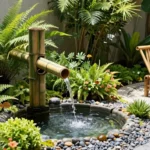
Rock fountains serve as captivating centerpieces that instantly draw attention and enhance our front yard’s aesthetic appeal. We should stack medium to large boulders to form the foundation and basin, creating height variance that anchors plant groupings and defines walkways naturally.
Natural stones blend seamlessly with our industry’s organic look, providing both texture and color variations. We can arrange weathered boulders in circular patterns around the fountain base to create instant visual interest while maintaining the natural feel of our yard.
The soothing sounds of flowing water from our rock fountain create a tranquil atmosphere that masks street noise effectively. We’ll find that strategically positioned fountains can break the monotony of green spaces while serving as dramatic focal points that enhance curb appeal significantly.
Build a Natural Stone Waterfall
Natural stone waterfalls add ever-changing movement to our front yard while creating an impressive architectural element. We should arrange stones to mimic natural cascades, integrating them with surrounding greenery or hardscape elements for cohesive design flow.
Building waterfalls with varying stone sizes creates depth and authentic texture that enhances tranquility throughout our outdoor space. We can position larger boulders at the base to anchor the feature while using smaller stones to guide water flow naturally.
These waterfall features provide practical benefits like erosion control and improved water drainage while creating inviting focal points. We’ll discover that the cascading water helps establish visual hierarchy in our landscaping while promoting a sense of natural serenity.
Create a Zen Rock Stream
Zen inspired rock streams using smooth river rocks and gravel simulate gentle water flow while promoting calmness in our front yard design. We should incorporate these minimalist features alongside simple plantings and gravel paths for organic walking experiences.
River rocks paired with stepping stones create clean lines that require minimal maintenance throughout various climate conditions. We can design these streams to complement modern architecture while softening transitions between different industry zones effectively.
Gravel pathways surrounding our rock streams define clear walking areas while maintaining the peaceful aesthetic we desire. We’ll appreciate how these low maintenance water features combine natural beauty with practical drainage answers that improve our property’s overall functionality.




Last update on 2026-02-27 / Affiliate links / Images from Amazon Product Advertising API
Incorporate Drought-Resistant Plants with Rocks
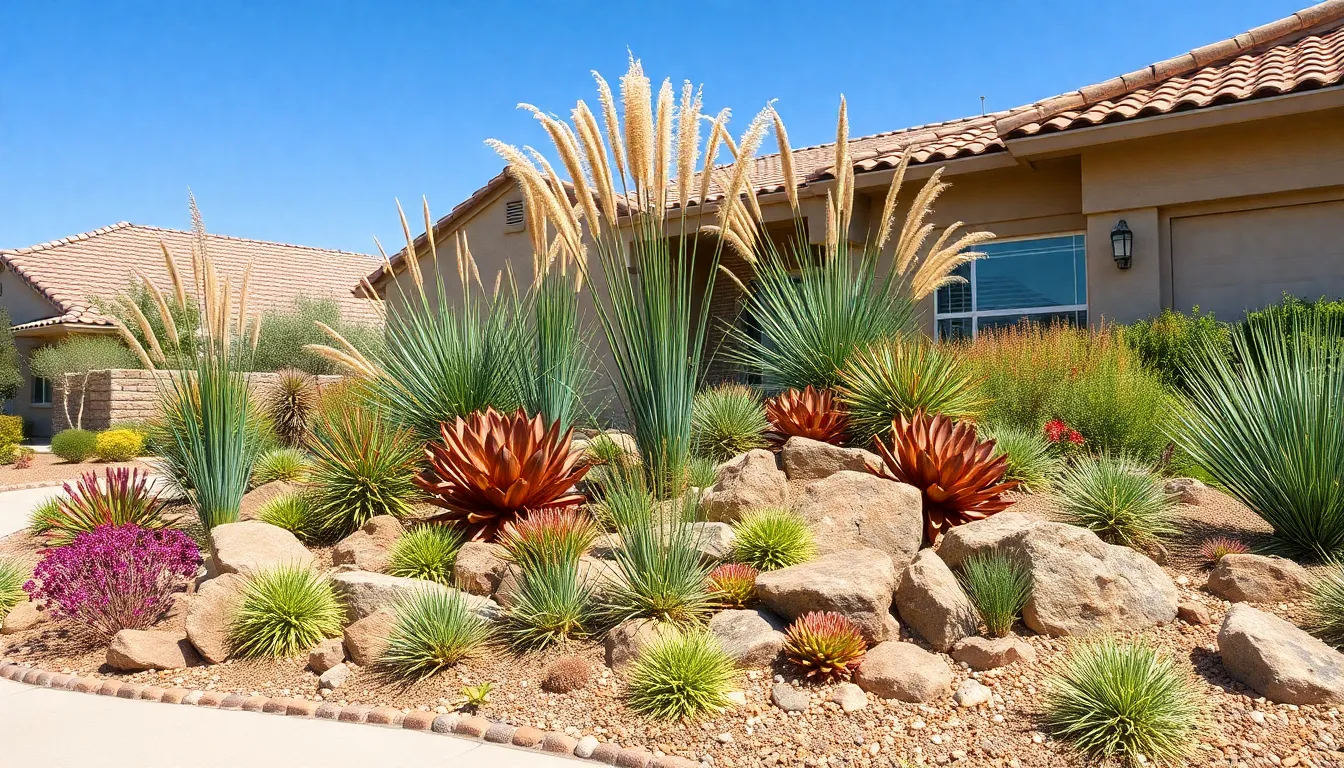
Building on water-wise landscaping principles, we can create stunning front yard designs that thrive with minimal irrigation. Rock and plant combinations naturally reduce water needs while maintaining year-round visual appeal.
Pair Succulents with Desert Stones
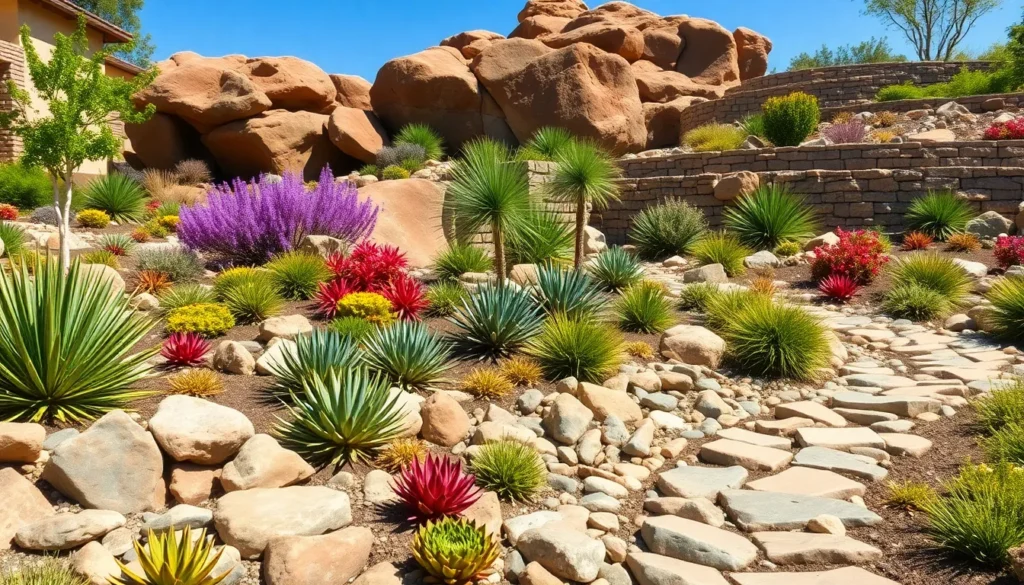
Succulents such as agave, aloe, and sedum create striking architectural forms when nestled among sandstone or decomposed granite. Desert stones retain heat throughout the day and reflect light back to the plants, mimicking their natural arid habitat. We find that this combination works exceptionally well because both elements share similar water requirements and aesthetic qualities.
The geometric shapes of succulents provide beautiful contrast against the rugged texture of desert stones. Agave plants particularly shine when surrounded by warm-toned sandstone, creating focal points that draw the eye naturally. Decomposed granite serves as excellent ground cover around these plantings, preventing weeds while allowing proper drainage.
Combine Ornamental Grasses with River Rocks
Ornamental grasses bring graceful movement and soft texture when planted alongside smooth, rounded river rocks. The fine blades of grasses create ever-changing contrast against the solid, polished surfaces of river stones. We recommend using drought-tolerant varieties like fountain grass, blue fescue, or Mexican feather grass for optimal results.
River rocks provide excellent drainage around grass plantings while preventing soil erosion during heavy rains. Their smooth surfaces reflect light beautifully, making the grass appear more vibrant and creating visual depth. The natural curves of river stones complement the flowing lines of ornamental grasses, producing a balanced and harmonious industry design.
Plant Perennials Between Rock Clusters
Hardy perennials like coneflowers, black-eyed Susans, and thyme thrive when planted between strategically placed rock clusters. Rocks offer natural wind protection for delicate perennial stems while helping retain soil moisture around root systems. We’ve found that this arrangement creates layered visual interest that changes throughout the growing season.
Rock clusters serve as natural mulch, reducing water evaporation and suppressing weed growth around perennial plantings. The stones provide thermal mass that moderates soil temperature, protecting plant roots from extreme heat and cold. This combination produces a naturalistic front yard that appears both structured and organic, with seasonal color bursts emerging from the permanent rock foundation.


Last update on 2026-02-27 / Affiliate links / Images from Amazon Product Advertising API
Establish Functional Rock Retaining Walls
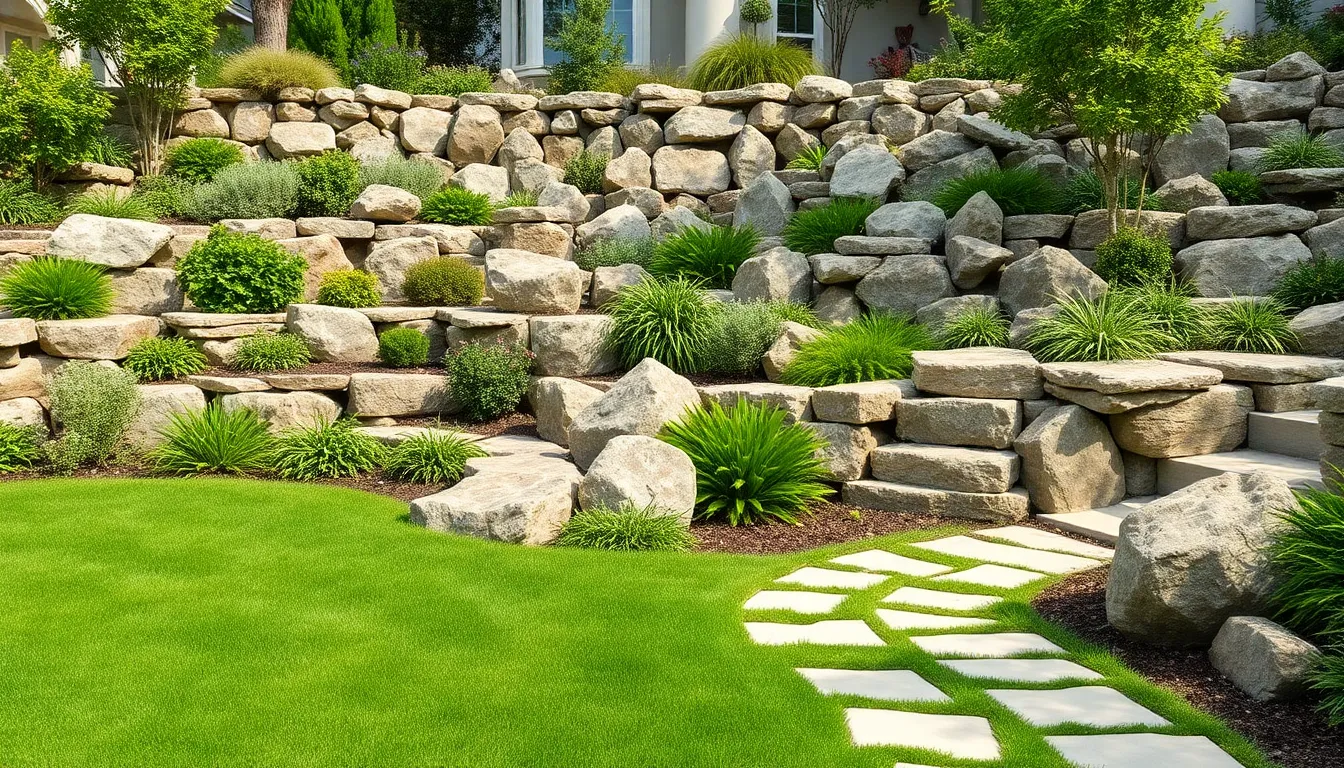
Rock retaining walls transform challenging slopes into stunning architectural features while providing essential soil stabilization for your front yard. These durable structures control erosion and create defined garden zones that enhance both function and visual appeal.
Build Terraced Stone Gardens
Terraced gardens maximize the potential of sloped terrain by creating multiple planting levels that prevent soil erosion and improve drainage. We recommend using natural stone retaining walls to construct these layered garden beds, which add depth and visual interest to your front yard industry. Medium to large boulders work exceptionally well for building sturdy terraces that can support various plant types.
Natural rock steps between terraces create seamless transitions while maintaining the organic feel of your stone garden design. Flat stones serve as practical pathways within terraced areas, allowing easy access for maintenance and enjoyment. Surrounding these stone elements with gravel defines garden beds clearly and reduces ongoing maintenance requirements.
The strategic placement of rocks in terraced gardens helps control water flow during heavy rains while preserving soil integrity. Different rock sizes throughout the terraces add texture and create visually striking focal points that complement your plantings beautifully.
Create Privacy Screens with Stacked Rocks
Stacked rock walls offer natural privacy answers that integrate seamlessly with your front yard’s existing industry elements. Gabion walls represent a contemporary approach where wire cages hold loose rocks, creating strong and visually striking privacy barriers. These structures provide effective noise reduction without the harsh appearance of traditional metal or wooden fencing.
Natural stones in stacked configurations blend organically with surrounding plants and yard features while offering durable screening answers. We’ve found that mismatched rocks in privacy walls create dramatic texture variations that serve as architectural focal points in front yard designs. The combination of different stone sizes in stacked walls adds visual weight and establishes clear property boundaries.
Privacy screens built with stacked rocks require minimal maintenance while providing year round screening effectiveness. These natural barriers complement both traditional and modern home architectures without overwhelming the industry’s overall aesthetic balance.
Design Slope Control Systems
Slope control systems using strategic rock placement prevent erosion while creating functional and decorative industry answers. Rock retaining walls positioned on steep areas effectively manage water flow and maintain soil stability during challenging weather conditions. These engineering answers blend seamlessly with industry design principles to create beautiful and practical outdoor spaces.
Large boulders anchored into hillsides provide immediate slope stabilization while serving as striking industry focal points. Terracing steep slopes with multiple rock walls creates manageable planting areas that transform unusable terrain into valuable garden space. The integration of various rock sizes in slope control systems adds natural texture while addressing exact drainage and erosion concerns.
Strategic placement of gabion walls on slopes offers contemporary answers that combine structural integrity with visual appeal. These wire caged rock systems allow for natural drainage while maintaining the hillside’s stability and preventing costly soil loss over time.
| # | Preview | Product | Price | |
|---|---|---|---|---|
| 1 |

|
Bi-Directional Retaining Wall 4ftX50ft,Geogrid for Retaining Wall,Driveway | $69.99 | Buy on Amazon |
Last update on 2026-02-27 / Affiliate links / Images from Amazon Product Advertising API
Install Decorative Rock Mulch Areas
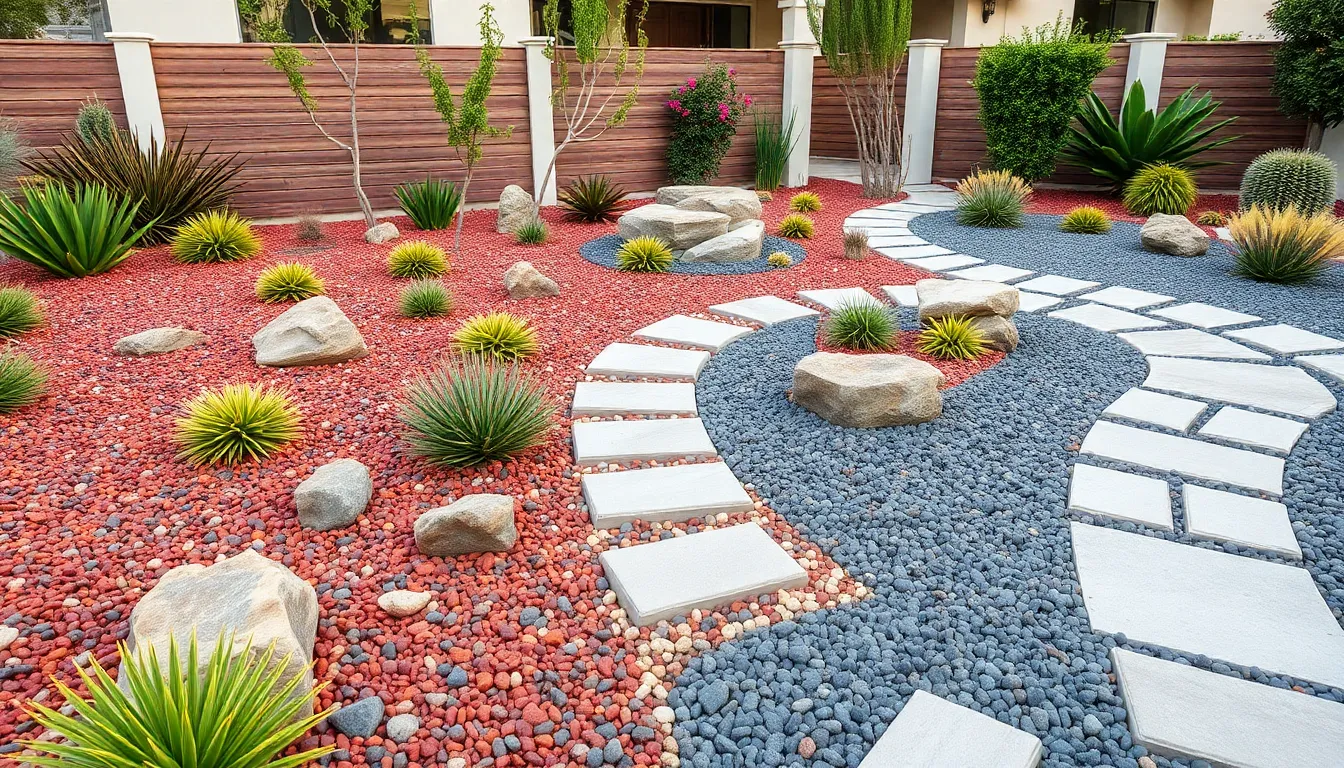
Decorative rock mulch transforms ordinary planting beds into sophisticated industry features while dramatically reducing maintenance requirements. Strategic placement of various rock types creates texture and color variations that complement your existing plant selections perfectly.
Cover Planting Beds with Pea Gravel
Pea gravel offers exceptional versatility for covering planting beds throughout your front yard industry design. These small, rounded stones create smooth surfaces that contrast beautifully with surrounding greenery while providing excellent drainage properties. Installing pea gravel around shrubs, perennials, and ornamental plants establishes clean borders that define garden spaces naturally.
Walkways benefit tremendously from pea gravel applications since the material compacts well under foot traffic while maintaining its organic appearance. We recommend using pea gravel in neutral tones like beige, gray, or tan to complement various plant colors throughout different seasons. This low maintenance option suppresses weed growth effectively while retaining soil moisture around plant roots.
Use Lava Rock for Color Contrast
Lava rock creates striking visual impact through its distinctive deep red and black coloration that enhances drought tolerant plant arrangements. This lightweight, porous material provides excellent soil aeration while supporting water retention around desert plants and succulents. Incorporating lava rock into xeriscaped areas establishes authentic southwestern aesthetics that thrive in challenging growing conditions.
Desert inspired landscapes benefit from lava rock’s ability to reflect heat while protecting plant roots from temperature fluctuations. We suggest combining black lava rock with silver foliaged plants like dusty miller or lamb’s ear for dramatic contrast effects. Red lava rock pairs exceptionally well with blue agave, barrel cactus, and other sculptural succulent varieties.
Temperature regulation occurs naturally when lava rock absorbs daytime heat and releases it gradually during cooler evening hours.
Apply Crushed Stone for Modern Appeal
Crushed stone in neutral tones like gray and white enhances contemporary front yard designs with sleek, minimalist aesthetics. These angular fragments create clean geometric lines that complement modern architecture while defining pathways and driveway edges precisely. Installing crushed stone as ground cover alternatives to traditional grass reduces water consumption significantly.
Modern landscapes benefit from crushed stone’s ability to create structured transitions between hardscape elements like concrete and pavers. We recommend using white crushed stone around architectural plants such as ornamental grasses or sculptural evergreens for maximum visual impact. Gray crushed stone works particularly well with steel planters, contemporary fencing, and minimalist water features.
Maintenance requirements remain minimal since crushed stone naturally compacts over time while maintaining its sharp, contemporary appearance throughout various weather conditions.


Last update on 2026-02-27 / Affiliate links / Images from Amazon Product Advertising API
Arrange Strategic Rock Focal Points
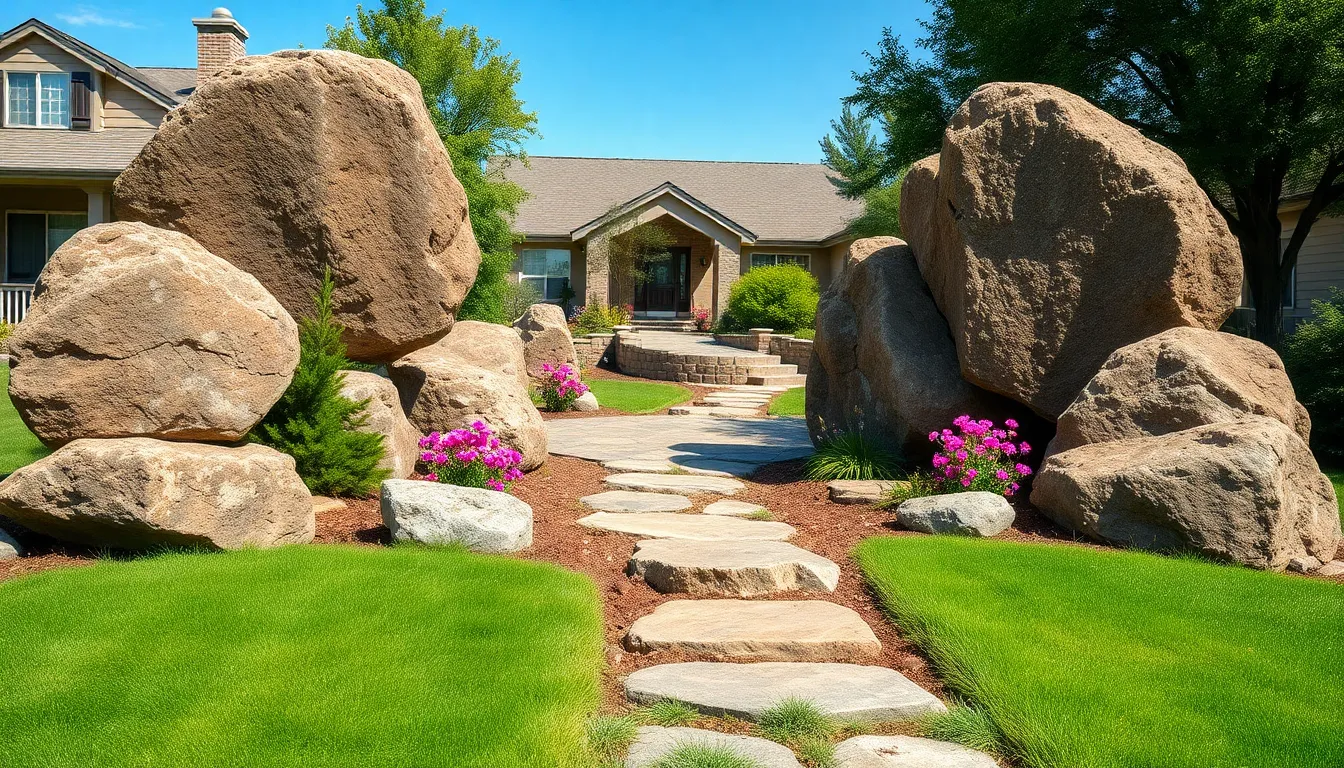
Strategic rock placement transforms ordinary front yards into captivating landscapes that draw the eye and create lasting impressions. We’ll explore three powerful techniques to maximize visual impact while maintaining natural harmony.
Position Large Boulders as Anchors
Large boulders serve as foundational elements that stabilize your entire industry design. We recommend placing these substantial stones at key intersections where pathways meet or where garden beds transition into lawn areas. Boulder placement creates visual weight that prevents designs from feeling scattered or unbalanced.
Positioning boulders near entryways establishes immediate curb appeal and welcomes guests with natural grandeur. These anchor stones work exceptionally well when grouped in odd numbers, following the rule of threes for maximum aesthetic impact. We’ve found that boulders ranging from 2 to 4 feet in diameter provide optimal presence without overwhelming smaller front yard spaces.
Strategic boulder placement also offers practical benefits beyond visual appeal. These substantial rocks can define informal seating areas where family members can pause and enjoy the garden. Also, boulders help redirect foot traffic naturally, protecting delicate plantings while creating logical pathways through your industry.
Create Rock Sculpture Displays
Rock sculptures transform your front yard into an outdoor art gallery that reflects personal style and creativity. We suggest grouping rocks of varying sizes, shapes, and textures to create three dimensional displays that capture attention from multiple viewing angles. Sculptural arrangements work best when they incorporate both horizontal and vertical elements.
Artistic rock groupings benefit from thoughtful color coordination using stones with complementary hues and textures. We recommend combining smooth river rocks with rough weathered boulders to create contrast that adds visual interest. These displays can incorporate gaps and spaces that allow ornamental grasses or succulents to emerge naturally between the stones.
Rock sculpture displays require careful consideration of scale and proportion within your overall industry design. Smaller sculptural elements work well as accent pieces near windows or along walkways, while larger installations can serve as central focal points visible from the street. We’ve observed that asymmetrical arrangements often create more ever-changing visual impact than perfectly balanced designs.
Design Seasonal Rock Arrangements
Seasonal rock arrangements keep your front yard ever-changing and captivating throughout the changing months. We recommend creating flexible displays that can accommodate rotating seasonal plants while maintaining structural integrity year round. Rock frameworks provide permanent beauty that complements temporary plantings.
Spring arrangements might feature colorful tulips or daffodils emerging between carefully positioned stones, while summer displays can showcase drought tolerant perennials that thrive in rock garden conditions. Fall arrangements benefit from incorporating warm toned stones that echo autumn foliage colors, and winter displays can highlight evergreen plants nestled among frost resistant rocks.
Seasonal flexibility requires planning permanent rock placements that allow easy access for plant rotation and maintenance. We suggest leaving strategic planting pockets between rocks where seasonal flowers can be easily replaced without disturbing the overall stone arrangement. This approach maintains visual continuity while allowing creative seasonal expression that keeps neighbors and visitors engaged with your evolving industry design.
| # | Preview | Product | Price | |
|---|---|---|---|---|
| 1 |

|
Focal Points | $1.29 | Buy on Amazon |
Last update on 2026-02-27 / Affiliate links / Images from Amazon Product Advertising API
Combine Different Rock Types and Textures
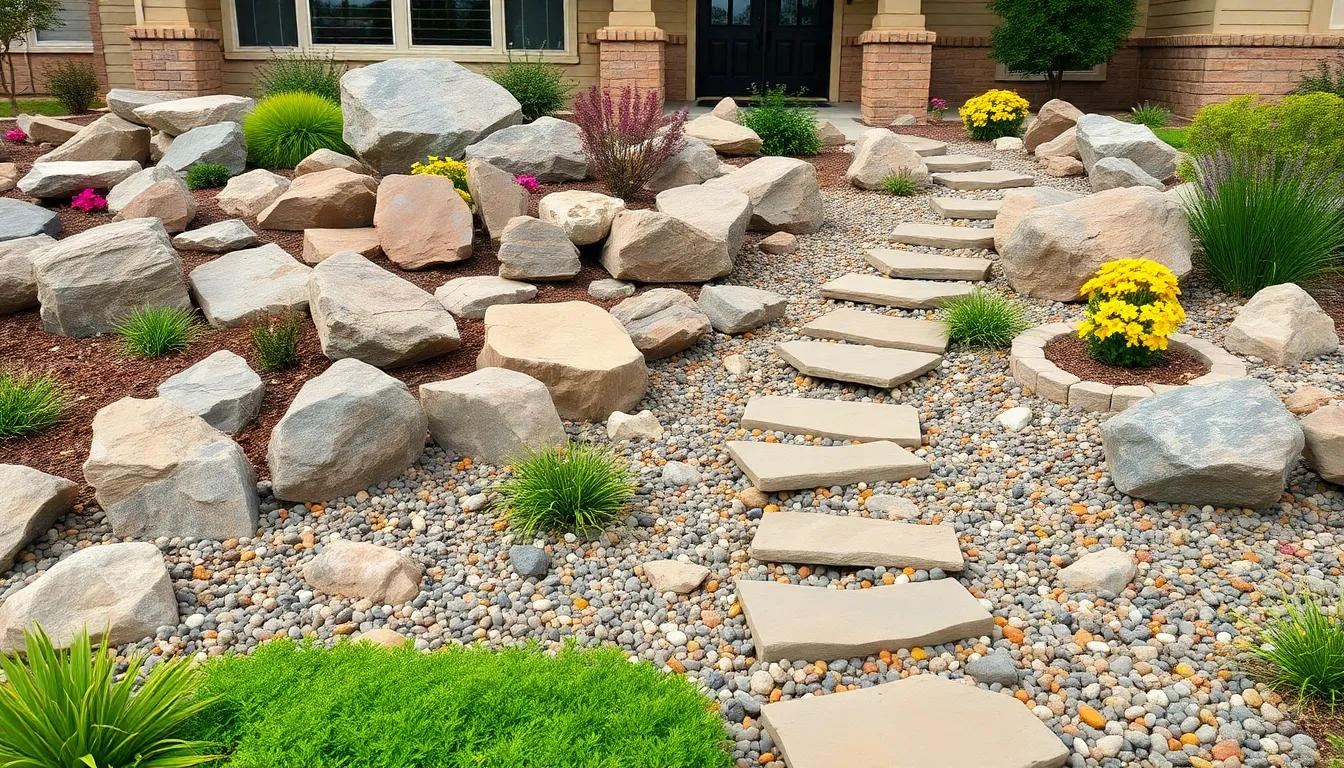
Creating depth and visual interest in our front yard starts with thoughtfully combining different rock types and textures. We can transform ordinary spaces into ever-changing landscapes by strategically mixing materials that complement each other.
Mix Smooth and Rough Stone Surfaces
Smooth river rocks paired with jagged natural stones create compelling tactile contrasts that engage visitors and add dimensional appeal to our front yard design. We achieve this balance by incorporating polished stones for pathways while using rough-textured boulders as dramatic focal points or plant anchors.
Irregular stepping stones with natural edges surrounded by fine gravel emphasize surface differences and create organic walkway designs. This combination lends authentic character to sitting areas and garden transitions while maintaining practical functionality for foot traffic.
Ever-changing surfaces emerge when we alternate between weathered fieldstones and smooth pebbles throughout planting beds and border areas. The textural variety keeps the eye moving naturally across our industry while establishing distinct zones within the overall design.
Blend Various Rock Colors and Sizes
Complementary color schemes using earthy grays, warm tans, and rich rust reds tie our industry naturally to its surrounding environment while creating sophisticated visual harmony. We select rocks that enhance rather than compete with our home’s exterior palette and existing vegetation.
Large boulders transitioning gradually to medium stones and finishing with small gravel define garden edges and borders with elegant proportion. This size progression creates natural flow patterns that guide the eye through different industry areas without abrupt visual breaks.
Contrasting colors in strategic locations draw attention to exact features like entryways, mailbox areas, or specimen plants. We use lighter colored stones to brighten shadowed areas and darker rocks to create grounding elements near architectural features.
Layer Different Stone Materials
Large flat stones forming patios or steps with gravel filled gaps combine structural durability with natural design flexibility. We arrange these foundational elements first, then fill surrounding areas with complementary smaller stones for cohesive integration.
Gabion walls filled with mixed rock sizes provide privacy screening that’s both functional and visually interesting while requiring minimal maintenance. These wire cage structures allow us to combine various stone types within single features for maximum textural impact.
Stone retaining walls integrated with pebble filled garden beds balance hard surface functionality with soft natural transitions. We layer materials from solid foundations to loose fill areas, creating moisture control and visual softness in our front yard design.
| # | Preview | Product | Price | |
|---|---|---|---|---|
| 1 |

|
Polished Healing Crystal Chips Stones Set, 36 Different Natural Gemstone Types, 2.5 lbs 0.3" Tumbled... | $28.99 | Buy on Amazon |
Last update on 2026-02-27 / Affiliate links / Images from Amazon Product Advertising API
Conclusion
Rock landscaping transforms your front yard into a stunning low-maintenance oasis that delivers lasting beauty and exceptional value. We’ve shown you how strategic stone placement water features and drought-resistant plant combinations create captivating outdoor spaces that thrive in any climate.
The versatility of rock landscaping means you can achieve any aesthetic from modern minimalist designs to natural organic gardens. Whether you’re building retaining walls creating decorative borders or installing water features these techniques provide both practical answers and visual appeal.
Your front yard deserves a industry that works as hard as you do. Rock landscaping delivers the perfect balance of functionality durability and beauty that’ll keep your outdoor space looking incredible for years to come.
Frequently Asked Questions
What are the main benefits of rock landscaping for front yards?
Rock landscaping offers low maintenance, drought resistance, and year-round beauty while increasing property value. It provides excellent drainage solutions, works well in difficult soil conditions, and helps reduce water usage. The natural materials create stunning visual appeal with minimal upkeep costs compared to traditional grass lawns.
How do I choose the right rocks for my front yard design?
Consider your home’s architecture and existing landscape when selecting rocks. Use large boulders as focal points, river rocks for pathways and drainage, and decorative gravel for ground cover. Mix different sizes, textures, and colors to create visual interest while maintaining a cohesive design that complements your property’s style.
Can I combine plants with rock landscaping?
Yes, combining drought-resistant plants with rocks creates stunning, water-wise designs. Pair succulents with desert stones, ornamental grasses with river rocks, and hardy perennials between rock clusters. The stones provide excellent drainage, heat retention, and wind protection while reducing irrigation needs and creating layered visual interest.
How do I create effective rock borders and edging?
Use natural flat stones for durable walkway borders and incorporate stepping stones with gravel for clean lines. Create curved edges to soften transitions between lawn and flower beds. Layer rocks of different sizes to add depth and texture, and use river rocks for gentle transitions and improved drainage.
What’s the best way to incorporate water features with rocks?
Build rock fountains as centerpieces for soothing sounds and visual appeal. Create natural stone waterfalls for movement and erosion control. Design Zen rock streams using smooth river rocks and gravel for calmness and effective drainage while defining walking areas with minimal maintenance requirements.
How can rock landscaping help with slope management?
Rock retaining walls provide essential soil stabilization and transform challenging slopes into architectural features. Use terraced stone gardens to prevent erosion and improve drainage. Create gabion walls for privacy and noise reduction, and implement slope control systems with large boulders and terracing for effective water management.
What types of decorative rock mulch work best?
Pea gravel offers versatile ground cover with excellent drainage and clean plant borders. Lava rock provides striking color contrast and benefits drought-tolerant plants. Crushed stone delivers modern aesthetics with minimal maintenance. Each material creates functional, visually appealing landscapes aligned with contemporary design principles.
How do I strategically place rocks for maximum visual impact?
Position large boulders as anchors at key intersections to create balance and define spaces. Use varied sizes and colors for dynamic rock sculpture displays. Create seasonal arrangements for flexible designs that accommodate changing plants. Progress from large boulders to small gravel for elegant transitions and sophisticated visual harmony.